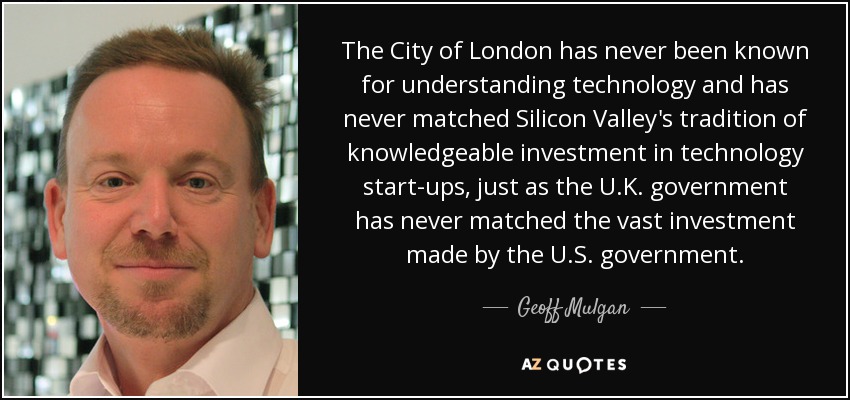
The City of London has never been known for understanding technology and has never matched Silicon Valley's tradition of knowledgeable investment in technology start-ups, just as the U.K. government has never matched the vast investment made by the U.S. government.
The simple index fund solution has been adopted as a cornerstone of investment strategy for many of the nation's pension plans operated by our giant corporations and state and local governments. Indexing is also the predominant strategy for the largest of them all, the retirement plan for federal government employees, the Federal Thrift Savings Plan (TSP). The plan has been a remarkable success, and now holds some $173 billion of assets for the benefit of our public servants and members of armed services.
... Any pension fund manager who doesn't have the vast majority-and I mean 70% or 80% of his or her portfolio-in passive investments is guilty of malfeasance, nonfeasance or some other kind of bad feasance!
Invest in low-turnover, passively managed index funds... and stay away from profit-driven investment management organizations... The mutual fund industry is a colossal failure... resulting from its systematic exploitation of individual investors... as funds extract enormous sums from investors in exchange for providing a shocking disservice... Excessive management fees take their toll, and manager profits dominate fiduciary responsibility.
Millions of mutual-fund investors sleep well at night, serene in the belief that superior outcomes result from pooling funds with like-minded investors and engaging high-quality investment managers to provide professional insight. The conventional wisdom ends up hopelessly unwise, as evidence shows an overwhelming rate of failure by mutual funds to deliver on promises.
Markets are efficient, but there are different dimensions of risk and those lead to different dimensions of expected returns. That's what people should be concerned with in their investment decisions and not with whether they can pick stocks, pick winners and losers among the various managers delivering basically the same product.
Believing that fundamental conditions of the country are sound and there is nothing in the business situation to warrant the destruction of values that has taken place on the exchanges during the past week, my son and I have for some days been purchasing sound common stocks. We are continuing and will continue our purchases in substantial amounts at levels which we believe represent sound investment values.
I pledge to invest in women because I believe it offers one of the greatest returns on investment. I am committed to the belief that we would all be in a much better place if half the human race (women) were empowered to prosper, invent, be educated, start their own businesses, run for office essentially be given the chance to soar.
Investment based on genuine long-term expectations is so difficult today as to be scarcely practicable.
By refusing to pay too much for an investment, you minimize the chances that your wealth will ever disappear or suddenly be destroyed.
Diversification is an established tenet of conservative investment.
The distinction between investment and speculation in common stocks has always been a useful one and its disappearance is cause for concern.
Some investments do have higher expected returns than others. Which ones? Well, by and large they're the ones that will do the worst in bad times.
There are only a few things investors can do to counteract risk: diversify adequately, hedge when appropriate, and invest with a margin of safety. It is a precisely because we do not and cannot know all the risks of an investment that we strive to invest at a discount. The bargain element helps to provide a cushion for when things go wrong.
Art is not an investment. Art is something you buy because you are financially solvent enough to give yourself a pleasure of living with great works rather than having to just see them in museums. People who are buying art at the top of the market as an investment are foolish.
Rather, risk is a perception in each investor's mind that results from analysis of the probability and amount of potential loss from an investment. If an exploratory oil well proves to be a dry hole, it is called risky. If a bond defaults or a stock plunges in price, they are called risky. But if the well is a gusher, the bond matures on schedule, and the stock rallies strongly, can we say they weren't risky when the investment after it is concluded than was known when it was made.
The risk of an investment is described by both the probability and the potential amount of loss. The risk of an investment-the probability of an adverse outcome-is partly inherent in its very nature. A dollar spent on biotechnology research is a riskier investment than a dollar used to purchase utility equipment. The former has both a greater probability of loss and a greater percentage of the investment at stake.
If your broker or investment advisor is not familiar with the concept of standard deviation of returns, get a new one.
Here's one truth that perhaps your typical investment counselor would disagree with: if you're comfortably rich and someone else is getting richer faster than you by, for example, investing in risky stocks, so what?! Someone will always be getting richer faster than you. This is not a tragedy.
Much of what is called investment is actually nothing more than mergers and acquisitions, and of course mergers and acquisitions are generally accompanied by downsizing.
It is better to be early than too late in recognizing the passing of one era, the waning of old investment favorites and the advent of a new era affording new opportunities for the investor.
To suppose that safety-first consists in having a small gamble in a large number of different companies where I have no information to reach a good judgment, as compared with a substantial stake in a company where one's information is adequate, strikes me as a travesty of investment policy.
Diversification is something that stock brokers came up with to protect themselves, so they wouldn't get sued for making bad investment choices for clients. Henry Ford never diversified, Bill Gates didn't diversify. The way to get rich is to put your eggs in one basket, but watch that basket very carefully. And make sure you have the right basket.
Our marketable equities tell us by their operating results - not by their daily, or even yearly, price quotations - whether our investments are successful. The market may ignore business success for a while, but eventually will confirm it.
Active management strategies demand uninstitutional behavior from institutions, creating a paradox that few can unravel. Establishing and maintaining an unconventional investment profile requires acceptance of uncomfortably idiosyncratic portfolios, which frequently appear downright imprudent in the eyes of conventional wisdom.
Follow AzQuotes on Facebook, Twitter and Google+. Every day we present the best quotes! Improve yourself, find your inspiration, share with friends
or simply: