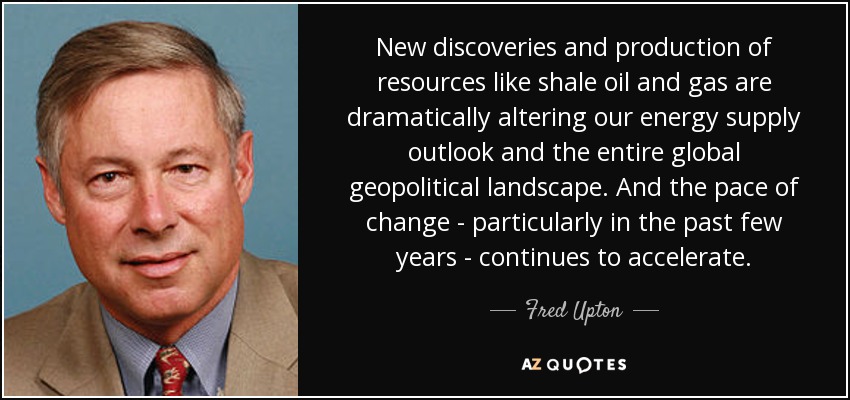
New discoveries and production of resources like shale oil and gas are dramatically altering our energy supply outlook and the entire global geopolitical landscape. And the pace of change - particularly in the past few years - continues to accelerate.
All people see fires, storms, explosions, or landscapes; but how many feel the flames, the lightnings, the whirlwinds, or the harmony? How many have an inner beauty that tinges their melancholy?
I read the landscape to help me through, to know what's come before me there, to find my footing in time.
Skullcrack City messes with your mind the way William Burroughs or a bellyful of hallucinogens will do. I'm a longtime fan of Johnson. A master of derangement, he's been bringing it for years. This time, though, it's different. He's burst into the clear and is taking seven-league strides across the literary landscape.
When I was growing up you would see big American films that really mythologised their landscape, that really showed the vastness and the drama of their country.
I consider my work non-objective and I think abstract is an abstraction of something, like a landscape. Abstraction means something is abstracted. It relates to something. Non-objective relates to nothing. It has no object.
Truly, the worst trains take one across the best landscapes.
When we enter the landscape to learn something, we are obligated, I think, to pay attention rather than constantly to pose questions. To approach the land as we would a person, by opening an intelligent conversation. And to stay in one place, to make of that one, long observation a fully dilated experience. We will always be rewarded if we give the land credit for more than we imagine, and if we imagine it as being more complex even than language. In these ways we begin, I think, to find a home, to sense how to fit a place.
If the abstract paintings show my reality, then the landscapes and still-lifes show my yearning.
But it is also untrue that I have nothing specific in mind. As with my landscapes: I see countless landscapes, photograph barely 1 in 100,000, and paint barely 1 in 100 of those that I photograph. I am therefore seeking something quite specific; from this I conclude that I know what I want.
I find the Romantic period extraordinarily interesting. My landscapes have connections with Romanticism: at times I feel a real desire for, an attraction to, this period, and some of my pictures are a homage to Caspar David Friedrich.
Fat people are so rarely included in visual culture that fat is perceived as a blot on the landscape of sleek and slim.
A lot of writing is a form of seeing - putting down what you see in terms of action and landscape.
Sometimes you take a job for the money, sometimes you take it for the location, sometimes you take it for the script; there are just a number of reasons, and ultimately what you see is the whole landscape of it. But I can tell you from behind the scenes - that's what it is, as an actor.
There are bound to be differences in any artistic collaboration with landscape elements, or theater, of lighting elements.
London has always provided the landscape for my imagination. It becomes a character - a living being - within each of my books.
I am occasionally enraptured by Western landscape. But I don't identify that state of mind as having to do with my own origins, having grown up in the West, although I certainly crisscrossed Nevada countless times growing up, and then as a young adult, in cars and on motorcycles.
I live in Cullowhee, North Carolina. That's where I teach, at Western Carolina University. That region is where my family has lived for a long time and that region is my landscape.
I read the papers, I surf the Web. At the beginning of the year, I try to see at least two episodes of every show on our network. Am I surfing? All the time. I'm aware of the landscape. I'm a competitor, so I have to know whom I'm competing with.
And it was only a week later that I realized a close up of Steve McQueen was worth the greatest landscape you could find.
The first dolly track was somebody who had the idea to put the camera on a boat on a canal. So the boat would move very slowly but steadily. So they would see all that surrounds you and you'd see the landscape changing slowly. So that was the first time.
How do we accurately evoke land we love? What should we even call the world we walk and drive through-scenery, landscape?
What I so like about Poussin and Cezanne is their sense of organization. Ilike the way in which they develop space and shape in architecturalcontinuity - the rhythm across their paintings. When I paint a landscape, Iget the greatest pleasure out of composing it. As I paint, I try to work outa visual sonata form or a fugue, with realistic images.
From the landscape: a sense of scale. From the dead: a sense of scale.
The old process of social assimilation used to be mainly about English new money - generated in London, the mucky, brassy North or the colonies - buying those houses and restoring them, and doing the three-generation thing, mouldering into the landscape, and the 'community,' identifying with the place in a familiar way.
Follow AzQuotes on Facebook, Twitter and Google+. Every day we present the best quotes! Improve yourself, find your inspiration, share with friends
or simply: