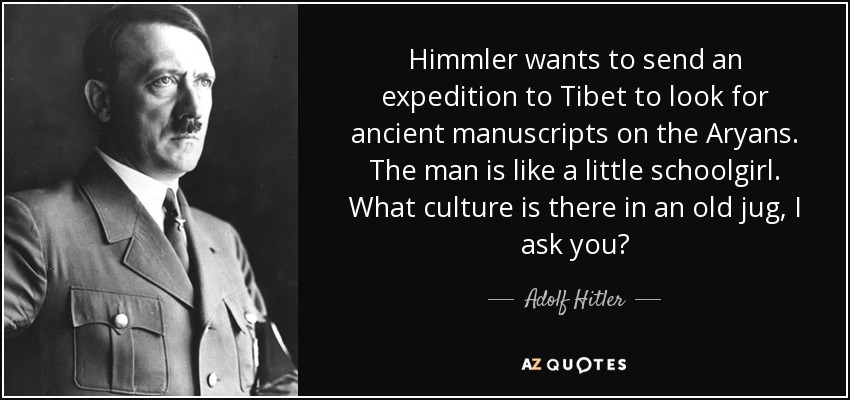
Himmler wants to send an expedition to Tibet to look for ancient manuscripts on the Aryans. The man is like a little schoolgirl. What culture is there in an old jug, I ask you?
Why am I obsessed with the idea I can justify myself by getting manuscripts published? Is it an escape-an excuse for any social failure-so I can say "No, I don't go out for many extracurricular activities, but I spend a lot of time writing."
When I get sent manuscripts from aspiring poets, I do one of two things: if there is no stamped self-addressed envelope, I throw it into the bin.-If there is, I write and tell them to f**k off.
I'm gregarious with writers and never with manuscripts . . . I [like to] create the illusion of seamless perfection, so I alone know the flawed homely process along the way.
I wake at 5 or 5:30 most mornings, make myself a latte and grab a cookie, write until 10 or 11, go have my favorite meal, 'second breakfast,' or grab coffee with friends, or play basketball. Then, around noon, I begin apologizing via email for the manuscripts I can't get to.
Your first attempt will be terrible.... Remember that everything great you see started out as someone else's bad first draft..... Whenever someone sends me a manuscript and says, 'It just flowed out of me,' I usually think: Let it flow back into you for a while.
Novels are completed when they are finished, but the memoir changes its own conclusion by virtue of being written... I was not at all the same person, when I handed the manuscript to the publisher, as I had been when I began. A memoir may always be retrospective, but the past is not where its action takes place.
Your book may be a masterpiece but do not suggest that to the publisher because many of the most hopeless manuscripts that have come his way have probably been so described by their authors.
You had censorship. If you brought a manuscript to the publisher, you knew he would suggest changes. If you wanted to write and speak what you thought had to be written and spoken, you had to act against all these suppressive rules.
I felt that there were so many things that could go wrong, in adapting The Hunger Games , and I had this fierce desire to protect this book that she had written. At that time, I read the second book, in manuscript form, and so I saw where she was going with the series. I was able to convince Suzanne [Collins] to trust me with the books.
If the big publishers are doing so well, why do they require writers to send return postage with their manuscripts?
A manuscript not submitted is a book not published.
The usual way - through a long series of rejections, revising my manuscripts, and kept trying again and again. Finally I was fortunate enough to find a good agent.
In fact, most of the changes found in early Christian manuscripts have nothing to do with theology or ideology. Far and away the most changes are the result of mistakes pure and simple slips of the pen, accidental omissions, inadvertent additions, misspelled words, blunders of one sort or another.
I finish the book so I can see how it's going to end. I write that first sentence, and if it's the right first sentence, it leads to the right second sentence and three years later you have a 500-page manuscript, but it really is like going on a trip, going on a journey. It's a voyage.
There's never any humongous next draft. I know a writer who every time he finished a novel - you would know his name very well - but his editor would come and live with him for a month. And they would go through the manuscript together.
To be perfectly honest the old habits, specifically deadlines, still very much inform what I do. I am brutally disciplined about getting manuscripts in on time.
Egypt has managed to reclaim the 13-page papyrus manuscript.
Maybe it's because we as writers are alone so often, are so attuned to listening to the run of our own thoughts, that we find it more natural to write down the thoughts rather than the deeds of our characters. But speaking as a teacher who has spent some twenty years slogging through manuscripts where thoughts and exposition pile up as thick as the aftermath of a California mudslide, I can attest to the power of the evocative detail, gesture, or figment of speech.
I have learned patience, for sure. Pre-publication is a long waiting game, especially for authors of picture books. We write the manuscript, sign the contract, and wait. It takes a while for the art director to find an illustrator and then the illustrator works on the sketches, and depending on those first round of sketches, it could be a few more months before you see a final illustration. I was surprised at how long it takes for all the pieces to come together.
The Rift, which was well over a thousand pages of manuscript, took two years.
Cut like crazy. Less is more. I've often read manuscripts - including my own - where I've got to the beginning of, say, chapter two and have thought: “This is where the novel should actually start.” A huge amount of information about character and backstory can be conveyed through small detail. The emotional attachment you feel to a scene or a chapter will fade as you move on to other stories. Be business-like about it.
Talking to Lee Child and discovering, from his chapter in The Chopin Manuscript, that he's even more of an audio geek than I am (as his chapter in Chopin proves).
I outline fairly extensively because I'm usually dealing with real events. I don't need to give myself as much information as I used to, but I still like to have two pages of outline for every projected 100 pages of manuscript.
The best young writers are convinced they need blurbs from famous writers before an editor will even read the first page of a manuscript. If this is true, then the editorial system that prevails today stinks. And let's start reforming it.
Follow AzQuotes on Facebook, Twitter and Google+. Every day we present the best quotes! Improve yourself, find your inspiration, share with friends
or simply: