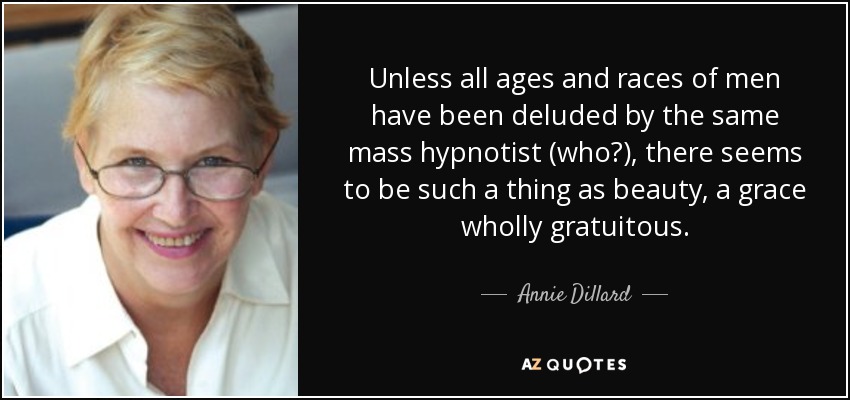
Unless all ages and races of men have been deluded by the same mass hypnotist (who?), there seems to be such a thing as beauty, a grace wholly gratuitous.
The mass believes that it has the right to impose and to give force of law to notions born in the café.
Man is unique in organizing the mass murder of his own species.
The fact of the religious vision, and its history of persistent expansion, is our one ground for optimism. Apart from it, human life is a flash of occasional enjoyments lighting up a mass of pain and misery, a bagatelle of transient experience.
The masses are the material of democracy, but its form-that is to say, the laws which express the general reason, justice, and utility-can only be rightly shaped by wisdom, which is by no means a universal property.
I was never a Republican, because those gentlemen, distinguished as they are, have only one real interest, and that is the making of special laws in order to protect their fortunes. I also know they have no compassion for the masses of the people in this country who are without money and who are, many of them, without food or houses. I have always thought that only as a Democrat, reflecting Jefferson and Jackson, could justice ever be done the people because, at this moment in history, ours is the only party which is even faintly responsive to the force of ideas.
If we may say that the Age of Andrew Jackson took political life out of the hands of aristocrats and turned it over to the masses, then we may say, with equal justification, that the Age of Television has taken politics away from the adult mind altogether.
Mass communication communicates massively: its language lacks precise articulation and avoids demanding terms; it argues for the kind of behavior in life which will make a "good program": ethic equals showbiz.
Alas, irreverence has been subsumed by mere grossness, at least in the so-called mass media. What we have now - to quote myself at my most pretentious - is a nimiety of scurrility with a concomitant exiguity of taste.
I am alone with the masses.
When Elvis made his mass-media debut on 'The Ed Sullivan Show' - his notorious gyrations filmed only from the waist up - I fell off the family chaise longue with delight.
It bothers me to read the comments of leaders of the Hamas and others who hate America that their goal is to have more weaponry capable of delivering all types of weapons of mass destruction.
The tubular steel chair is surely rational from technical and constructive points of view. It is light, suitable for mass production, and so on. But steel and chromium surfaces are not satisfactory from the human point of view.
In the crowd, herd, or gang, it is a mass-mind that operates-which is to say, a mind without subtlety, a mind without compassion, a mind, finally, uncivilized.
Sometimes it looks as if, the better off they [nations] become, the bigger do they conceive the gap between what is actually their lot and what would be desirable, while in the poor countries large masses of people seem to be satisfied by merely surviving.
Keeping the peace with the particular man in one's life becomes more essential than battling the mass male culture.
Modern man-whether in the womb of the masses, or with his workmates, or with his family, or alone-can never for one moment forget that he is living in a world in which he is a means and whose end is not his business.
In effect, according to Lenin, socialism and democracy are indivisible. By gaining democratic freedoms the working masses come to power.
He who prides himself an extraordinary person by his deeds is rejected by the world; he who has independent ideas is hated by the mass.
There's often a distressing disconnect between the good words we speak and the way we live our lives. In personal relations and politics, the mass media, the academy and organized religion, our good words tend to float away even as they leave our lips, ascending to an altitude where they neither reflect nor connect with the human condition. We long for words like love, truth, and justice to become flesh and dwell among us. But in our violent world, it's risky business to wrap our frail flesh around words like those, and we don't like the odds.
Religion would certainly be more relevant to the hurting masses of humanity if people could express their hopes and dreams and pain and anguish to one another in the context of religious worship. As it is now our services are so antiseptic and sterile that people gathering for worship relate to others at only the most superficial level, and hardly ever get to know one another. . . . Maybe that is one of the reasons why people feel religion is irrelevant, because they cannot find support and solace during times of crisis and pain. That is when real religion should be at its best.
May I so boldly suggest that this Thanksgiving, we focus on one-on-one conversations, instead of broadcasting our lives to the masses.
...a man estimable for his learning, amiable for his life, and venerable for his piety. Arbuthnot was a man of great comprehension, skilful in his profession, versed in the sciences, acquainted with ancient literature, and able to animate his mass of knowledge by a bright and active imagination; a scholar with great brilliance of wit; a wit who, in the crowd of life, retained and discovered a noble ardour of religious zeal.
The art of propaganda lies in understanding the emotional ideas of the great masses and finding, through a psychologically correct form, the way to the attention and thence to the heart of the broad masses.
The more modest its intellectual ballast, the more exclusively it takes into consideration the emotions of the masses, the more effective [propaganda] will be.
Follow AzQuotes on Facebook, Twitter and Google+. Every day we present the best quotes! Improve yourself, find your inspiration, share with friends
or simply: