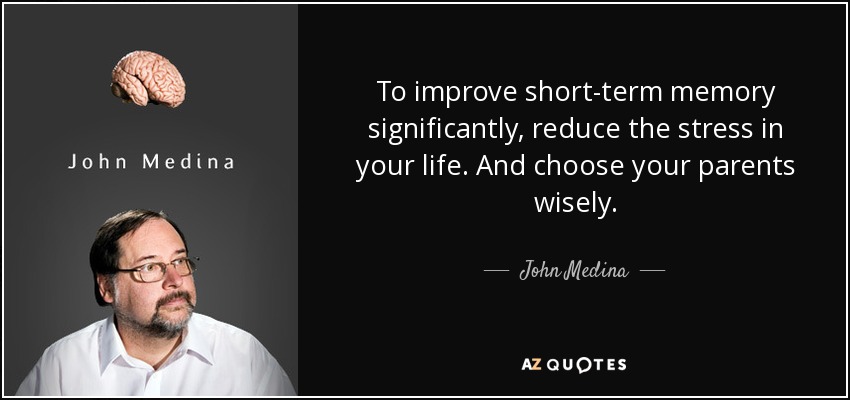
To improve short-term memory significantly, reduce the stress in your life. And choose your parents wisely.
I thought back to a childhood memory: the first dead body I'd ever seen was the body of an immigrant washed up on shore. I went back to that memory. As a child, you can't process these types of images in a healthy way. I don't think anyone can, really. So I explored that. These people were buried in mass graves. I don't know if their families ever heard from them again.
[Dan Fried ]is a pillar of the U.S. State Department. He`s part of its institutional memory. He has been in the room for basically every important negotiation, every standoff, every big development, particularly between the United States and Russia for decades.
The inaction of the international community towards Guatemala is injustifiable. The community should play an active role with concrete measures and sanctions imposed, as was the case in South Africa, Iraq, Yugoslavia, Cuba and Haiti. Why for us no? Why legalize death in one place and somewhere else no? This is clear in our memories.
I don't think you can erase memory, you can just bury it, and when we're ready to process old traumas they can reveal themselves in unique ways.
My earliest childhood memory is of my father going crazy when the Giants won the World Series in 1954. He started whoopin' and hollerin' and jumpin' up and down all around the living room. I started crying because he scared me to death.
Remembered memory is much more powerful than actually having your own memory.
Inspiration comes from books, music, films and of course, living memories and life experiences, my own and those of people I've known or met; the casual glimpse from the stranger or the life and death of the close relative; to breathe, for a moment, a Chekhovian air, it's all song and ice.
[White House] feels even more like home now because you have all these memories that were formed watching your kids grow up.
I have such memories; I keep thinking about all the people I worked with. I was in the recording studio and I was talking to one of the engineers who is 24 and they don't know these people. They just absolutely don't know the people and it just tickles me. I don't feel like I've grown up.
Salinger is such a terrific writer; he did so many great things. He is one of those writers that I still reread, simply because he makes me see the possibilities and makes me feel like writing. There are certain writers who put you in the mood to write. In the way a whiff of a cigar will bring back memories of a ballgame on a Saturday afternoon, reading Salinger makes me want to get to the typewriter.
This may be a little bit of a provocative thing to say, but the memoirist doesn't owe the reader anything other than a good story and the inclining of the mind in the direction of memory. Of course, the memoirist is not allowed to make things up. But the really skilled memoirist knows what to leave in and what to leave out to serve the story. In autobiography you can't do that.
I suppose if I didn't write for a living and it couldn't be published, I would have wanted to write anyway. I think there's something about the act of writing that organizes thoughts and memories.
I think it's more difficult writing what it's like to be a child. You can pretend you know what it's like, but you don't really know. The only parts I can remember is that the adults were like, "Aren't they cute?" But when you're little you're looking at the other kids like they're your colleagues. They're not like, "Oh, we're all cute little kids." They're more like your office acquaintances. It's very hard to grasp the memories of what it actually was like to be a kid.
Wilkie Collins was a rival and competitor of Dickens. His novel Moonstone sold more copies at the time than Dickens' last two books. But that meant nothing in the long run. Right now, to be honest, Wilkie Collins is what he deserved to be back then: a footnote, an almost lost memory. And he knew he would become that.
All memory is fiction.
As you may know, my motto is: "All memory is fiction." It could just as easily be: "All fiction is memory." Unpacked, these two statements defy the ease of logic, but offer some really important truths about narrative art, at the very least, and about memory. So I would say that all art is personal.
If you are using a digital camera specifically for that reason you have in mind from the beginning, then yeah, it'll work. But like if you're just shooting a normal film and just kind of just shooting extra stuff because you can because you've got the memory space, it's a bit pointless.
Writing fiction lets you be a little more emotional and unguarded, a little freer. Writing fictional characters is also really different from writing about real people. In nonfiction, you can only say so much about the people you interact with. After all, they're actual people, their version of their story trumps yours. In a novel, you can build a character, using certain parts or impressions of someone you know, and guessing or inventing others, without having to worry that your guesses or memories or inventions are wrong.
To conjure a particular knowledge you visualize an architectural structure and then you walk around and see the details that then bring back the words or the poetry or the lines of thought. Memory's going extinct because we rely on machines and copies and so on. The idea of working with structures that conjure dreams, personages, history, time, that can be contained in this way as you walk through your mind, is a challenge.
One of the first memories I have was watching Whoopi Goldberg perform her one-woman show on Broadway on HBO. She moved seamlessly through an array of spirited and soul-stirring characters, each one holding a mirror up to me and allowing me in many ways to see a reflection of myself on screen.
Everything is in our cellular level. My mom's is definitely in my cellular memory.
The Nova Scotian black community always remembered Viola Desmond - they didn't lose track of her, ever. Her memory was very much alive there, but the rest of us didn't know anything about her. It's just so typical of Canadians that we know Rosa Parks, in that "bad country to the south of us" - they needed this lovely, courageous woman to sit down in the front of the bus - but we wouldn't know ours, because of course we "don't have racism in Canada."
I love Nashville, but I miss the Gulf Coast, the wetlands, and the Delta of Lower Alabama every day. Magnolia Springs is a sweet little town in reality, but, in my heart, it is a kind of mythological oasis. I relive the memory every time I cross the Magnolia River. My memory is probably not accurate, but it's a wonderful memory. So Magnolia Springs lives in my heart as a beautiful, cool, watery place.
Donald Trump's slogan: "Let's make America great again." And when I hear that, that seems to suggest there was a moment in the past when America really was great, you know, when women knew their places, when we could set dogs on black people in Mississippi, when young people went and sit in at lunch counters and were assaulted by others. That's about the death of memory. That's about memory being basically suppressed in a way that doesn't allow people to understand that there were things that happened in the past that we not only have to remember, we have to prevent from happening again.
Follow AzQuotes on Facebook, Twitter and Google+. Every day we present the best quotes! Improve yourself, find your inspiration, share with friends
or simply: