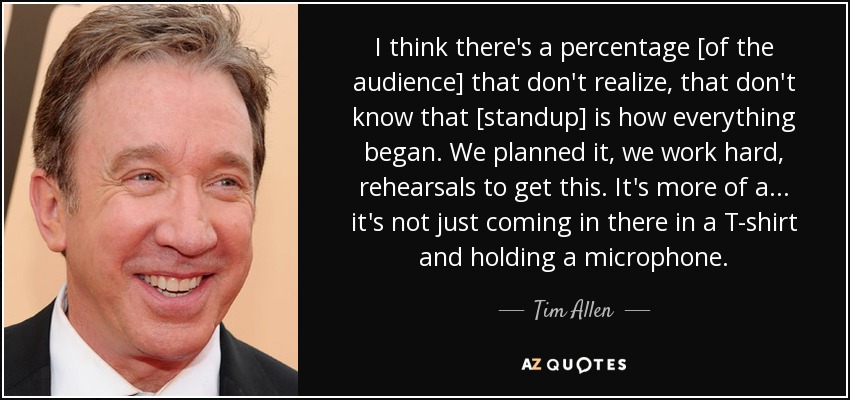
I think there's a percentage [of the audience] that don't realize, that don't know that [standup] is how everything began. We planned it, we work hard, rehearsals to get this. It's more of a ... it's not just coming in there in a T-shirt and holding a microphone.
I'm not a journalist any more. I don't have to stick a microphone up somebody's nostril and I don't have a camera lens behind my shoulder, I think people talk to me in a much franker way.
You know, every time it comes, every time that light comes on or every time that camera comes on, every time that microphone comes on, the Mac Man seek and destroy.
The way I perform or the setup is always same - just me and a microphone and the text - and they usually have some relation of how physical that stack becomes. When I'm editing it together, the density of the papers is an indicator to be like, "You need to stop."
People thought this was a computer IT gig, and that will flow through those nerdy departments and it won't come into fashion photography, it won't come into television, it won't come into my daily communications, it won't come into my telephone, my microphone, my light control, my microwave radio, my - I mean, just name it.
I've had the opportunity to spend some time with Donald Trump. He is - he - as you can imagine, I mean, he's a very engaging man. He's - he puts on an image as a lot of candidates and I think all of us do when we're in front of a microphone that's really tough and combative.
When I'm the person in front of the microphone, and I'm the person in the light, I want to reflect and refract the light onto places where they need the attention, where I don't need it.
Those of us with a microphone who are blessed with the gift of being in the public eye have a special opportunity to give voice to all those groups whose activism is sometimes ignored or put on the back pages with the the dumbing down of television and the tabloidization of journalism. As Ralph Nader called it, "sound barks," not even sound bites.
I'm in school every day. It depends on what it is that you do with all that free time when I'm not on the microphone. I'm reading, I'm studying. I love documentaries. I love learning what I don't know. And of course, I wouldn't suggest that particular lane for others.
Animated program was definitely a different process but it was fun though, it had elements of doing my podcast where we were all in a booth with microphones joking around and stuff. It was definitely a fun process.
Basically, if you shoot your own stuff, you can just pick up a camera and some wireless microphones, grab a couple of LEDs, and you're off and running. And if you don't shoot your own stuff, you can just grab one other person to do camera and you can learn how to do the sound, and you're off and running.
I don't like going to the studio. It just seems too cold. There's no crowd to react to, or share anything with; it's just talking into a microphone that's going into a computer.
Maybe I'll start from the initial idea, what motivated me to do that. In 1953, I had access to a tape recorder. Tape recorders were not widely available. There was no cassette tape back then. It was a Sears Roebuck tape machine. I put a microphone in the window and recorded the ambience.
My first tape piece was made with that Sears Roebuck recorder. I modified sound using cardboard tubes with a microphone in the end to filter the sound. I had a wooden apple box with a Piezo [contact] mic and little objects that I could amplify on the box. I used the bathtub for reverberation.
There are three different modes: playing piano, just me at the microphone, and me at my effects units. And I can mix those up in different ways.
In standup, you don't have anything near you except a microphone.
Footballs, basketballs, microphones, gas and grass... Just some of the few things that J-Ro likes to pass.
Follow AzQuotes on Facebook, Twitter and Google+. Every day we present the best quotes! Improve yourself, find your inspiration, share with friends
or simply: