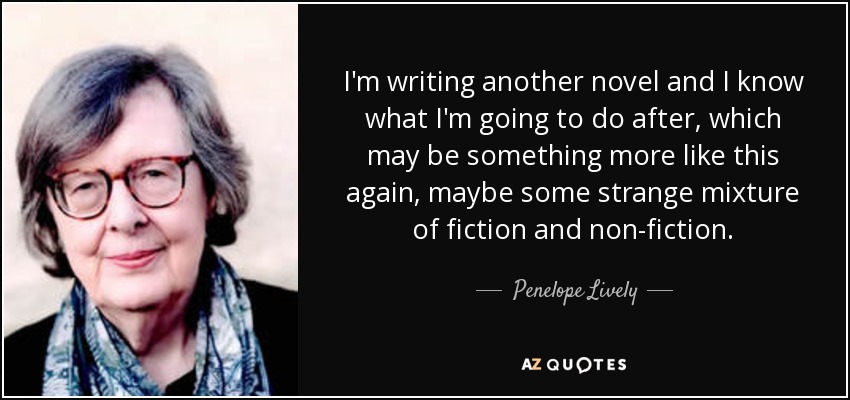
I'm writing another novel and I know what I'm going to do after, which may be something more like this again, maybe some strange mixture of fiction and non-fiction.
I like to read biographies of authors that I love, like Richard Yates. I also like to see what non-fiction authors are out there. My bible is Something Happened. It's one of the greatest books I've ever read. But if I don't read a Dostoevsky soon I'm going to kill myself.
Read non-fiction. History, biology, entomology, mineralogy, paleontology. Get a bodyguard and do fieldwork. Find your inner fish. Don't publish too soon. Not before you have read Thomas Mann in any case. Learn by copying, sentence by sentence some of the masters. Copy Coetzee's or Sebald's sentences and see what happens to your story. Consider creative non-fiction if you want to stay in South Africa. It might be the way to go. Never neglect back and hamstring exercises, otherwise you won't be able to write your novel. One needs one's buttocks to think.
When you play a non-fiction character it is more responsibility than when you are playing a fiction character because that person lived, and you do want to pay respect to that.
It's very hard to be a screenwriter. I remember getting a couple of awards. I got a PEN West award a million years ago when I did Running on Empty, and I sat in the room with all these writers. They wrote everything from novels to non-fiction to children's books to journalism - any kind of writing - and I realized that there was no one in the room who would ever read anything I'd written.
I use non-fiction work written by Whites in my research. It's indispensable. That wasn't the problem. I said that "The Wire" was a cliché! It's like my writing a series about Jewish life and casting all of the characters as inside traders.
In high school, in 1956, at the age of sixteen, we were not taught "creative writing." We were taught literature and grammar. So no one ever told me I couldn't write both prose and poetry, and I started out writing all the things I still write: poetry, prose fiction - which took me longer to get published - and non-fiction prose.
When you're not doing fiction, there's a limit to how much illustrating you can do with your work. I mean, you can do fine. There are great non-fiction writers, but people aren't necessarily going to say anything that reveals them as much as a picture might. Even their surroundings, in lot of cases, the things that meant the most to me were the things I noticed in their houses. I was always looking, as much as I was listening to them. I was looking around for clues as to why I was there.
One would expect an actress to stand onscreen mostly as a caricature. If she would say, "I'm selling shoes," you would believe her. She says it and it creates this fiction, non-fiction perception of the film. People believe it because she says it. If she said, "I'm a butcher," people would believe it too, I think.
Many Americans have never owned a book. And others have never owned a non-fiction book. Providing them with a 300-page paperback would get them started, maybe. And even if it didn't, at least they'd own that one. So that's a serious problem.
I always say that writing non-fiction versus writing fiction is a bit like architecture versus abstract painting.
In non-fiction you have to stay true to historical events, be they personal or national .
I'm very interested in film making. It's telling a story, fiction or non-fiction. I have been filmed quite a lot. Contrary to popular belief, filming isn't glamorous. It can be wearingly repetitious, as the same shot is taken over and over again.
My documentaries have always been very much constructed in the spirit of dominant cinema. From the time I started making non-fiction, I was mainly interested in designing and creating documentaries like fiction, so it was a natural evolution to try and embark on doing a dramatic narrative.
I try and make non-fiction films that feel like fiction, so I'm always looking for the subtext and that's what really excites me.
I just think there's something in the non-fiction form that allows you to see things clearly, if you're patient.
Follow AzQuotes on Facebook, Twitter and Google+. Every day we present the best quotes! Improve yourself, find your inspiration, share with friends
or simply: