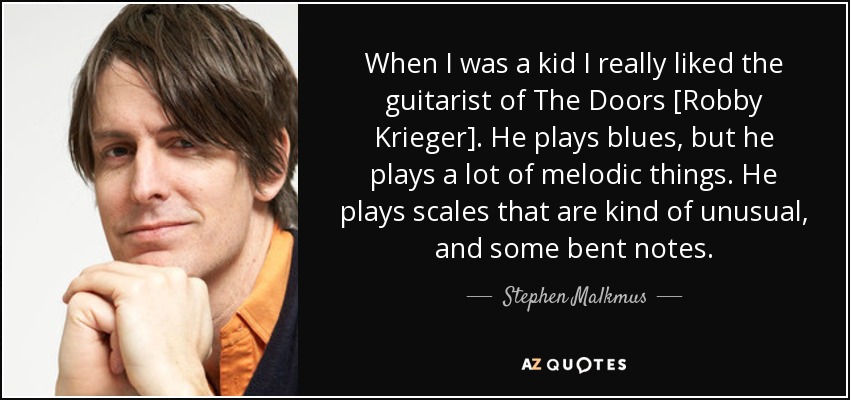
When I was a kid I really liked the guitarist of The Doors [Robby Krieger]. He plays blues, but he plays a lot of melodic things. He plays scales that are kind of unusual, and some bent notes.
This [9/11 event] was bloody-minded destruction for no other reason than to do it. Note that there was no claim for these attacks. There were no demands. There were no statements. It was a silent piece of terror. This was part of nothing.
“I Don’t Want to Miss A Thing” is a hard song to perform, I was worried that I was not going to reach that significant note that is at the end of the song. Thank god, Steven loved it! He was the nicest and friendliest judge that I have met. He also invited me to chat with him whether I had free time on the Idol set.
Taj [ Johnson] is the singer in my family. So whenever I would be practicing my warmups in the house, she would let me have it. I could be on the other side of the house doing my voice lessons and she would scream, "Drop your jaw for those long notes."
For years and years I carried these notebooks around with me - I had hundreds of pages of notes, these fragments that consisted of biographical anecdotes, diary passages, critical rants, agitations, scenes of my marriage.
I think the female first-person is still dismissed, demonized, especially if the book does not end on an empowering note, especially if the main character is perceived as unlikeable, or too privileged.
I'm interested in the limits of personality, in the possibility of change, and the saving power of art. Do powerful works of art raise our consciousness to such a degree that we refrain from sliding into moral hazard? Do we take note? Or are we doomed to repetition?
Radio, or at least the kind of radio we're proposing to do, can cut through that. It can reach people who would otherwise never hear your work, and of course I find that very notion inspiring. Radio stories are powerful because the human voice is powerful. It has been and will continue to be the most basic element of storytelling. As a novelist (and I should note that working my novel is the first thing I do in the morning and the very last thing I do before I sleep), shifting into this new medium is entirely logical. It's still narrative, only with different tools.
When I'm singing at the piano and I'm having a really nice fun day singing, if I have a headache, the headache will immediately dissipate just the notes going through my head.
One thing about having mostly absent parents that I think was perhaps "good" for the development of my intellect/writing is that I was given almost total freedom to read/write/look at whatever I wanted. I wonder a lot about how my past experiences, particularly my negative childhood (home life and being severely bullied/ostracized throughout school) as formed my/my thoughts/my writing, though I should also note those things were far from the only thing that had an impact on me/my writing.
I never wanted to get caught in doing something that was really one note.
I sang "O Holy Night" in a school choir. My mother came and listened to me and complimented me. So that was the high point. I cannot sing a note.
If you don't practice for three days, everyone will notice." It's something you have to really maintain. So unfortunately, I don't play it that often but I may take it up again. If you don't play for a while, you just can't hit the notes. It's like going to the gym. If you go and do weights, you can lift x amount of weight and if you don't go for ages, you've gotta start again and start from the beginning. So it's a bit like that. It's just a muscle.
I'm writing the book to a children's musical. I got a note from the producers saying, "Can't you make it campier?" So now, I'm trying to determine the camp sensibility of the average eight year old.
I had two chances to fail [working for Disney]. The first one, they said was "too juvenile." The second one was,they give you general areas to work in. They said, "Set 'My Fair Lady' in ancient Egypt."I came up with this idea about an Egyptian princess, and I gave her, as a sidekick, a little scarab. I had a telephone meeting with the executive "handling" me, and he said, "I looked over the notes. Very cute. But lose the beetle.Beetles don't talk." Well, how do you answer that? I said, "Excuse me just a moment, I've got a teacup calling me on the other line."
My scripts are always filled with notes. I like to just analyze everything from the point of view of the whole picture, of the movie, my whole picture.
I don't like streaming. I hate all that crap. I'd rather be a fan and have the piece in front of you where you could read the liner notes and everything about it instead of just consume. Enjoy it that way. It's just a digital file.
Western philosophers gained access to Asian and African traditions initially by noting similarities and differences. But that, as A.C. Mukerji, of Allahabad, was to note in 1932, is not to do philosophy, but is at best a preparation.
I didn't use anybody's story. I used the context and the structure of the situation. People were so, so desperate to tell their story and begin to digest their experience - like turning it into a story - that after the fist few weeks I could go with a pad and pencil and take notes. People didn't seem at all bothered by that.
Read Mann's notes, which contain precise accounts of cholera and its symptoms, and observe how careful he is throughout his fiction in getting medical details straight - then you might begin to wonder whether cholera is the only candidate for the cause of Aschenbach's death. What results from this, I think, is a deeper appreciation of Mann's brilliance in keeping so many possibilities in play. The ambiguity is even more artful than people have realized.
In fact, now for whatever reason, if we're recording in the same room, I get a little distracted because I'm watching the actor instead of listening to the actor. The way we do it now, they're on the phone, and we're sitting here with scripts in front of us taking notes seriously and marking takes and doing some adlibs. I can really focus on the words and not the surroundings.
An example I love: Diwata auditioned for the school play by doing a big number from Once Upon A Mattress. I went home and my boyfriend plunked out the notes for me, and I had to learn and prepare that song just so I could learn and know how that feels. I've never had that kind of detail in a rehearsal process. Jason Moore is absolutely unbelievable.
I started using Notes [on my iPhone] but I do a lot of hand written notes. It's a very slow, accumulative thing.
Almost no one as I think most leadership books are a joke. They are, as I note in Leadership BS, frequently based on wishes and hopes rather than reality, on inspiring stories rather than systematic social science, and on "oughts" rather than "is."
To me, the big difference is when you yell cut and then you have to walk over there and deliver a note, it gives it much more import as opposed to "Hey, try that." It's just much more intimate, I think.
Follow AzQuotes on Facebook, Twitter and Google+. Every day we present the best quotes! Improve yourself, find your inspiration, share with friends
or simply: