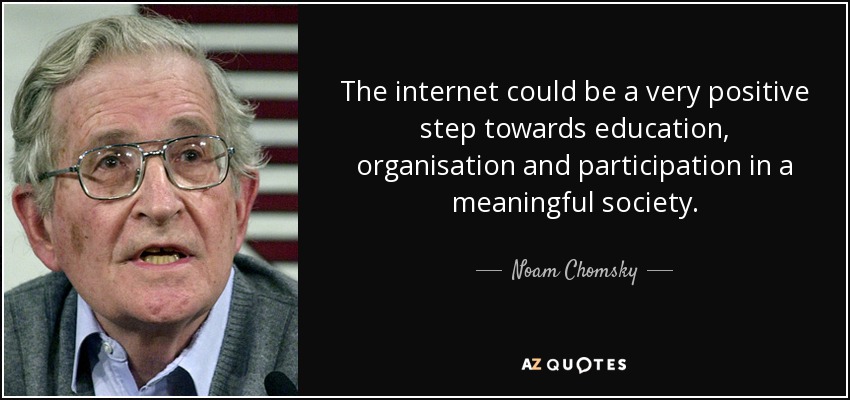
The internet could be a very positive step towards education, organisation and participation in a meaningful society.
Governments of rich countries spend some $6bn of tax money a year on disaster relief and development aid overseas, while each new earthquake, famine or tidal wave can attract 1,000 aid organisations, from the United Nations Children's Fund and Oxfam to the 'Jesus Brigades' of the American south and other charitable adventurers.
The world dominion of western thought, forms of organisation, technology and military force is not God-given, nor eternal, nor greatly appreciated by the rest of the world.
I'm not a fan of giving a website a simple number like an IQ rating because like people they can vary in all kinds of different ways. So I'd be interested in different organisations labelling websites in different ways.
Philip is being very vocal about it. For me, I don't think the story isn't at all anti-religious in any way. I think what's it more against is the control and the misuse of power that any organised religion, or any political organisation exercises over the people they're supposed to represent. I think that, for me, is what's important in the movie.
Then it becomes necessary to get the field organisation to accept the help provided. This is normally the role of the Change Manager; to implement the change that no-one asked for or wants.
In a global race, can we really justify the huge number of expensive peripheral European institutions? Can we justify a commission that gets ever larger? Can we carry on with an organisation that has a multibillion pound budget but not enough focus on controlling spending and shutting down programmes that haven't worked?
It is an in, a grave evil and a disturbance of the right order, for a larger and higher organisation, to arrogate to itself functions which can be performed efficiently by smaller and lower bodies.
Organisations with decision-making speed and imagination will thrive as nobody can claim to have a monopoly over creativity.
The community of masses of human beings has produced an order of life in regulated channels which connects individuals in a technically functioning organisation, but not inwardly from the historicity of their souls.
One must also acknowledge that there are moments in an organisation's development when fresh blood and new vision are required, which may imply that an outsider may be better suited to the leadership role.
The fully developed bureaucratic apparatus compares with other organisations exactly as does the machine with the non-mechanical modes of production.
Economic development is something much wider and deeper than economics, let alone econometrics. Its roots lie outside the economic sphere, in education, organisation, discipline and, beyond that, in political independence and a national consciousness of self-reliance.
I always run inclusive and successful organisations.
A society which discards those who are weak and non-productive risks exaggerating the development of reason, organisation, aggression and the desire to dominate. It becomes a society without a heart, without kindness - a rational and sad society, lacking celebration, divided within itself and given to competition, rivalry and, finally, violence.
Most organisations say they want creativity, but really they do not.
It is tempting to call for better leadership, but we probably expect too much from the leaders of the nations. Those nations are too big, the connections not strong enough, the commitment to the future not long enough. It is better to look smaller, to our now-smaller organisations, to local communities and cities, to families and clusters of friends, to small networks of portfolio people with time to give to something bigger than themselves. We have to fashion our own directions in our own places.
People talk about the businesses of the future needing to be more agile and more responsive if they are to be successful. But this requires a deep change in the way organisations work.
Advertising and the free society are closely connected. Advertising helps to make a free society remain so by increasing competition, and by helping to maintain the freedom of the mass media themselves. The free society is one where advertising and advertising agencies are likely to be in considerable demand, though it is true that even in a totally centralist society there would still be a need for organisations and people to have access to mass communication media.
Family organisation is broken and young animals are increasingly being denied a mother to turn to for comfort and for grooming. One of the saddest and most pathetic of farm practices - inevitable at the present time for the supply of dairy produce - is the separation of the calf from the cow at birth or soon after.
What you of the CHOAM directorate seem unable to understand is that you seldom find real loyalties in commerce. ... Men must want to do things of their own innermost drives. People, not commercial organizations or chains of command, are what make great civilizations work. Every civilization depends upon the quality of the individuals it produces. If you over-organize humans, over-legalize them, suppress their urge to greatness - they cannot work and their civilization collapses.
The doctrine of evolution implies the passage from the most organised to the least organised, or, in other terms, from the most general to the most special. Roughly, we say that there is a gradual 'adding on' of the more and more special, a continual adding on of new organisations. But this 'adding on' is at the same time a 'keeping down'. The higher nervous arrangements evolved out of the lower keep down those lower, just as a government evolved out of a nation controls as well as directs that nation.
... on these expanded membranes [butterfly wings] Nature writes, as on a tablet, the story of the modifications of species, so truly do all changes of the organisation register themselves thereon. Moreover, the same colour-patterns of the wings generally show, with great regularity, the degrees of blood-relationship of the species. As the laws of nature must be the same for all beings, the conclusions furnished by this group of insects must be applicable to the whole world.
We have more than enough programs, organisations, parties, and strategies in the world for the alleviation of suffering and injustice.
I used to work for the World Health Organisation in poor countries all over the world - Bangladesh, Korea, the Philippines and India. You learn a whole range of things about how other people are living and try to connect with them to gain an understanding of where they're coming from.
Follow AzQuotes on Facebook, Twitter and Google+. Every day we present the best quotes! Improve yourself, find your inspiration, share with friends
or simply: