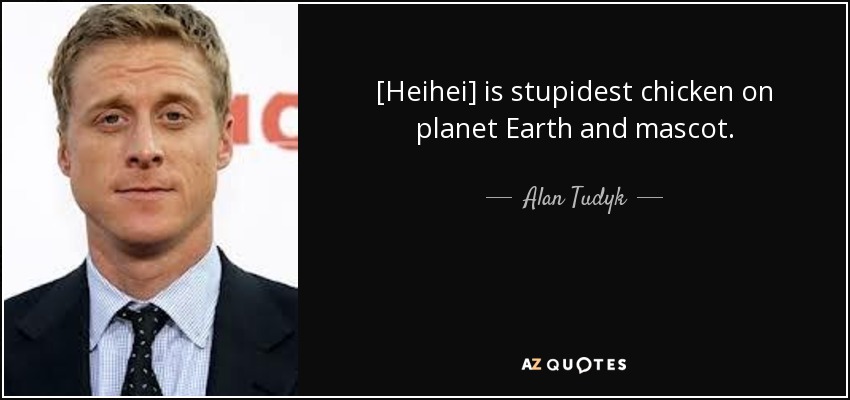
[Heihei] is stupidest chicken on planet Earth and mascot.
"What place would you advise me to visit now?" he asked. "The planet Earth," replied the geographer. "It has a good reputation."
The earth itself assures us it is a living entity. Deep below surface one can hear its slow pulse, feel its vibrant rhythm. The great breathing mountains expand and contract. The vast sage desert undulates with almost imperceptible tides like the oceans. From the very beginning, throughout all its cataclysmic upthrusts and deep sea submergences, the planet Earth seems to have maintained an ordered rhythm.
Natural disasters in Bolivia have been getting worse with the passage of time. It's brought about by a system: the capitalist system, the unbridled industrialization of the resources of the Planet Earth.
The planet earth has a life span of eight billion years, give or take a few million. People have been around for approximately forty thousand years-a virtual blink in the cosmos. It is sad that we as a species are ravaging the natural world so fast that we are jeopardizing our survival. If we wipe ourselves out, it would be the height of folly, but the earth will survive even us. It will eventually restore itself. It might take a few thousand years, and it won't be just as it was before, but its life is stronger than death.
The secret of our success on planet Earth is space. Lots of it. Our solar system is a tiny island of activity in an ocean of emptiness.
If the human species, or indeed any part of the biosphere, is to continue to survive, it must eventually leave the Earth and colonize space. For the simple fact of the matter is, the planet Earth is doomed... Let us follow many environmentalists and regard the Earth as Gaia, the mother of all life (which indeed she is). Gaia, like all mothers, is not immortal. She is going to die. But her line of descent might be immortal. . . . Gaia's children might never die out-provided they move into space. The Earth should be regarded as the womb of life-but one cannot remain in the womb forever.
To our knowledge, life exists on only one planet, Earth. If something bad happens, it's gone. I think we should establish life on another planet-Mars in particular-but we 're not making very good progress. SpaceX is intended to make that happen.
If we can avoid disaster for the next two centuries, our species should be safe as we spread into space. If we are the only intellegent beings in the galaxy we should make sure we survive and continue. . . . Our only chance of long-term survival is not to remain inward looking on planet Earth but to spread out into space. We have made remarkable progress in the last hundred years. But if we want to continue beyond the next hundred years, our future is in space.
In order for life to have appeared spontaneously on Earth, there first had to be hundreds of millions of protein molecules of the Ninth Configuration. But, given the size of the planet Earth, do you know how long it would take for just one of these protein molecules to appear by chance? Roughly 10 to the 243rd power, billions of years; and I find that far, far more fantastic than simply believing in a god.
For here Am I sitting in a tin can, Far above the world. Planet Earth is blue, And there's nothing I can do.
Kansas is a piece of real estate that completely disproves the theory of roundness as a quality of the planet earth.
It is the hope of those who work toward the breakout from planet Earth that the establishment of permanent, self-sustaining colonies of humans off-Earth will ... make human life forever unkillable, removing it from the endangered species list, where it now stands on a fragile Earth overarmed with nuclear weapons. Second, the opening of virtually unlimited new land areas in space will reduce territorial pressures and therefore diminish warfare on Earth itself.
I think the human race doesn't have a future if we don't go into space. We need to expand our horizons beyond planet Earth if we are to have a long-term future. We cannot remain looking inward at ourselves on a small and increasingly polluted and overcrowded planet. We need to look outward to the wider universe.
When I was on The View, Barbara Walters was asking me about the blood and stuff, and I said, 'Well, you know, that's a staple of Japanese cinema.' And then she came back, 'But this is America.' And I go, 'I don't make movies for America. I make movies for planet Earth.'
We've begun at last to wonder about our origins, star stuff contemplating the stars, organized collections of ten billion billion billion atoms contemplating the evolution of matter, tracing that long path by which it arrived at consciousness here on the planet Earth and perhaps throughout the cosmos. Our obligation to survive and flourish is owed not just to ourselves but also to that cosmos, ancient and vast, from which we spring.
Mosquitoes are the greatest mass murderers on planet Earth.
Ko Un's poems evoke the open creativity and fluidity of nature, and funny turns and twists of Mind. Mind is sometimes registered in Buddhist terms - Buddhist practice being part of Ko Un's background. Ko Un writes spare, short-line lyrics direct to the point, but often intricate in both wit and meaning. Ko Un has now traveled worldwide and is not only a major spokesman for all Korean culture, but a voice for Planet Earth Watershed as well.
Which aspects of our nature will prevail is uncertain, particularly when our visions and prospects are bound to one small part of the small planet Earth. But up there in the Cosmos an inescapable perspective awaits.
I was lucky enough to have been born on this planet earth, in this admirable country of the United States of America.
Jesus doesn't just want songs. He wants justice for the people on planet Earth.
We ask everybody to help us to change the world, but we are not talking about our planet Earth; we are talking about the world that each one of us creates within our mind. We are talking about the story that we create.
Climate has always changed. It always has and always will. Sea level has always changed. Ice sheets come and go. Life always changes. Extinctions of life are normal. Planet Earth is dynamic and evolving. Climate changes are cyclical and random. Through the eyes of a geologist, I would be really concerned if there were no change to Earth over time. In the light of large rapid natural climate changes, just how much do humans really change climate?
The masters are men like us who have evolved ahead of us and come to the end of the evolution as a human being on planet earth.
If there was a war, a big war, a major war on the planet, it would be a nuclear war, and it would destroy all life, human and subhuman, on planet earth.
Follow AzQuotes on Facebook, Twitter and Google+. Every day we present the best quotes! Improve yourself, find your inspiration, share with friends
or simply: