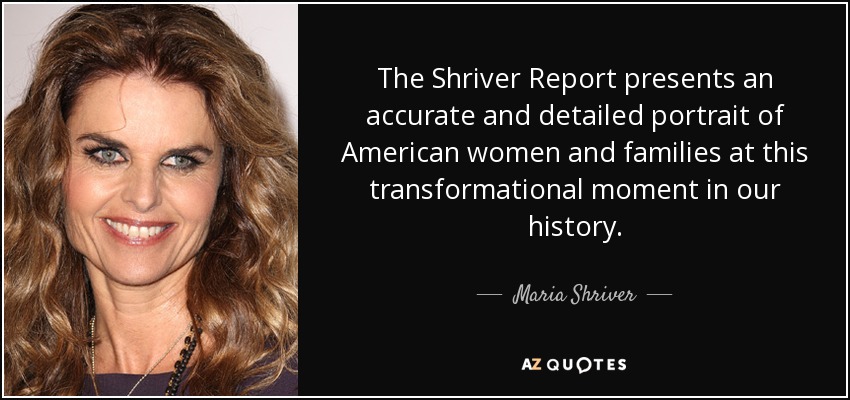
The Shriver Report presents an accurate and detailed portrait of American women and families at this transformational moment in our history.
What a business is this of a portrait painter! You bring him a potato and expect he will paint you a peach.
A Daring Life: A Biography of Eudora Welty is a beautifully written portrait of Eudora Welty and her amazing life. Carolyn J. Brown carries the reader through Welty's long, productive writing career and introduces her family and friends along the way. The book's very readable text, its lovely use of Welty quotes, and its excellent photographs make the work a treasure. This intimate look at Eudora Welty is a welcome addition for her readers.
It’s not easy to find old-school journalism in true crime … yet with Lethal Intent, author Sue Russell proves how integrity, tenacity, brutal truth and honest reporting become essential components to what is a riveting—if not terrifying—narrative of America’s most hated ‘monster,’ Aileen Carol Wuornos. It’s not easy humanizing serial killers, but through an objective lens, clear and defined, Russell paints a graphic portrait of Wuornos’ evil intentions and rough life—a true page-turner, breathless, intense—but also important.
Cristina Eisenberg weaves her observations as a scientist and her personal experiences afield into a resonant account about the web of life that links humans to the natural world. Grounded in best science, inspired by her intimate knowledge of the wolves she studies, she offers us a luminous portrait of the ecological relationships that are essential for our well-being in a rapidly changing world. The Wolf's Tooth calls for a conservation vision that involves rewilding the earth and honoring all our relations.
So many people dislike themselves so thoroughly that they never see any reproduction of themselves that suits. None of us is born with the right face. It’s a tough job being a portrait photographer.
Sometimes small incidents, rather than glorious exploits, give us the best evidence of character. So, as portrait painters are more exact in doing the face, where the character is revealed, than the rest of the body, I must be allowed to give my more particular attention to the marks of the souls of men.
I make figurative portraits as a way to explore theories of quantum physics.
Every image is in some way a “portrait,” not in the way that it would reproduce the traits of a person, but in that it pulls and draws (this is the semantic and etymological sense of the word), in that it extracts something, an intimacy, a force.
Understand this: we are both tiny and massive. We are nothing more than molded clay given breath, but we are nothing less than divine self-portraits, huffing and puffing along the mountain ranges of epic narrative arcs prepared for us by the Infinite Word Himself.
Don’t try to capture a man in one synthetic portrait, but rather in lots of snapshots taken at different times and in different circumstances.
My paintings are loosely based on meta narratives. The pictures float in and out of pictorial genres. Still life's become personified, portraits become events, and landscapes become constructions. I embrace the area between which the subject is composed and decomposing, formed and formless, inanimate and alive.
My work has been about making a record of my life that no one can revise. I photograph myself in times of trouble or change in order to find the ground to stand on in the change. I was coming out of a melancholic phase. This was taken when I was traveling extensively, on the road from hotel to hotel. You get displaced, and then taking self-portraits becomes a way of hanging on to yourself.
Bruheem kol dumuyay eloha! Blessed are all God's self-portraits.
Tim Thornton's portrait of a pop culture obsession is so convincing that one can't help wishing that his fictional alt rock band actually existed, or suspecting that they did. The Alternative Hero is a weirdly compelling portrait of fanatic fandom which reads like High Fidelity at high volume.
Oh, you ask me, what is the greatest torture of a person who does portraits for a living? I could fill several volumes with nice nasty stories. I don't know.
I think I was driven to paint portraits to commit images of friends and family to memory. I have face blindness, and once a face is flattened out, I can remember it better.
[Raphael's] great superiority is due to the instinctive sense which, in him, seems to desire to shatter form. Form is, in his figures, what it is in ourselves, an interpreter for the communication of ideas and sensations, an exhaustless source of poetic inspiration. Every figure is a world in itself, a portrait of which the original appeared in a sublime vision, in a flood of light, pointed to by an inward voice, laid bare by a divine finger which showed what the sources of expression had been in the whole past life of the subject.
The longing of my heart is a fairy portrait of myself: I want to be pretty; I want to eliminate facts and fill up the gap with charms.
I also remember when I watched Henry: Portrait of a Serial Killer [1990] at, like, age 15. That scared the crap out of me. Because it didn't operate inside the usual conventions of the horror genre in the way that I could accept. I can accept horny teenager counselors being murdered at camp. But I couldn't accept the derangement of Henry: Portrait of a Serial Killer, which was that anyone could be murdered at any moment - whole families, with no build-up music and no meaning. It terrified me.
Listen: if I am a painter and I do your portrait, have I or haven't I the right to paint you as I want?
Photography freed painting from a lot of tiresome chores, starting with family portraits.
The severe schools shall never laugh me out of the philosophy of Hermes, that this visible world is but a picture of the invisible, wherein as in a portrait, things are not truly, but in equivocal shapes, and as they counterfeit some real substance in that invisible fabric.
I am living a new and exalted life of late. It steeps me in a sacred rapture to see a portrait develop and take soul under my hand. First, I throw off a study - just a mere study, a few apparently random lines - and to look at it you would hardly ever suspect who it was going to be; even I cannot tell, myself.
In front of the model I work with the same will to reproduce truth as if I were making a portrait. I do not correct nature, I incorporate myself into it; it directs me. I can only work with a model. The sight of human forms nourishes and comforts me.
Follow AzQuotes on Facebook, Twitter and Google+. Every day we present the best quotes! Improve yourself, find your inspiration, share with friends
or simply: