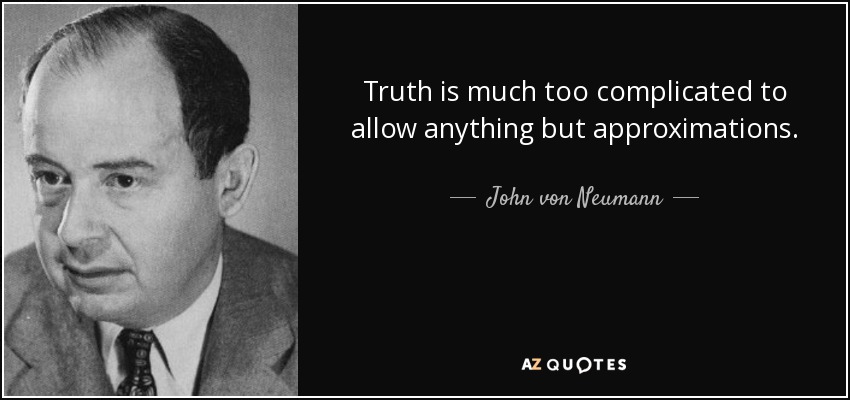
Truth is much too complicated to allow anything but approximations.
We live at a time that is notable for the polemical nature of discussions about identity, consciousness, rationality, agency, memory, and feeling. 'New atheists' and reductive materialists conduct gladiatorial debates against defenders of faith and enemies of reductionism. Lots of heat is produced, but, alas, little light is shed. How marvelous it is, then, to see this fine new book by Lenn E. Goodman and Gregory Caramenico. Here is a learned, illuminating, and decidedly non-polemical treatment of the classic questions of soul, mind, and brain-an exemplary work of scholarship.
Humans were eventually irrational creatures gifted with the power of rationality.
A man demonstrates his rationality, not by a commitment to fixed ideas, stereotyped procedures, or immutable concepts, but by the manner in which, and the occasions on which, he changes those ideas, procedures, and concepts.
Philosophy ought to be able to give an account of rationality that is not wholly detached from science's account of nature, even if it is not straightforwardly reducible to it.
The tangible source of exploitation disappears behind the façade of objective rationality.
A conviction akin to religious feeling of the rationality or intelligibility of the world lies behind all scientific work of a high order.
First, study the present construction. Second, ask for all past experiences ...study and read everything you can on the subject.
I regard individuality as the most precious trait we have, because without it there is no creativity, there is no consciousness, there is no rationality. There is nothing that could make me speak more strongly to this point.
The music of the soul is also the music of salesmanship. Exchange value, not truth value counts. On it centers the rationality of the status quo, and all alien rationality is bent to It.
I ask the fundamental question of rationality: Why do you believe what you believe? What do you think you know and how do you think you know it?
Even intellectuals should have learned by now that objective rationality is not the default position of the human mind, much less the bedrock of human affairs.
Thinking is more interesting than knowing, but less interesting than looking.
The term "rational" and its variants (rationality, rationalism) are used in a lot of contexts in economic debate, both positively and negatively, but nearly always sloppily or dishonestly. A specimen I've seen on more occasions than I can count is the line (usually presented with a sense of witty originality) "if you are opposed to economic rationalism, you must be in favor of economic irrationalism"... I've come to the conclusion that the word "rational" has no meaning that cannot better be conveyed by some alternative term and that the best advice is probably to avoid it altogether.
Nothing sedates rationality like large doses of effortless money.
If man has been kicked up out of that which is only impersonal by chance , then those things that make him man-hope of purpose and significance, love, motions of morality and rationality, beauty and verbal communication-are ultimately unfulfillable and thus meaningless.
Fear cannot be without hope nor hope without fear. [They are the two sides of a coin, so learning how to manage fear through learning, understanding, rationality, controlled imagination, preparation, mental focus (including distraction) and a gratitude attitude is very helpful.]
Why do we not exhaust the heritage of the ages, spiritual and material for our immediate pleasure, and let posterity go hang? So far as simple rationality is concerned, self-interest can advance no argument against the appetite of present possessors. Yet within some of us, a voice that is not the demand of self-interest or pure rationality says that we have no right to give ourselves enjoyment at the expense of our ancestors' memory and our descendants' prospects. We hold our present advantages only in trust.
There is always some madness in love.
There must be only three supreme values which govern a person's life: Reason, Purpose, and Self-esteem. Reason, as his only tool of knowledge--Purpose, as his choice of the happiness which that tool must proceed to achieve--Self-esteem, as his inviolate certainty that his mind is competent to think and his person is worthy of happiness, which means: is worthy of living. These three values imply and require all of man's virtues, and all his virtues pertain to the relation of existence and consciousness: rationality, independence, integrity, honesty, justice, productiveness, pride.
It is not the slumber of reason that engenders monsters, but vigilant and insomniac rationality
In general, we’re least aware of what our minds do best.
Buffett’s genius was largely a genius of character—of patience, discipline, and rationality.
The hope for the twentieth century rests on recognition that war and depression are man-made, and needless. They can be avoided in the future by turning from the nineteenth-century characteristics just mentioned (materialism, selfishness, false values, hypocrisy, and secret vices) and going back to other characteristics that our Western Society has always regarded as virtues: generosity, compassion, cooperation, rationality, and foresight, and finding a increased role in human life for love, spirituality, charity, and self discipline.
Anger may bring extra energy, but it eclipses the best part of our brain: its rationality. The energy of anger is almost always unreliable.
Follow AzQuotes on Facebook, Twitter and Google+. Every day we present the best quotes! Improve yourself, find your inspiration, share with friends
or simply: