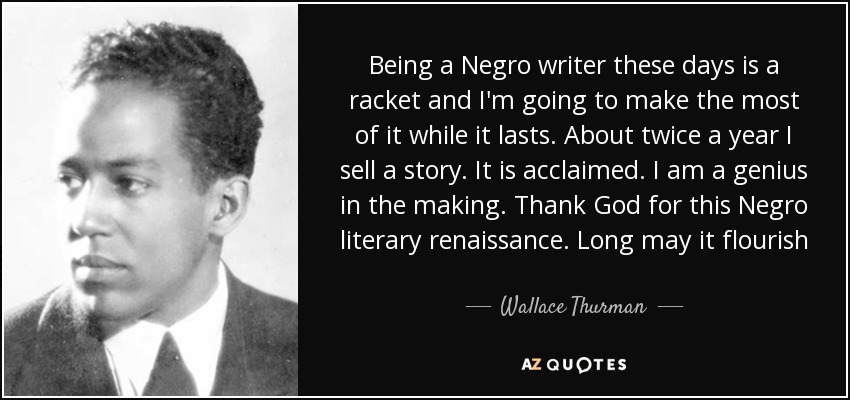
Being a Negro writer these days is a racket and I'm going to make the most of it while it lasts. About twice a year I sell a story. It is acclaimed. I am a genius in the making. Thank God for this Negro literary renaissance. Long may it flourish
I'm looking to evolve the concept of the new renaissance artist, taking the world by storm through the art of public display and demonstration, with technical savvy, using cell phones and computers.
People will get tired of overly retouched images soon and they'll want something different. If people have too much reality, they want fantasy. What matters most is what the image communicates. I remember the first roll of film I shot at high school, the contact sheet went from these really worthy images of cracks in the wall and ended up with all of my dancer friends naked in Renaissance poses.
When you get a new worldview you get a new world. It's like the shift from medieval Christianity to the Renaissance and enlightenment.
I certainly think there are things that impressed me as a child about the church. The smells and the sounds and the pagaentry of it remained with me. The aesthetic I really love. I think a lot of my sense of melody comes from singing those hymns and doing the renaissance music and stuff.
It's easy to say "This year in art sucked." After all, about 85 percent of all shows of contemporary art are bad. But 85 percent of all art made in the Renaissance was bad.
Renaissance man, woman, either way it's a worthy pursuit! Like the painters of Emilia's day, I was raised in an environment that encouraged creative expression. Both my parents were artists, who didn't think much of TV and refused to upgrade our old black and white set. To entertain myself, I made art and wrote puppet shows.
We're lucky to be in the middle of a TV renaissance. It's the healthiest storytelling medium in our culture.
A lot of people who want to see the short story have a renaissance of readership - they tend to think of short stories, and sometimes poems too, as being well-suited to the way we now live, with all of these broken-up bits of time. I hope they're right, but my sense is that our fiction reading has become, if anything, more cherished as a kind of escape from fragmentation.
As an artist, I identify with Sandro Botticelli. We know him as the man who painted Primavera and The Birth Of Venus. The goddesses and ancient subjects he chose represented virtues which were meant to inspire people. Then he went through a dark phase when he was listening to the sermons of Savonarola, who preached against the worldly pleasures of the Renaissance. But Botticelli's works live on, inspiring people to this day. Five hundred years after his death, he still has thousands of fans!
In a sense, Open City is a kind of Wunderkammer, one of those little rooms assembled with bric-a-brac by Renaissance scholars. I don't mean it as a term of praise: these cabinets of curiousities contained specific sorts of objects - maps, skulls (as memento mori), works of art, stuffed animals, natural history samples, and books - and Open City actually contains many of the same sort of objects. So, I don't think it's as simple as literary inclusiveness.
While nothing is certain, I firmly believe our nation is on the verge of a nuclear energy renaissance.
There's a creativity, a power, an energy, an ability to do things unlike any other period in history. It's a little bit like sitting in the Renaissance, but multiplied a thousand-fold.
Exploration belongs to the Renaissance, travel to the bourgeois age, tourism to our proletarian moment.
I am what I have always been: the last Renaissance man, if I may be allowed to say so.
But very early in life I became part of the majority culture and now don't think of myself as a minority. Yet the university said I was one. Anybody who has met a real minority - in the economic sense, not the numerical sense - would understand how ridiculous it is to describe a young man who is already at the university, already well into his studies in Italian and English Renaissance literature, as a minority.
I came from a white middle class neighborhood. Was I expected to go back there and teach the woman next door about Renaissance sonnets? The embarrassing truth of the matter was that I was being chosen because Yale University had some peculiar idea about what my skin color or ethnicity signified.
I like things that are kind of eclectic, when one thing doesn't go with another. That's why I love Rome. The town itself is that way. It's where Fascist architecture meets classic Renaissance, where the ancient bangs up against the contemporary. It has a touch of everything. That's my style, and that's what my work is about.
When we talk about the future, we often talk about it as damage and limitation exercise. That needn't be the case - it could be a Renaissance.
Eric Walrond, handsome, cosmopolitan, and beguilingly enigmatic, may have been the most promising literary talent of the Harlem Renaissance.... James Davis's finely written, beautifully paced Eric Walrond is a major biography of a fascinating figure.
A housing renaissance has begun. This may be hard to believe after the dizzying, six-year-long crash in home sales, construction and house prices. But housing turned the corner last year, and it will take off in 2013.
America became a special source of attraction to people who were fleeing the aftereffects of the 30 Years War and the religious persecution that began to sweep through Europe in the period between the Renaissance and the Enlightenment. And when people got here, very often they succeeded.
Everybody in mathematics had given up for 100 years or 200 years the idea that you could from pictures, from looking at pictures, find new ideas. That was the case long ago in the Middle Ages, in the Renaissance, in later periods, but then mathematicians had become very abstract.
If you had a front row seat at the Renaissance, you would have seen Machiavelli come by plotting, and you would have seen murders in the streets, you would have seen violence, you have seen people burning books and it would have looked like the world was a horrible place, but that's where all these incredible stuff we're still living with comes out of.
Leisure was the sine qua non of the full Renaissance. The feudal nobility, having lost its martial function, sought diversion all over Europe in cultivated pastimes: sonneteering, the lute, games and acrostics, travel, gentlemanly studies and sports, hunting and hawking, treated as arts.
Follow AzQuotes on Facebook, Twitter and Google+. Every day we present the best quotes! Improve yourself, find your inspiration, share with friends
or simply: