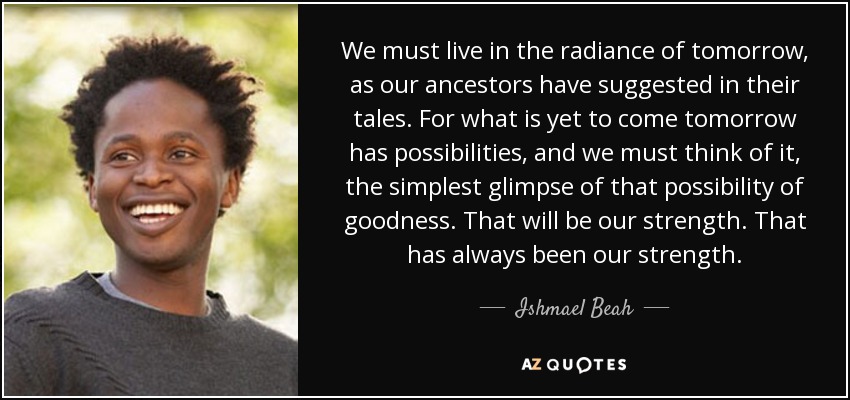
We must live in the radiance of tomorrow, as our ancestors have suggested in their tales. For what is yet to come tomorrow has possibilities, and we must think of it, the simplest glimpse of that possibility of goodness. That will be our strength. That has always been our strength.
Jennifer Fulwiler's story of finding God when you aren't looking for Him is a universal tale which will touch many hearts. With warmth and unflinching candor she leads us through a personal journey of faith and maturity that is as funny as it is affecting.
Victoria Roberts spins an exciting Highland tale of intrigue, betrayal, and love with a braw Highland hero and strong English heroine any reader will love.
All lives are tales. Some spread, and grow in the telling. Others are just told between us and the gods, muttered back and forth behind our days, but those tales grow too and shake us just as fierce.
As the mother of six, Karen Santorum knows the power of stories to shape and mold the nature of our children. In Everyday Graces, Karen has complied a treasure chest of tales that helps us raise the next generation of children into adults of kind compassion. Everyday Graces is a must for families that desire their children to become people of character.
William Shakespeare was the most remarkable storyteller that the world has ever known. Homer told of adventure and men at war, Sophocles and Tolstoy told of tragedies and of people in trouble. Terence and Mark Twain told cosmic stories, Dickens told melodramatic ones, Plutarch told histories and Hans Christian Andersen told fairy tales. But Shakespeare told every kind of story – comedy, tragedy, history, melodrama, adventure, love stories and fairy tales – and each of them so well that they have become immortal. In all the world of storytelling he has become the greatest name.
Adam Roberts is the affable and infectiously curious friend we all wish we had with us in the kitchen—the one who prods us with questions, entertains us with amusing tales, and makes us feel better when our cake flops.
A massive and brilliant accomplishment--the first English translation of the original Grimm brothers' fairy tales. The plain telling is that much more forceful for its simplicity and directness, particularly in scenes of naked self-concern and brutality. Hate, spite, love, magic, all self-evident, heartbreaking, delightful. I will return to this book over and over, no doubt about it.
I have a bold plan to break from the Bloomberg years, and end the 'Tale of Two Cities' by providing real opportunity to all New Yorkers, no matter where they live.
If you read folklore and mythology, any kind of myths, any kind of tall tales, running is always associated with freedom and vitality and youthfulness and eternal vigor. It's only in our lifetime that running has become associated with fear and pain.
A heartwarming tale of Christmas past that's chock full of all the wit and hilarity we admire in America's favorite humorist--Mark Twain. Carlo DeVito brings us back one hundred years to a magical time in Twain's family life, revealing a house that's brimming with love and laughter, as well as the profound heartbreaks of life. A Mark Twain Christmas only deepens our understanding and respect for both the man and his work.
Jacqueline Carey has created a postmodern fable of enormous scope and force. Santa Olivia is at once a cautionary tale of people caught in a web of lies and creeping terror, and a love song to the beauty and power of being different. At the novel's heart is the kind of grace Carey is known for: an illumination of the strength that lies hidden inside all of us.
My heart beats more for a raw, average vulgar art, which doesn't live between sleepy fairy-tale moods and poetry but rather concedes a direct entrance to the fearful, commonplace, splendid and the average grotesque banality in life.
The delight we experience when we allow ourselves to respond to a fairy tale, the enchantment we feel, comes not from the psychological meaning of the tale (although this contributes to it) but from its literary qualities-the tale itself as a work of art.
To young men contemplating a voyage I would say go. The tales of rough usage are for the most part exaggerations, as also are the tales of sea danger. To face the elements is, to be sure, no light matter when the sea is in its grandest mood. You must then know the sea, and know that you know it, and not forget that it was made to be sailed over.
For sheer drama, few accounts of slavery match Solomon Northup's tale of abduction from freedom and forcible enslavement.
Everything that I have told you is, of course, a fairy tale. Life is magical, after all. Nothing is safe and everything changes.
And you must tell the child the legends I told you - as my mother told them to me and her mother to her. You must tell the fairy tales of the old country. You must tell of those not of the earth who live forever in the hearts of the people.
Magical, yes, but THE SNOW CHILD is also satisfyingly realistic in its depiction of 1920s homestead-era Alaska and the people who settled there, including an older couple bound together by resilient love. Eowyn Ivey's poignant debut novel grabbed me from the very first pages and made me wish we had more genre-defying Alaska novels like this one. Inspired by a fairy tale, it nonetheless contains more depth and truth than so many books set in this land of extremes.
My intention was to grapple with the metaphysical meaning behind Scheherazade and present that meaning in its essence. Scheherazade is the symbol of the savior. She weaves tales not to save her own life, but to save humanity from its unending retributive response to injury.
Henri-Georges Clouzot's cool, clammy, twisty 1955 thriller Diabolique is an almost perfect movie about a very nearly perfect murder, a film in which the artist's methods and the killers' are ideally matched, equal in cunning and in ruthlessness. The screenplay, adapted by Clouzot and three other writers from a novel by the crack French crime-fiction team of Pierre Boileau and Thomas Narcejac, is a fantastically elaborate piece of contrivance, but the scrupulous realism of the direction makes the unnatural tale somehow feel entirely likely.
Pleasing things: finding a large number of tales that one has not read before. Or acquiring the second volume of a tale whose first volume one has enjoyed. But often it is a disappointment.
Each of us has been designed for one of two immortal functions, as either a storyteller or as a cross-legged listener to tales of wonder, love, and daring. When we cease to tell or listen, then we no longer exist as a people.
And the people listened, and their faces were quiet with listening. The story tellers, gathering attention into their tales, spoke in great rhythms, spoke in great words because the tales were great, and the listeners became great through them.
Typically, the hero of the fairy tale achieves a domestic, microcosmic triumph, and the hero of myth a world-historica l, macrocosmic triumph. Whereas the former-the youngest or despised child who becomes the master of extraordinary powers-prevails over his personal oppressors, the latter brings back from his adventure the means for the regeneration of his society as a whole.
Follow AzQuotes on Facebook, Twitter and Google+. Every day we present the best quotes! Improve yourself, find your inspiration, share with friends
or simply: