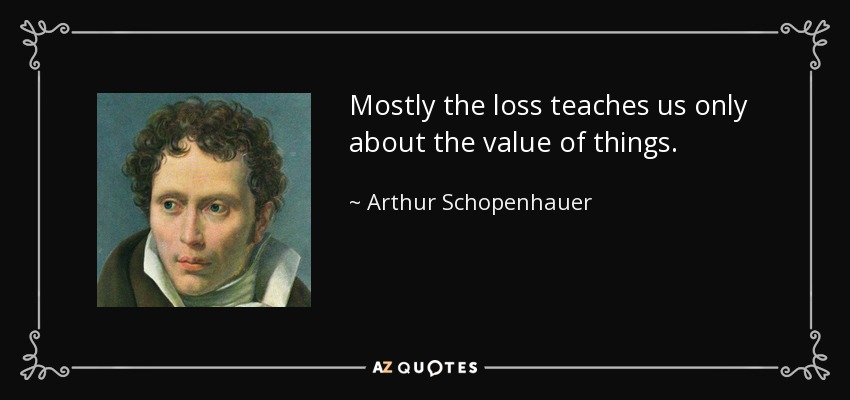
Mostly the loss teaches us only about the value of things.
The authentic religion teaches you to discover your immortality, to discover the god within you.
When you're a little kid, growing up, most of us know what's right and wrong. Our parents teach us that discipline.
I'm not looking for Bible verses to back up a lifestyle of passiveness. I'm looking for Bible verses and life experiences to teach me to live more radically for Christ.
I am very scared at the beginning of each book, because I've never written it before. I feel I have to teach myself how to do it.
Recovery culture teaches you that you have to repent. I don't think that's necessary.
The first fiction I ever wrote was short stories. I was writing short stories in my late teens and early twenties, and I think it's how you teach yourself to write.
We know that African American students tend to be relational learners. It's about the relationships between a teacher and student. Students respond well to teachers they know, believe in them, care about them, but also who teach in a matter that elicits a more active approach to learning, rather than just sitting and listening. The research on this is strong and has been available for a long time, but it is not widely practiced. That's a huge obstacle.
Oh, I usually don't know a whole lot about a subject when I begin; the process itself teaches me a lot as I go along. Usually I know enough about one narrow area of the subject to start myself going, and then everything - including a lot more research - follows from that.
Does research get in the way of the story? It certainly can. Anything can, given that as writers we're all geniuses at procrastination. But mostly research teaches me about the world. Which often shows me the way, in terms of the story.
Yoga has stopped me from destroying my joints after running. It slows me down. My brain and body can go into overdrive - yoga teaches me to focus on the moment and not get ahead of myself.
I love to read and teach experimental fiction but yes, neither this work nor my first novel is really that experimental. It uses some experimental techniques but in the end, I would not say that it is experimental. I'm not sure why. I do a lot of writing on my own, and I have always just written this way.
I used to teach writing in a federal prison, and for my students' benefit, I would liken the narrative use of this highly personal point of view to a boxer's getting in close to his opponent.
My god, people are selling their work and people are reading it! The horror! That MFA programs have to advertise that they'll let you write YA or fantasy or what-have-you is just absurd, but we do, because the presumption is that they're closed to that sort of thing. You're offering an MFA in creative writing? Teach people how to write well, worry about that part, let the writers come up with the stories.
I also liked it when professors assigned us stories that they love. In general, I liked workshops more when they were more than just a workshop, when the professor took the time to actually guide us as young writers and teach us things it took them a long time to figure out on their own. I could probably write ten pages on this question.
They didn't teach Nietzsche in the philosophy department at Harvard; philosophy there was strictly analytical stuff and the poetic ramblings of Nietzsche did not belong. And see - you are teaching it in a literature class - so they must have been right.
I have a friend who teaches yoga (or is it pilates?), and she said that I don't seem to live in the moment. And I said, "Exactly!" I'd go nuts if I lived in the moment.
Everyone and everything that shows up in the world of form in this universe originates not from a particle, as quantum physics teaches us, but from an energy field. That energy field can be called God, soul, spirit, or consciousness. It looks a certain way, sounds a certain way, and feels a certain way. I try to stay in harmony with what I believe it sounds and feels like.
You could have a kid that is going to get in trouble a little bit, and you can teach them as much as you can, and hopefully they'll go the right way.
As a matter of fact, I constantly tell audiences all over the world that the single greatest icon of American culture from the publication of "To Kill A Mockingbird" was that novel so that if we say, what conversation can we have that would lead us on a road of tolerance, and teachers have decided that if you're going to teach values in a school in America, the answer that American teachers at all kinds of schools have come up with, just let Harper Lee teach "To Kill A Mockingbird." And then all the teacher has to do is stand back and guide the discussion.
And one thing the void certainly can teach us is how to wait, how to become truly patient, and how to let go of superfluous intellectual baggage - all of which is a good lesson for hyper-agitated multi-tasking goal-focussed contemporary human beings.
Shake It Up definitely teaches kids about the importance of reaching for your dreams and setting high goals. It also teaches great lessons about friendship and family.
Christianity alone teaches that our only way for reconciliation with God is by his grace that is received through faith.
What I teach is how to go inside and reach that place I call "love consciousness." This is a place of peace and joy that is within all humans.
Basically, my mother is a piano teacher, and she actually teaches piano at Yamaha School of Music today. She's a really, really amazing human being and is very patient. She had enough patience for me, as a kid, which I'm very thankful for. She made sure that music was a part of my general education as well.
Follow AzQuotes on Facebook, Twitter and Google+. Every day we present the best quotes! Improve yourself, find your inspiration, share with friends
or simply: