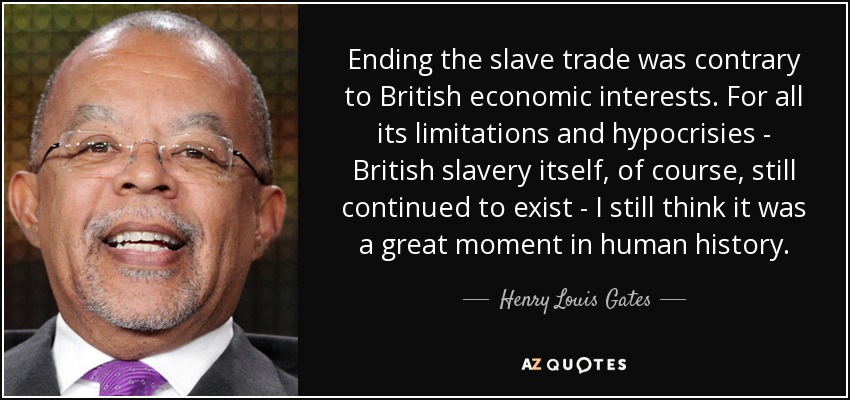
Ending the slave trade was contrary to British economic interests. For all its limitations and hypocrisies - British slavery itself, of course, still continued to exist - I still think it was a great moment in human history.
The main difference lies in wage levels, which is because our workers are not yet as well trained as in other countries. We are a poor country. This is why we must accept the conditions that prevail in international markets. But our trade unions do represent the rights of workers.
German businesspeople have invested a great deal in our country, and trade is flourishing. We want to speed up economic cooperation. Your country is a large, important provider of aid, and it has done a great deal to reduce the poverty of many Vietnamese.
It is not far-fetched to draw a line from Operation Ajax through the Shah's repressive regime and the Islamic Revolution to the fireballs that engulfed the World Trade Center in New York.
When you're trading well, you have a better mental attitude. When you're trading poorly, you start wishing and hoping. Instead of getting into trades you think will work, you end up getting into trades you hope will work.
Now in regard to trades and other means of livelihood, which ones are to be considered becoming to a gentleman and which ones are vulgar, we have been taught, in general, as follows. First, those means of livelihood are rejected as undesirable which incur people's ill-will, as those of tax-gatherers and usurers. Unbecoming to a gentleman, too, and vulgar are the means of livelihood of all hired workmen whom we pay for mere manual labour, not for artistic skill; for in their case the very wage they receive is a pledge of their slavery.
If you get rid of a lot of the poseurs by destroying record companies, maybe it's a good trade-off.
We have an international system. We all profit from it. Trade profits from it. Peace. We can travel around the world because of it. And part of that system is certain ideas, the certain ideas you can't invade other countries for no reason. You can't commit genocide. You can't - rogue regimes can't have nuclear weapons, and you can't gas your own people.
Before you trade sandwiches, check between the bread.
J.P. Morgan once had a friend who was so worried about his stock holdings that he could not sleep at night. The friend asked, 'What should I do about my stocks?' Morgan replied, 'Sell down to your sleeping point' Every investor must decide the trade-off he or she is willing to make between eating well and sleeping well. High investment rewards can only be achieved at the cost of substantial risk-taking. So what is your sleeping point? Finding the answer to this question is one of the most important investment steps you must take.
One of the most basic and pervasive social processes is the sorting and labeling of things, activities, and people... Sorting and labeling processes involve a trade-off of costs and benefits. In general, the more finely the sorting is done, the greater the benefits - and the costs... Sorting and labeling, whether of people or of things, is a sorting and labeling of probabilities rather than of certainties.
Soros is the best loss taker I've ever seen. He doesn't care whether he wins or loses on a trade. If a trade doesn't work, he's confident enough about his ability to win on other trades. There are a lot of shoes on the shelf; wear only the ones that fit. If you're extremely confident, taking a loss doesn't bother you.
The key to investment success is emotional discipline. Making money has nothing to do with intelligence. To be a successful investor, you have to be able to admit mistakes. I trained a guy to trade who had a 188 IQ. He was on "Jeopardy" once and answered every question correctly. That same person never made a dime in trading during 5 years!
To know how to live is my trade and my art.
That's our mirror. Every dip, every crash, every bubble that's burst, a testament to our brilliant stupidity. This one gave us the railroads. This one the Internet. This one the slave trade. And if we hope to do anything about saving the environment, or getting to other worlds, we'll need a bubble for that too. Everything I've ever done in my life worth anything has been done in a bubble: in a state of extreme hope and trust and stupidity.
As long as capital-both human and money-can move toward opportunity, trade will not balance.
An unsuccessful manager blames failure on his obligations; the effective manager turns them to his own advantage. A speech is a chance to lobby...a visit to an important customer a chance to extract trade information.
Modern war is so expensive that we feel trade to be a better avenue to plunder; but modern man inherits all the innate pugnacity and all the love of glory of his ancestors.
Those who would trade safety for freedom deserve neither.
Ukraine is also successfully moving toward democracy and making progress expanding freedoms and rights to its people. We can help Ukraine achieve these goals and improve its economy by normalizing trade relations.
War is a serious game in which a man risks his reputation, his troops, and his country. A sensible man will search himself to know whether or not he is fitted for the trade.
The First Amendment guarantees liberty of human expression in order to preserve in our Nation what Mr. Justice Holmes called a "free trade in ideas." To that end, the Constitution protects more than just a man's freedom to say or write or publish what he wants. It secures as well the liberty of each man to decide for himself what he will read and to what he will listen. The Constitution guarantees, in short, a society of free choice.
Law is not a trade, not briefs, not merchandise, and so the heaven of commercial competition should not vulgarize the legal profession.
In politics and in trade, bruisers and pirates are of better promise than talkers and clerks.
I would trade all my tomorrow's for one single yesterday.
Follow AzQuotes on Facebook, Twitter and Google+. Every day we present the best quotes! Improve yourself, find your inspiration, share with friends
or simply: