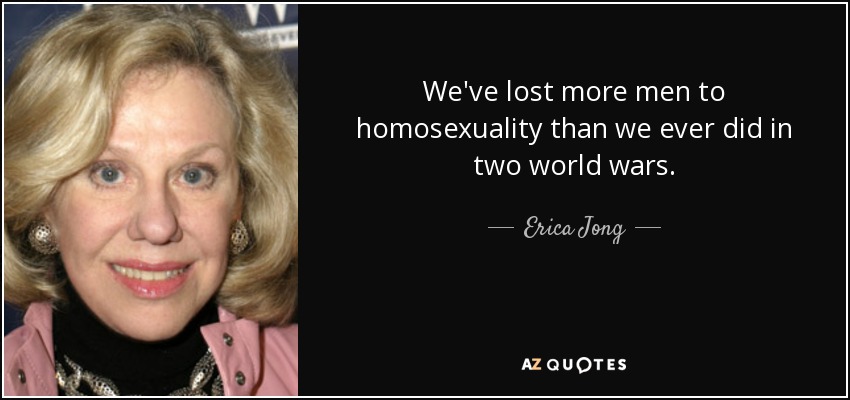
We've lost more men to homosexuality than we ever did in two world wars.
Speaker, with mixed emotions we mark the 50th anniversary of the Turkish genocide of the Armenian people. In taking notice of the shocking events in 1915, we observe this anniversary with sorrow in recalling the massacres of Armenians and with pride in saluting those brave patriots who survived to fight on the side of freedom during World War I.
I only take vitamin B complex. Before World War II, I used to take ionized yeast, because in the pre-war era we never heard about vitamins.
We had the great depression, we had two world wars, we had the flu epidemic. We had oil shock. We had all these terrible things happen. But something about the American system unleashed more and of a potential to human beings over that hundred years so that we had a seven for one improvement in - there's never been any - I mean, you have centuries where if you've got a 1 percent improvement, then it's something. So we've got a great system. And we've got more productive capacity now than we ever have.
The good thing about Egypt is, between the two World Wars, Egypt was - had a liberal society. It has a political life. It has parties. It was not - it was dysfunctional in many ways, but it was not a very repressive regime. Egypt, at one time, was the bellwether of the Arab world, was the trendsetter, created great culture, movies, cinema, you name it.
The world is near escalating to World War Three and where are the leaders of each religion? Why aren't they having a conclave; why aren't they coming together?
Now, God be thanked Who has matched us with His hour, And caught our youth, and wakened us from sleeping, With hand made sure, clear eye, and sharpened power, To turn, as swimmers into cleanness leaping.
... the next war will be a war in which people not armies will suffer, and our boasted, hard-earned civilization will do us no good. Cannot the women rise to this great opportunity and work now, and not have the double horror, if another war comes, of losing their loved ones, and knowing that they lifted no finger when they might have worked hard?
Science was blamed for all the horrors of World War I, just as it's blamed today for nuclear weapons and quite rightly. I mean World War I was a horrible war and it was mostly the fault of science, so that was in a way a very bad time for science, but on the other hand we were winning all these Nobel Prizes.
Almost everybody wore a curious limpidity of expression, like newborn babies or souls just after death. Dazed but curiously dignified.... after a criseof hysterical revulsion and tiredness, I passed beyondand became entered by a rather sublime feeling.
... there was the first Balkan war and the second Balkan war and then there was the first world war. It is extraordinary how having done a thing once you have to do it again, there is the pleasure of coincidence and there is the pleasure of repetition, and so there is the second world war, and in between there was the Abyssinian war and the Spanish civil war.
The times are so peculiar now, so mediaeval so unreasonable that for the first time in a hundred years truth is really stranger than fiction. Any truth.
What I hated even more than the conflict was the lurid spectacle of a world of unreason.
If, then, this civilization is to be saved, if it is not to be submerged by centuries of barbarism, but to secure the treasures ofits inheritance on new and more stable foundations, there is indeed need for those now living fully to realize how far the decay has already progressed.
While American men are fighting to rid the old world of autocracy let American women set to and rid the new world of this intolerable old burden of sex ignorance.
John Glenn's father, known as Herschel, was mostly deaf from injuries in World War I. To help out at home, young Glenn sold rhubarb all over town from the family garden.
The financial interdependence of the world's banks is like the interlocking alliances that predated World War I.
History counts its skeletons in round numbers. A thousand and one remains a thousand, as though the one had never existed: an imaginary embryo, an empty cradle, ... emptiness running down steps toward the garden, nobody's place in line.
Until the Second World War, it was unthinkable for a married woman of the working or middle class to disgrace her husband by working after marriage, because her employment indicated that he was a poor provider
During the first World War women in the United States had a chance to try their capacities in wider fields of executive leadershipin industry. Must we always wait for war to give us opportunity? And must the pendulum always swing back in the busy world of work and workers during times of peace?
It is the women of Europe who pay the price while war rages, and it will be the women who will pay again when war has run its bloody course and Europe sinks down into the slough of poverty like a harried beast too spent to wage the fight. It will be the sonless mothers who will bend their shoulders to the plough and wield in age-palsied hands the reaphook.
We were such a part of everybody's life in the Second World War. We represented something overseas and at home - a sort of security.
I don't know what the country's coming to. Everyone trying to be better than their betters--mink coats and no manners. No wonder Germany's arming.
If the World War [I] demonstrated anything it was that government ownership is fraught with the gravest dangers and usually leads to disaster. Take Britain. The two problems which have caused the greatest trouble since the war ended have been transportation and coal. The government seized both industries when the war broke out. It got them into such a hopeless mess that it does not know how to turn [In] coal; the government now realizes, it took hold of the tail of a wild animal and is afraid to let go.
During World War II, Joseph Stalin was once asked by an American writer, according to Professor Dean Russell, how he could justify conscripting all the property of all the people for use by the government to fight the war. Stalin answered by asking why they considered it more immoral and illogical to conscript lifeless property than to conscript life itself, as was being done in the United States and all other capitalistic countries. His American challenger had no answer, because there was no answer.
Follow AzQuotes on Facebook, Twitter and Google+. Every day we present the best quotes! Improve yourself, find your inspiration, share with friends
or simply: