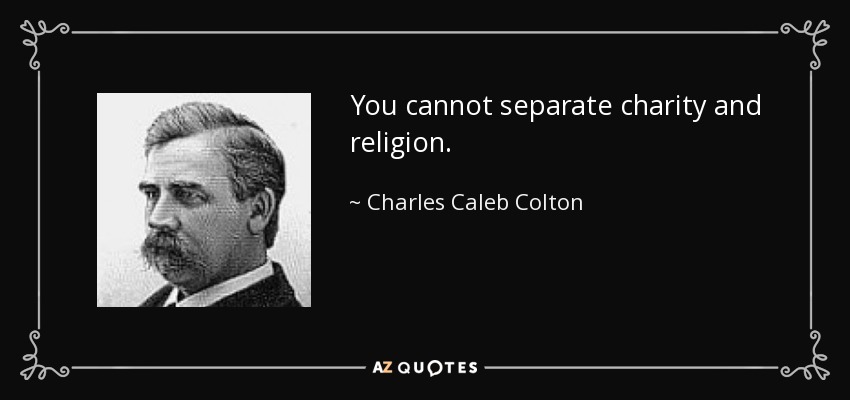
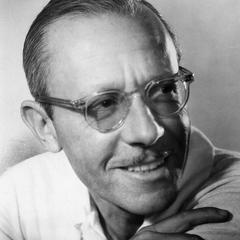

You cannot separate charity and religion.
Very great personages are not likely to form very just estimates either of others or of themselves; their knowledge of themselves is obscured by the flattery of others; their knowledge of others is equally clouded by circumstances peculiar to themselves. For in the presence of the great, the modest are sure to suffer from too much diffidence, and the confident from too much display.
Emulation has been termed a spur to virtue, and assumes to be a spur of gold. But it is a spur composed of baser materials, and if tried in the furnace will be found to want that fixedness which is the characteristic of gold. He that pursues virtue, only to surpass others, is not far from wishing others less forward than himself; and he that rejoices too much at his own perfections will be too little grieved at the defects of other men.
The blindness of bigotry, the madness of ambition, and the miscalculations of diplomacy seek their victims principally amongst the innocent and the unoffending. The cottage is sure to suffer for every error of the court, the cabinet, or the camp. When error sits in the seat of power and of authority, and is generated in high places, it may be compared to that torrent which originates indeed in the mountain, but commits its devastation in the vale.
He that will often put eternity and the world before him, and who will dare to look steadfastly at both of them, will find that the more often he contemplates them, the former will grow greater, and the latter less.
I question if Epicurus and Hume have done mankind a greater service by the looseness of their doctrines than by the purity of their lives. Of such men we may more justly exclaim, than of Caesar, "Confound their virtues, they've undone the world!
If a horse has four legs, and I'm riding it, I think I can win.
Contemporaries appreciate the person rather than their merit, posterity will regard the merit rather than the person.
In politics, as in religion, it so happens, that we have less charity for those who believe the half of our creed, than for those that deny the whole of it; since if Servetus had been a Mohammedan, he would not have been burnt by Calvin.
There are three difficulties in authorship; to write any thing worth the publishing — to find honest men to publish it — and to get sensible men to read it.
The drafts which true genius draws upon posterity, although they may not always be honored so soon as they are due, are sure to be paid with compound interest in the end.
Men spend their lives in anticipations,—in determining to be vastly happy at some period when they have time. But the present time has one advantage over every other—it is our own. Past opportunities are gone, future have not come. We may lay in a stock of pleasures, as we would lay in a stock of wine; but if we defer the tasting of them too long, we shall find that both are soured by age.
The intoxication of anger, like that of the grape, shows us to others, but hides us from ourselves.
Time is the measurer of all things, but is itself immeasurable, and the grand discloser of all things, but is itself undisclosed.
Time,- that black and narrow isthmus between two eternities.
A Christian builds his fortitude on a better foundation than stoicism; he is pleased with every thing that happens, because he knows it could not happen unless it first pleased God, and that which pleases Him must be best.
Ambition is to the mind what the cap is to the falcon; it blinds us first, and then compels us to tower by reason of our blindness.
There is this paradox in pride - it makes some men ridiculous, but prevents others from becoming so.
To despise our own species is the price we must often pay for knowledge of it.
Pride, like the magnet, constantly points to one object, self; but, unlike the magnet, it has no attractive pole, but at all points repels.
True goodness is not without that germ of greatness that can bear with patience the mistakes of the ignorant.
Pity a thing often avowed, seldom felt; hatred is a thing often felt, seldom avowed.
Public charities and benevolent associations for the gratuitous relief of every species of distress, are peculiar to Christianity; no other system of civil or religious policy has originated them; they form its highest praise and characteristic feature.
Precisely in proportion to our own intellectual weakness will be our credulity as to those mysterious powers assumed by others.
Criticism is like champagne, nothing more execrable if bad, nothing more excellent if good.
Follow AzQuotes on Facebook, Twitter and Google+. Every day we present the best quotes! Improve yourself, find your inspiration, share with friends
or simply: