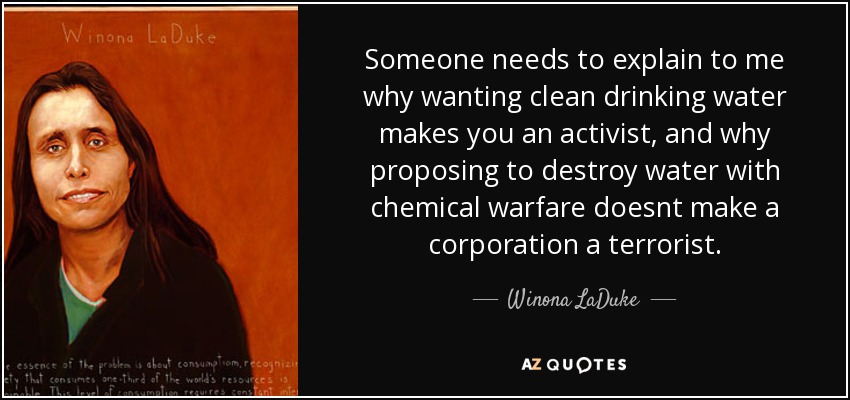
Someone needs to explain to me why wanting clean drinking water makes you an activist, and why proposing to destroy water with chemical warfare doesnt make a corporation a terrorist.
I don’t consider myself an activist, but I realize how much I’ve benefited from the sacrifice of others. So if hearing that the CEO of Apple is gay can help someone struggling to come to terms with who he or she is, or bring comfort to anyone who feels alone, or inspire people to insist on their equality, then it’s worth the trade-off with my own privacy.
I do not believe in God, but I believe God is man’s greatest idea. Those incapable of religious feeling or those (like hard-core gay activists) who profane sacred ground do not have the imagination to educate the young. … Until the left comes to its senses about the cultural power of religion, the right will continue to broaden its appeal.
On the one hand I follow a vocation because I have an ability that I should exercise, but I want to use it for a reason, because I don't see that the freedoms that I enjoy are God-given realities. So I have a very healthy, activist general tension in me which feels that no, this is not gratuitous, it is important to keep this in focus.
I come from a family of conservation activists, and so I've had a strong connection to nature all my life. My father has been a leader within the movement for over thirty years and has taught most of what I know about environmental conservation. While he would always take me hiking, camping, and rafting, he also taught me that the spiritual value of the outdoors alone is not enough to save nature against economic interests.
In 1973, I was shown a graphic of how dependent the United States was on nonrenewable resources like oil and coal and that little was being done to change that. It seemed irrefutable that we needed a change in direction or we'd be paying a huge price down the road. That's when I made a commitment to become a political activist.
We have emphasized the importance of applied action research because it allows evidence-based policy and program development and a focus on learning. We are also committed to using a participatory approach in which local people, local program managers and providers, local researchers, women's health activists, and national decision-makers play the leading role. International "experts" from technical assistance agencies or universities can make important contributions, but they certainly don't have all the answers.
Compromise is not popular. It's not at all popular among young people who these days call themselves "activists." They think compromises are dishonest, opportunistic, humiliating. Not in my vocabulary.
What's most remarkable about the conservative activists who promote a small, hysterical group of conspiracy theorists claiming a Muslim theocracy is the greatest threat facing America today is that they are also promoters of the mythology that America was founded and should be governed as a Christian nation - or, when they're feeling magnanimously ecumenical, a "Judeo-Christian" nation.
Against the tyranny of forgetting, educators, young people, social activists, public intellectuals, workers and others can work to make visible and oppose the long legacy and current reality of state violence and the rise of the punishing state. Such a struggle suggests not only reclaiming, for instance, education as a public good but also reforming the criminal justice system and removing the police from schools.
I mean the prime case that you can look at is Martin Luther King, who was only an activist for 13 years. But every year, he became deeper, more concerned, connecting more issues.
Trotsky found out about him - Leon Trotsky - because A.J.[Muste] worked. He was an activist. And he organized the first sit-in strike in Toledo in a factory. And Trotsky was very impressed with that.
Radical activists can't ignore the fact that we live in this world, like it or not, and have to make difficult decisions about which paths are the best - or sometimes, the least harmful. There are no abstract formulas. Have to think through each case on its own.
It's hard to achieve that, especially in a free society, but it's been done, and that's the kind of thing that activists in the IWW have to work against, right on the shop floor. It's not so simple, but it's been done before.
America's got to look after America again. That means taking a realistic appraisal of who is actually at risk in this country, not whining feminists, or whinging Black Lives Matter activists, but gay people and women at risk from Islam. Also, so people in this country who have been treated badly, lied to and lied about. An honest appraisal of who actually needs government attention in this country. And when all of that is done, then we can think about interfering elsewhere again.
When we were working on immigration reform and there was a young Latino man, young immigration activist here who, in the Roosevelt Room, refused to shake my hand.He made a point of saying, "I can't shake your hand; you're deporting too many people." And I just said to him, "Young man, I'm glad that you feel so passionately about this issue, but you're with the president right now in the White House. You've got to think about what's going to be most effective in getting what you need, what you're trying to accomplish. Because this may not be your best strategy."
It's useful for activists just to be out there to keep you mindful and not get complacent, even if ultimately you think some of their criticism is misguided.
It's the reason why I am always interested in engaging in people who are pushing us and pushing against the status quo. But having been an activist, the only thing that I'm always encouraging activists to do is, once you have raised the issue, and even through controversial means, you have to come behind it with an agenda and the possibility of reconciliation if power meets your demands.
The only time I get frustrated with activist criticism is if I have recognized them, and invited them to work with me to figure out how we solve this problem that they're concerned about, and either they don't engage out of the sense of purity - "I'm not going to shake his hand" - or you're not sufficiently prepared so you don't even know what to ask for, or you're not being strategic as an activist and trying to figure out how the process has to work in order for you to get what you want.
I thought Brittany Packnett, who was one of the Ferguson activists, really interesting, smart young lady, really impressive - you might want to talk with her. So she was one of the organizers of the Ferguson movement, ended up joining our task force. She came in here and she just knew her stuff.
I think that where I've gotten frustrated during the course of my presidency has never been because I was getting pushed too hard by activists to see the justness of a cause or the essence of an issue.
Follow AzQuotes on Facebook, Twitter and Google+. Every day we present the best quotes! Improve yourself, find your inspiration, share with friends
or simply: