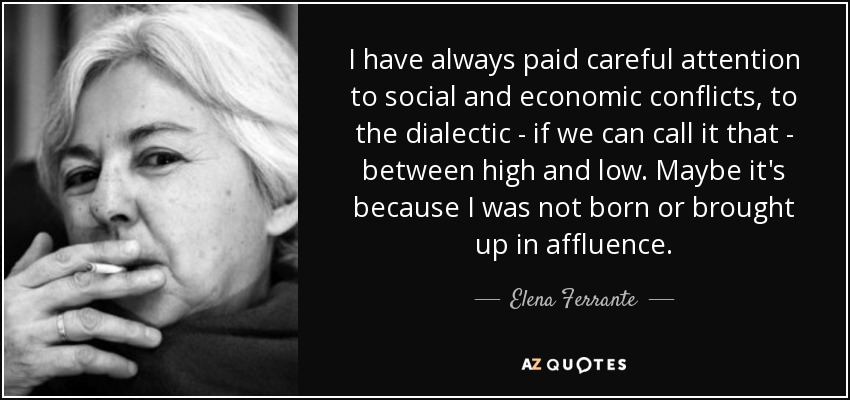
I have always paid careful attention to social and economic conflicts, to the dialectic - if we can call it that - between high and low. Maybe it's because I was not born or brought up in affluence.
There's no question that in my lifetime, the contrast between what I called private affluence and public squalor has become very much greater.
It was only in the late nineteenth century and then the twentieth century, with the maturation of consumer capitalism, that a shift was made toward the cultivation of unbounded desire. We must appreciate this to realize that late modern consumption, consumption as we now know it, is not fundamentally about materialism or the consumption of physical goods. Affluence and consumer-oriented capitalism have moved us well beyond the undeniable efficiencies and benefits of refrigeration and indoor plumbing.
There's no question that in my lifetime, the contrast between what I called private affluence and public squalor has become very much greater. What do we worry about? We worry about our schools. We worry about our public recreational facilities. We worry about our law enforcement and our public housing. All of the things that bear upon our standard of living are in the public sector.
Education confers humility, endows one with the authority to command, that will entitle one to affluence. With the help of charity and compassion this affluence can be made fruitful, and by this means, happiness in this world and peace in the next can be won.
The rule seems to be that there are no absolutes, that what is rare is prized. Thus, in times of relative affluence, thin models become dominant.
No matter what your work, let it be your own. No matter what your occupation, let what you are doing be organic. Let it be in your bones. In this way, you will open the door by which the affluence of heaven and earth shall stream into you.
If we are not sensible about this, in our ideas of wealth creation we may completely destroy the planet - which we are already doing in many ways.
We must understand what our idea of wealth is. Is it just about more buildings, more machines, more cars, more of everything? More and more is death. In the most affluent societies in the world, for example in the United States of America, a significant percentage of the population is on anti-depressants on a regular basis. If you just withdraw one particular medication from the market, almost half the nation will go crazy. That is not wellbeing. Generally, an American citizen has everything that anyone would dream of.
The prospect of penury in age is so gloomy and terrifying that every man who looks before him must resolve to avoid it; and it must be avoided generally by the science of sparing. For, though in every age there are some who, by bold adventures, or by favorable accidents, rise suddenly to riches, yet it is dangerous to indulge hopes of such rare events; and the bulk of mankind must owe their affluence to small and gradual profits, below which their expense must be resolutely reduced.
There is no question that Francis was in advance of his age, as he anticipated all that is liberal and sympathetic in modern times: the love of nature, the love of animals, the sense of social compassion, the sense of the spiritual dangers of affluence.
Markets are interested in profits and profits only; service, quality, and general affluence are different functions altogether. The universal, democratic prosperity that Americans now look back to with such nostalgia was achieved only by a colossal reigning in of markets, by the gargantuan effort of mass, popular organizations like labor unions and of the people themselves, working through a series of democratically elected governments not daunted by the myths of the market.
To change our laws and culture, the green movement must attract and include the majority of all people, not just the majority of affluent people.
Many Christians and Christian leaders have been neutralized by the love of money and materialism. The homage paid to affluence becomes a burden that saps our energy as well as our love for God and other people...Like Jesus and Paul, we can learn to be content with what we have, living modestly in order that we may give liberally to the work of the kingdom and to meet the needs of others.
Most of us have achieved levels of affluence and comfort unthought of two generations ago. We've never had it so good, most of us. Nor have we ever complained so bitterly about our problems.
Government does not cause affluence. Citizens of totalitarian countries have plenty of government and nothing of anything else.
The West has enough technology, enough science, enough affluence, enough money, but something of the inner is missing. There is no peace, no silence, no joy, no bliss, no meditativeness, no experience of godliness.
We, perhaps, have corrupted our children and our grandchildren by heedless affluence, by a lack of manliness, by giving the younger generation more money and liberty than their youth can handle, by indoctrinating them with sinister ideologies and false values, by permitting them, as young children, to indulge themselves in imprudence to superiors and defiance of duly constituted authority, by lack of prudent, swift punishment when the transgressed, by coddling and pampering them when they were children and protecting them from a very dangerous world.
I've been criticized by many anarchists as believing that anarchism is impossible without affluence. On the contrary, I think affluence is very destructive to anarchism. If you are absorbed by that commodity world then you're not going to move toward any radical positions, you're going to move toward a stance of protectiveness.
The state has typically been a device for producing affluence for a few at the expense of many.
The greatest of all contraceptives is affluence.
You mix the affluence of the white and the poverty of the black and you do not get a civilized society. Integration on an equal level is one thing. Mixing on an unequal level is another.
Those peculiar social sensibilities nourished by our own peculiar political principles, while they enhance the true dignity of a prosperous American, do but minister to the added wretchedness of the unfortunate; first, by prohibiting their acceptance of what little random relief charity may offer; and, second, by furnishing them with the keenest appreciation of the smarting distinction between their ideal of universal equality and their grind-stone experience of the practical misery and infamy of poverty.
Large department stores, with their luxuriant abundance of canned goods, foods, and clothing, are like the primary landscape and the geometrical locus of affluence. Streets with overcrowded and glittering store windowsthe displays of delicacies, and all the scenes of alimentary and vestimentary festivity, stimulate a magical salivation. Accumulation is more than the sum of its products: the conspicuousness of surplus, the final and magical negation of scarcitymimic a new-found nature of prodigious fecundity.
The preservation of liberty, not the promotion of efficiency, is the primary justification for private property. Efficiency is a happy, though not accidental, by-product - and a most important by-product because liberty could not have survived if it had not also produced affluence.
Follow AzQuotes on Facebook, Twitter and Google+. Every day we present the best quotes! Improve yourself, find your inspiration, share with friends
or simply: