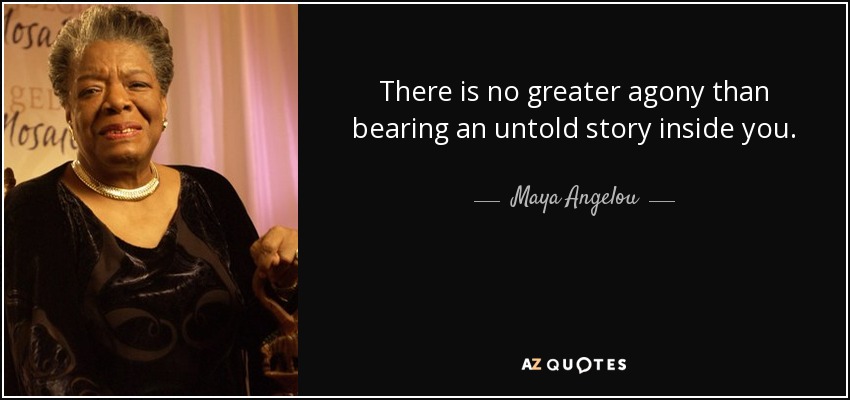
There is no greater agony than bearing an untold story inside you.
If you have any young friends who aspire to become writers, the second-greatest favor you can do them is to present them with copies of The Elements of Style. The first-greatest, of course, is to shoot them now, while they're happy.
If there's a book you really want to read, but it hasn't been written yet, then you must write it.
There is nothing to writing. All you do is sit down at a typewriter and bleed.
The easiest way to separate yourself from the unformed blobby mass of "aspiring" writers is to a) actually write and b) actually finish. That's how easy it is to clamber up the ladder to the second echelon. Write. And finish what you write. That's how you break away from the pack and leave the rest of the sickly herd for the hungry wolves of shame and self-doubt. And for all I know, actual wolves.
My advice for aspiring writers is threefold.First, read as much as possible, both within and outside the genre you arem working in. By reading you hone your internal ear for style. Second, write. Everything comes down to it; unless you write, you are not a writer. Third, submit your work. But - stop chasing every seductive new market out there, and stop trying to write for the tastes of specific established professional markets and editors. That way lies mediocrity and eventual dissolution of your true voice, no matter how embryonic or pronounced it may be now.
The one thing an aspiring writer must understand is that it's hard. If you think it's not hard, you're not doing it right.
The most important thing for aspiring writers is for them to give themselves permission to be brave on the page, to write in the presence of fear, to go to those places that you think you can’t write - really that’s exactly what you need to write.
When I read students’ attempts at creative writing it is obvious immediately that most of them have not read much or widely. The aspiring writer must read everything he or she can to appreciate the myriad ways words are used and to what effect.
Tips for aspiring writers: don't be afraid of writing rubbish. It's very easy to become hypnotised by an empty page or screen. It's tempting to abandon a half-finished work because you can't make it perfect. I hereby give you permission to write things that aren't perfect, make mistakes, try things that don't work, experiment with styles you're not used to and generally throw words around. You'll learn much faster that way.
The only advice I can give to aspiring writers is don't do it unless you're willing to give your whole life to it. Red wine and garlic also helps.
There is no such thing as an "aspiring writer". You are a writer. Period.
I would give them (aspiring writers) the oldest advice in the craft: Read and write. Read a lot. Read new authors and established ones, read people whose work is in the same vein as yours and those whose genre is totally different. You've heard of chain-smokers. Writers, especially beginners, need to be chain-readers. And lastly, write every day. Write about things that get under your skin and keep you up at night.
I would also suggest that any aspiring writer begin with short stories. These days, I meet far too many young writers who try to start off with a novel right off, or a trilogy, or even a nine-book series. That's like starting in at rock climbing by tackling Mt. Everest. Short stories help you learn your craft.
I'm an aspiring writer. I hate that phrase. You're either a writer or you're not.
[M]y first published book had just appeared in stores. The last year of my life-the year of finishing it, editing it, and seeing it through its various page-proof passes-ranks among the most unnerving of my young life. It has not felt good, or freeing. It has felt nerve-shreddingly disquieting. Publication simply allows one that much more to worry about. This cannot be said to aspiring writers often or sternly enough. Whatever they carry within themselves they believe publication cures will not, I can all but guarantee, be cured. You just wind up with new diseases.
Fear of failure is the reason most often cited to explain why so many aspiring writers never realize their dreams. But I think it’s that same fear of failure that absolutely invigorates those who do push through-that is, the fear of not being heard.
I think when you are an aspiring writer, you must write every day. It's not as though anybody will call you up on the phone and say, "I understand you are a very promising, aspiring writer and I'm going to give you this assignment." You have to create it yourself or it's never going to happen.
A lot of aspiring writers are all ready to write a novel, but they don't know how to write sentences.
Like so many aspiring writers who still have boxes of things they've written in their parents' houses, I filled notebooks with half-finished poems and stories and first paragraphs of novels that never got written.
I think a lot of young aspiring writers get misdirected; they think 'I ought to write this, even though I enjoy reading that'. What you have to do is write what you enjoy reading.
Well, to aspiring writers, I would tell them that we live in a wonderful time where you're able to make your work visible, easily.
The short of it is, as an aspiring writer, there is nothing as damaging to your credibility as saying that you don't like to read.
I am dismayed to realize that much of the advice I used to parcel out to aspiring writers has passed its sell-by date.
I tell aspiring writers that you have to find what you must write. When you find it, you will know, because the subject matter won’t let you go. It’s not enough to write simply because you think it would be neat to be published. You have to be compelled to write. If you’re not, nothing else that you do matters.
Follow AzQuotes on Facebook, Twitter and Google+. Every day we present the best quotes! Improve yourself, find your inspiration, share with friends
or simply: