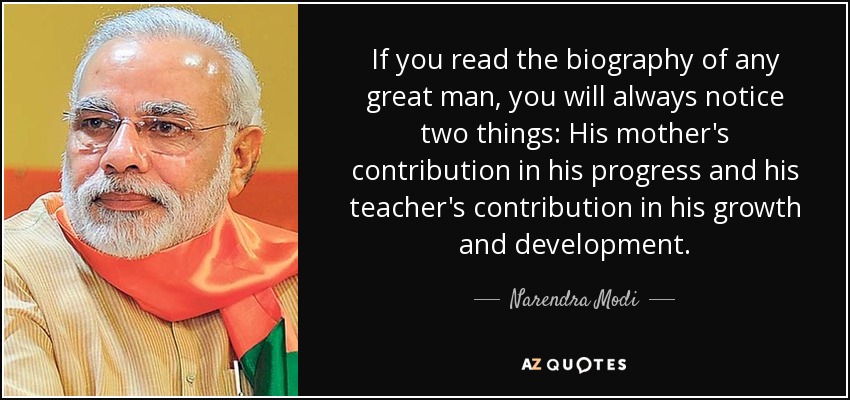
If you read the biography of any great man, you will always notice two things: His mother's contribution in his progress and his teacher's contribution in his growth and development.
Sin in the Second City is a masterful history lesson, a harrowing biography, and - best of all - a superfun read. The Everleigh story closely follows the turns of American history like a little sister. I can't recommend this book loudly enough.
I'm getting very sorry for the Devil and his disciples such as the good Le Chiffre. The devil has a rotten time and I always like to be on the side of the underdog. We don't give the poor chap a chance...the Devil had no prophets to write his Ten Commandments and no team of authors to write his biography.
May God blast anyone who writes a biography of me.
Arnold Rampersad's stunningly revealing biography has, at long last, unveiled-in magisterial prose-the very complex and vulnerable man behind Ralph Ellison's own masks and myths. One of the nation's most brilliant writers emerges as all the more fascinating precisely because he was so very human. Painstakingly researched and compellingly written, Ralph Ellison is a masterwork of the genre of literary biography.
Like Richard Ellmann on James Joyce, Arnold Rampersad on Ralph Ellison is in a class of its own. His masterful and magisterial book is the most powerful and profound treatment of Ellison's undeniable artistic genius, deep personal flaws, and controversial political evolution. And he reveals an Ellison unbeknownst to all of us. From now on, all serious scholarship on Ellison must begin with Rampersad's instant and inimitable classic in literary biography.
Isabel Wilkerson's The Warmth of Other Suns is an American masterpiece, a stupendous literary success that channels the social sciences as iconic biography in order to tell a vast story of a people's reinvention of itself and of a nation-the first complete history of the Great Black Migration from start to finish, north, east, west.
I think a biography is only as interesting as the lives and times it illuminates.
I always use primary sources, in addition to reading biographies and other materials.
The rumors of Frank Sinatras violence and his ties to organized crime were such that journalists joked in print about me ending up in concrete boots and sleeping with the fishes if I proceeded to write his biography.
Memoirs give the knowledge about the author and his environment. They are different from biography. Memoirs do not get ahead, and the man who writes a biography looks at his future like at a very simple thing.
Usually I read biographies of interesting people. I am not attracted to novels - make-believe, or recreations of what people think life should be.
Most of society thinks that biography is destiny, that the past equals the future, and of course it does if you live there...but what we really have to remind ourselves is that decision is the ultimate power.
I push back against a deeply-entrenched tendency in American culture to label quickly and no longer even examine the labels that were initially stamped on a person. I don't have a problem with any of my "hyphenated" biography - I don't have any problem with that at all. The world would be a better place if our thread of hyphenation were truly embraced beyond mere naming and category.
On the whole, most biographies about literary women tend to diagnose them.
Why I love the ancients so much? Aside from everything else, when I read them, the entire past between them and me unfolds at thesame time. The hearts of how many heroes and poets may have been set on fire by Plutarch's biographies which now inspire me with their own and with borrowed flames!
I haven't had a chance to pick up a good book in a long time, because I've been either reading scripts or learning them or writing them. And so, by the time the day is done, I usually just want to click on The Bachelor and fall asleep. But I gravitate toward biographies and things like that.
I use biography, I use literary connections (as with Platen - this seems to me extremely helpful for appreciating the nuances of Mann's and Aschenbach's sexuality), I use philosophical sources (but not in the way many Mann critics do, where the philosophical theses and concepts seem to be counters to be pushed around rather than ideas to be probed), and I use juxtapositions with other literary works (including Mann's other fiction) and with works of music.
All of Robert Caro's biographies are exceptional, in part because of Caro's fundamental ambivalence about power. He sees its necessity and use for getting things done, even as he is often repelled by watching power at close range. His masterpiece on Robert Moses, The Power Broker, describes the evolution of Moses from idealist to pragmatist as he became one of the most powerful figures in the 20th century.
It's great fun to memorize somebody's biography, and then liberally play with the real facts of their life and go a step beyond reality.
Computer chips will cost about a penny. That's the cost of scrap paper. The Internet will be basically for free and it will be inside our contact lens. When we blink, we will go online. When we see somebody that we don't recognize, our contact lens will identify who they are, print out their biography in your contact lens and translate, if they're speaking Chinese, into English with subtitles as they speak.
I'd put the most money on Robert Caro's biography of Lyndon Johnson - and not just because we'll probably still be waiting for the final volume in 2017.
[Freud's] great strength, though sometimes also his weakness, was the quite extraordinary respect he had for the singular fact... When he got hold of a simple but significant fact he would feel, and know, that it was an example of something general or universal, and the idea of collecting statistics on the matter was quite alien to him.
Each truth that a writer acquires is a lantern, which he turns full on what facts and thoughts lay already in his mind, and behold, all the mats and rubbish which had littered his garret become precious. Every trivial fact in his private biography becomes an illustration of this new principle, revisits the day, and delights all men by its piquancy and new charm.
Dreadful is a poignant biography of a forgotten man who drank himself to death. It's a brilliant evocation of a self-hating gay novelist in the 1940s whom Gore Vidal once considered a rival.
Follow AzQuotes on Facebook, Twitter and Google+. Every day we present the best quotes! Improve yourself, find your inspiration, share with friends
or simply: