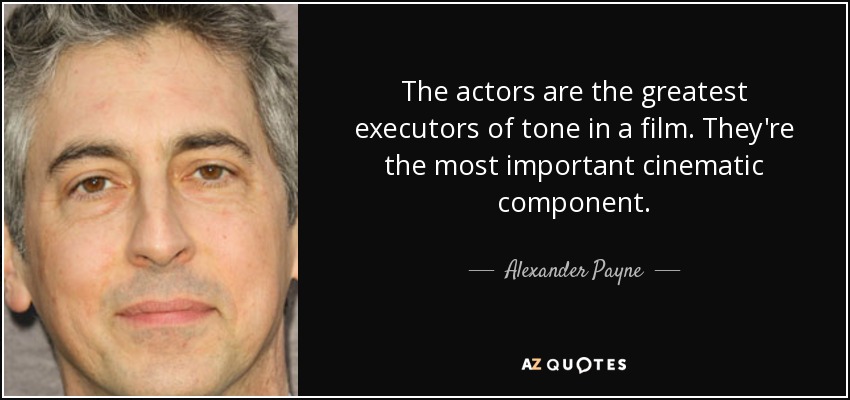
The actors are the greatest executors of tone in a film. They're the most important cinematic component.
Screenwriting is the most prized of all the cinematic arts. Actually, it isn't, but it should be.
Our music over the years has been very cinematic. It's surprising we never really got into film soundtracks.
There's something about a roller coaster that triggers strong feelings, maybe because most of us associate them with childhood. They're inherently cinematic; the very shape of a coaster, all hills and valleys and sickening helices, evokes a human emotional response.
And then, I suppose, there's also a cinematic reality on top of that. Because it was extremely difficult to keep tabs on, it was quite confusing acting that.
I began to exercise a lot of cinematic muscle with the precepts I had learned in the New York art world. Film was intriguing. I began to think of art as elitist, whereas film was not.
I think violence in a cinematic context can be, if handled in a certain way, very seductive.
The living room is a monument to my impulsive spending habits. I've got more than two hundred DVDs, including cinematic greats such as Monkey Bone, Corkey Romano, and A Night at the Roxbury, leading me to believe not only do I have awful taste in films, but I also have a Chris Kattan fixation. What I don't have is $4000 earing intrest in a money market account.
All religions are branches of one big tree. It doesn't matter what you call Him just as long as you call. Just as cinematic images appear to be real but are only combinations of light and shade, so is the universal variety a delusion. The planetary spheres, with their countless forms of life, are naught but figures in a cosmic motion picture. One's values are profoundly changed when he is finally convinced that creation is only a vast motion picture and that not in, but beyond, lies his own ultimate reality.
I don't like the strictly objective viewpoint [in which all of the characters' actions are described in the third person, but we never hear what any of them are thinking.] Which is much more of a cinematic technique. Something written in third person objective is what the camera sees. Because unless you're doing a voiceover, which is tremendously clumsy, you can't hear the ideas of characters. For that, we depend on subtle clues that the directors put in and that the actors supply. I can actually write, "'Yes you can trust me,' he lied." [But it's better to get inside the characters' heads.]
To my mind any phenomenon is paracinematic if it shares one element with cinema, e.g., modularity with respect to space and time.
Up to and including the moment of exposure, the photographer is working in an undeniably subjective way. By his choice of technical approach, by the selection of the subject matterand by his decision as to the exact cinematic instant of exposure, he is blending the variables of interpretation into an emotional whole.
You have to question a cinematic culture that preaches artistic expression, and yet would support a decision that is clearly a product of a patriarchy-dominant society, which tries to control how women are depicted on screen. The MPAA is okay supporting scenes that portray women in scenarios of sexual torture and violence for entertainment purposes, but they are trying to force us to look away from a scene that shows a woman in a sexual scenario, which is both complicit and complex. It's misogynistic in nature to try and control a woman's sexual presentation of self.
The poet’s life is just so much crenellated waste, nights and days whipping swiftly or laboriously past the cinematic window. We’re hunched and weaving over the keys of our green our grey or pink blue manual typewriter maybe a darker stone cold thoritative selectric with its orgasmic expectant hum and us popping pills and laughing over what you or I just wrote, wondering if that line means insult or sex. Or both. Usually both.
Pace is crucial. Fine writing isn't enough. Writing students can be great at producing a single page of well-crafted prose; what they sometimes lack is the ability to take the reader on a journey, with all the changes of terrain, speed and mood that a long journey involves. Again, I find that looking at films can help. Most novels will want to move close, linger, move back, move on, in pretty cinematic ways.
Cinematic and symphonic: this is a compelling story revealed in a sequence of voices that are as pitch-perfect as they are irresistible. This is a wonderfully impressive debut: tender, muscled and unforgettable.
THE ACT OF KILLING invents a new form of cinematic surrealism.
If I never do another movie, I will have had the privilege of working on one of the big Hollywood movies with top people, creating a world that can only be described as totally cinematic
I fell in love with it. Walking around just feels so cinematic. I find the aris- tocratic parts of London so unattractive and angular; the architecture is so white and gated. But in New York, it’s different—even uptown it’s really grand, and there’s no real segregation there. It’s all mixed up.
I think the thing that I love the most about working in the digital cinema is that you're only limited in your cinematic technique by your imagination - you're not restricted by the physical laws of nature. You don't have to worry about physically moving a 50lb camera through space, or worry about shadows and rigging.
Slow motion is so visually cinematic; when you create that, you create it for your audience, you let them have the feeling of what it must be like to be there. And in a movie, you can't forget the audience.
My cinematic crush has been pretty much the same since I was 12: Kevin Costner.
I base everything on my own life experiences as a female. I start from there, and then I look for characters and settings that I think are cinematic, where I can use symbols and imagery to tell a story.
'Sweet Valley High' is fantastic, fabulous, a little bit campy, and - dare I say it - cinematic.
When I go to the cinema, I want to have a cinematic experience. Some people ignore the sound and you end up seeing something you might see on television and it doesn't explore the form. Sound is the other picture. When you show people a rough cut without the sound mix they are often really surprised. Sound creates a completely new world. With dialogue, people say a lot of things they don't mean. I like dialogue when it's used in a way when the body language says the complete opposite. But I love great dialogue I think expositional dialogue is quite crass and not like real life.
Follow AzQuotes on Facebook, Twitter and Google+. Every day we present the best quotes! Improve yourself, find your inspiration, share with friends
or simply: