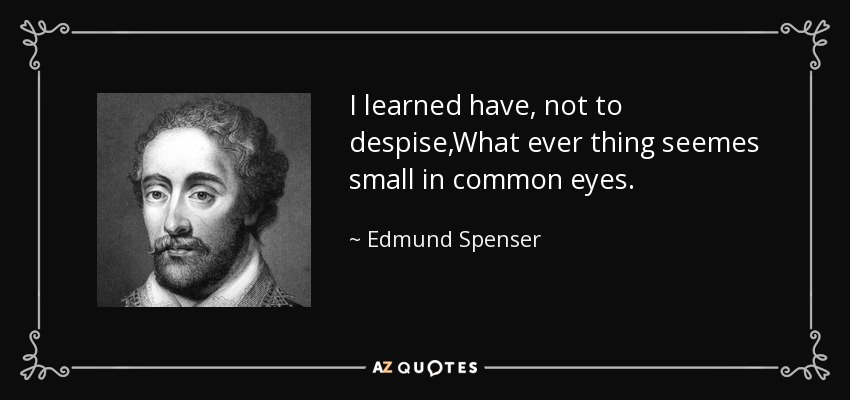
I learned have, not to despise,What ever thing seemes small in common eyes.
The richest author that ever grazed the common of literature.
Among the words that can be all things to all men, the word "race" has a fair claim to being the most common, most ambiguous and most explosive. No one today would deny that it is one of the great catchwords about which ink and blood are spilled in reckless quantities. Yet no agreement seems to exist about what race means.
Debased men, but they all had something in common: They showed a keen regard for virtue, and tried to dress themselves in that costume. Hypocrisy, for all its bad reputation, at least showed a decent respect for goodness.
The only thing that will redeem mankind is cooperation ... it is common to wish well to oneself, but in our technically unified world, wishing well to oneself is sure to be futile unless it is combined with wishing well to others.
I myself hate that old Hemingwayesque paradigm of the writer as prizefighter and I have tried hard to create an alternate one for myself. When Anne Sexton admonished me, "We are all writing God's poem," I took it to mean there should be no competition between writers because we are all involved in a common project, a common prayer. But to Gore's and Norman's generation, particularly those male writers who served in the second world war, the prizefighter paradigm remains.
As the Deity has given us Greeks all other blessings in moderation, so our moderation gives us a kind of wisdom which is timid, in all likelihood, and fit for common people, not one which is kingly and splendid. This wisdom, such as it is, observing that human life is ever subject to all sorts of vicissitudes, forbids us to be puffed up by the good things we have, or to admire a man's felicity while there is still time for it to change.
Travel opens different eyes to different things, shows things we've never seen before, shows the world from entirely different angles. That's the power of drawing and the power of travel. They both make the familiar unfamiliar and vice versa. They show what we all have in common and what we may have missed thanks to preconceptions that may have marred our vision.
Is an institution always a man's shadow shortened in the sun, the lowest common denominator of everybody in it?
I don't need to praise anything so justly famous as Frost's observation of and empathy with everything in Nature from a hornet to a hillside; and he has observed his own nature, one person's random or consequential chains of thoughts and feelings and perceptions, quite as well. (And this person, in the poems, is not the "alienated artist" cut off from everybody who isn't, yum-yum, another alienated artist; he is someone like normal people only more so - a normal person in the less common and more important sense of normal.)
There's only one kind of common sense but a thousand varieties of stupidity.
Common sense is usually lack of imagination, and imagination is usually lack of common sense.
Barring love and war, few enterprises are undertaken with such abandon, or by such diverse individuals, or with so paradoxical a mixture of appetite and altruism, as that group of avocations known as outdoor recreation. It is, by common consent, a good thing for people to get back to nature. But wherein lies the goodness, and what can be done to encourage its pursuit?
Common sense is better than genius, and hence its bestowment is more universal.
Organization is not only directly linked to unity, but a natural development of that unity. Accordingly, the leaders' pursuit of that unity is also an attempt to organize the people, requiring witness to the fact that the struggle for liberation is a common task." "Leaders who do not act dialogically, but insist on imposing their decisions, do not organize the people--they manipulate them. They do not liberate, nor are they liberated: they oppress.
The great thing that guys like Facebook's Mark Zuckerberg and the Google guys have in common is they treat their technology like it's art, and I suppose in the hands of virtuosos like them, it is.
Problems are common, but attitude makes the difference!!!
I would never behave with so little dignity. Nor would I wish to be confronted in such a manner by anyone else. Vampires inspire screams, not squees. Involuntary urination is common, I grant, but it properly flows from a sense of terror, not an ecstatic sense of hero worship.
Fine sense and exalted sense are not half so useful as common sense. There are forty men of wit for one man of sense; and he that will carry nothing about him but gold, will be every day at a loss for want of readier change.
the art of becoming 'rich', in the common sense, is not absolutely nor finally the art of accumulating much money for ourselves, but also of contriving that our neighbour shall have less. In accurate terms, it is 'the art of establishing the maximum inequality in your own favour'.
There is one common condition for the lot of women in Western civilization and all other civilizations that we know about for certain, and that is, woman as a sex is disliked and persecuted, while as an individual she is liked, loved, and even, with reasonable luck, sometimes worshipped.
God pity us indeed, for we are human, And do not always see, The vision when it comes, the shining change, Or, if we see it, do not follow it, Because it is too hard, too strange, too new, Too unbelievable, too difficult, Warring too much with common, easy ways, And now I know this, standing in this light, Who have been half alive these many years, Brooding on my own sorrow, my own pain, Saying "I am a barren bough. Expect, Nor fruit nor blossom from a barren bough."
Even as a child I was fascinated by death, not in a spiritual sense, but in an aesthetic one. A hamster or guinea pig would pass away, and, after burying the body, I'd dig it back up: over and over, until all that remained was a shoddy pelt. It earned me a certain reputation, especially when I moved on to other people's pets. "Igor," they called me. "Wicked, spooky." But I think my interest was actually fairly common, at least among adolescent boys. At that age, death is something that happens only to animals and grandparents, and studying it is like a science project.
Symons remarked that the most common and unhelpful illusion plaguing those who came to see him was the idea that they ought somehow, in the normal course of events, to have intuited long before they had finished their degrees, started families, bought houses and risen to the top of law firms - what they should properly be doing with their lives. They were tormented by a residual notion of having through some error or stupidity on their part missed out on their true calling.
Experience is mad when it steps beyond the horizons of our common, that is, our communal sense.
Follow AzQuotes on Facebook, Twitter and Google+. Every day we present the best quotes! Improve yourself, find your inspiration, share with friends
or simply: