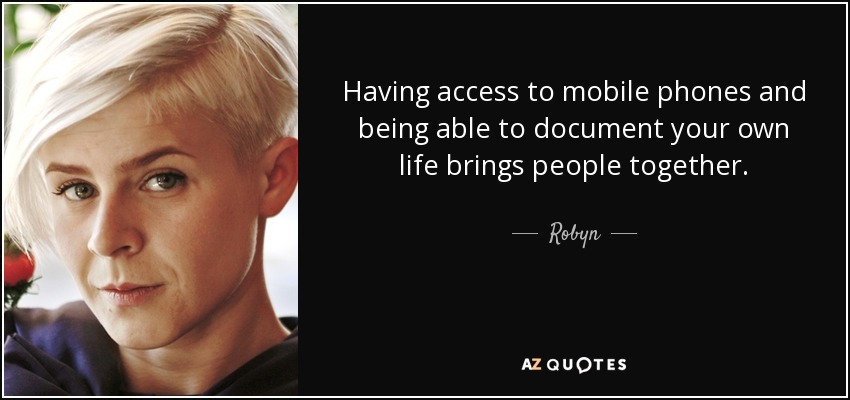
Having access to mobile phones and being able to document your own life brings people together.
I believe in the Biblical documents supporting Jesus. But I have no illusions about them. I think they contain many flaws, scribal errors, and so forth and they are only partial or fragmentary.
People write to me all the time to tell me that "homosexuality is an abomination." They base this on a quote in Leviticus. I think the Bible has proved to be a very mysterious and dangerous document.
I want to see something that I've never seen before, so how can I tell that actor what that is? I'm not trying to construct a document or situation that is what I want, because what I want is something new to me.
Keep in mind our Constitution predates the Industrial Revolution. Our founders did not know about electricity, the train, telephones, radio, television, automobiles, airplanes, rockets, nuclear weapons, satellites, or space exploration. There's a lot they didn't know about. It would be interesting to see what kind of document they'd draft today. Just keeping it frozen in time won't hack it.
E-mail also changed things in that you don't have to write a full document to discuss something. You can just send an e-mail to a list.
Amending the U.S. Constitution, the document most sacred to those who love freedom and liberty, is a delicate endeavor and should be done only on the basis of the most clear and convincing evidence that a proposed amendment is necessary.
Before the famine, which was in the 1840s, that was an emotional turning point... There are various documents showing how the Elizabethan English, in particular, were shocked by Irish displays of affection, by the way women acted toward strangers, walking up and putting their arms around them and kissing them right full on the mouth.
Well, probably the best way to put it might be that at some time, not just in an instant, but over some period of time I became aware of the fact that I wanted to document examples like Kroger or Piggly Wiggly in the late '50s, early '60s.
When you have the catalog of work, it doesn't feel like you've got one shot to get it right; it's just like, you're making a new document of something at the present time, and it's a living thing, and it changes. It's been cool to help other people make their records, to produce. You get a crash course in things that you don't get as the artist.
Several months ago, out of the blue, a company named "Cingular" started sending me bills. I had never heard of Cingular, and I honestly did not know what these bills were for, so I put them in the pile where I keep documents that I intend to scrutinize more carefully later on, after my death. Then I started seeing TV commercials for Cingular, but of course they did not make it clear what Cingular is, because the First Rule of Modern Advertising is: "Never reveal what you are advertising."
The success of a meeting often depends on having the right documents - proofs, artwork, schedules, research charts, etc. - present at the start of the meeting. All too often we arrive like plumbers, leaving our tools behind.
The result is - document destruction - we're really not going to be able to prove beyond a truth the negatives and some of the positive conclusions that we're going to come to. There will be always unresolved ambiguity here.
The main reason I went to digital was because I got time-lapse, video, and still images all in one camera. Having a minimal amount of gear is really important for someone who wants to walk around. That allowed me to have this flexibility to document things in different ways.
Snowden is almost preternaturally prepossessing and self-possessed. I think of a novelist whose dream character just walks into his or her head. It must have been like that with you and Snowden. But what if he'd been a graying guy with the same documents and far less intelligent things to say about them? In other words, how exactly did who he was make your movie and remake our world?
We tend to let our freedoms slip away because they are tucked away in documents and policies that we don't ever deal with directly.
Chinese are already more on board than we are. China is the only country that actually discussed in formal government documents how important it is to control the size of your populations if you’re going to limit emissions.
You have tens, hundreds of thousands of people in government, and just as many among contractors, who feel totally comfortable writing at the top of the document "internal use only," "official use only," and a million other synonyms, all of which amount to "none of your business" to the public.
If Bush had read all the documents about the Russians and British in Afghanistan in the 19th century, he would have not done what he did in the 21st. He would have understood how difficult it was to control this territory. He probably didn't read them.
For me, the eye and the word go together. Even when I was working in word documents, I was always obsessed with fonts, size, margins - the look of words on a page. The way something looks or sounds is also what it means.
My favorite method of encryption is chunking revolutionary documents inside a mess of JPEG or MP3 code and emailing it off as an "image" or a "song." But besides functionality, code also possesses literary value. If we frame that code and read it through the lens of literary criticism, we will find that the past hundred years of modernist and postmodernist writing have demonstrated the artistic value of similar seemingly arbitrary arrangements of letters.
I believe that there have been repeated attempts to influence prices in the silver markets. There have been fraudulent efforts to persuade and deviously control that price. Based on what I have been told by members of the public, and reviewed in publicly available documents, I believe violations to the Commodity Exchange Act (CEA) have taken place in silver markets and that any such violation of the law in this regard should be prosecuted.
What's important to me is that [photographs] have the appearance of being documents of what goes on. I like the illusion of veracity, that they look like life rather than movie stills. I don't want them to look fabricated.
Constitution is a living document; no strict constructionism.
When your child has matured sufficiently to understand how the judicial system works, set a bedtime for him and then send him to bed an hour early. When he tearfully accuses you of breaking the rules, explain that you made the rules and you can interpret them in any way that seems appropriate to you, according to changing conditions. This will prepare him for the Supreme Court's concept of the US Constitution as a 'living document'.
Follow AzQuotes on Facebook, Twitter and Google+. Every day we present the best quotes! Improve yourself, find your inspiration, share with friends
or simply: