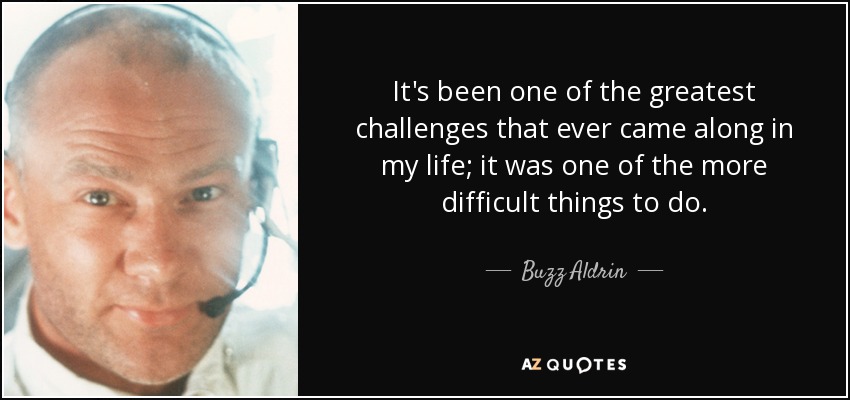
It's been one of the greatest challenges that ever came along in my life; it was one of the more difficult things to do.
If, nevertheless, textbooks of pharmacology legitimately contain a chapter on drug abuse and drug addiction, then, by the same token, textbooks of gynecology and urology should contain a chapter on prostitution; textbooks of physiology, a chapter on perversion; textbooks of genetics, a chapter on the racial inferiority of Jews and Negroes.
It [Moonlight movie] deals with drug addiction, drug dealing, and single parenthood, but they are three dimensional characters. You understand where they are from and what they are trying to do with their lives. It is not a stereotype that has been pasted onto somebody. These are stories that come from Barry's [ Jenkins] and Tarell's [Alvin McCraney] mothers.
[Jack Nash from The Andromeda Strain] was not in the original film, but he was kind of a Geraldo Rivera almost kind of reporter that had a drug addiction. We start the story in rehab, and then he gets the roots of the story. I loved him.
In the gay world, some of the most enriching and incredibly life-affirming and shaping relationships, very often between younger boys and older men, can be hugely positive experiences for those young boys. They can save those young boys from desolation, suicide and drug addiction, all sorts of things, providing they're consensual.
For a decade Americans have been steeped in the rhetoric of "zero tolerance" and the faith that virtually all problems from drug addiction to lousy teaching can be solved by pouring on the punishment. Even without a Commander in Chief who pledges to rid the world of evildoers, smoke them out of their holes and the like, we would be vulnerable to the temptation to brush aside frustrating complexities and relieve intolerable fear (at least for the moment) by settling on one or more scapegoats to crush. To imagine that trauma casts out fantasy is a dangerous mistake.
Theodore Dalrymple is a brilliant observer of both medicine and society, and his book wittily engages with two versions of the current nonsense: orthodox medicine on drug addiction, and romantic poets on the wisdom you supposedly enjoy from getting high.
So often with beginning writers, the story that they want to start with is the most important story of their life - my molestation, my this, my horrible drug addiction - they want to tell that most important story, and they don't have the skills to tell it yet, so it ends up becoming a comedy. A powerful story told poorly becomes funny, it just makes people laugh behind their hands.
I wasn't understanding enough about drug addition. No one seemed to know much about drug addiction. Things like LSD were all new. No one knew the harm. People thought cocaine was good for you.
Onstage it was always comfortable for me because that's where I felt at home. Offstage it was a different situation. I was still shy offstage and unfortunately, my shyness and my inability to communicate and really have great conversations or be part of the gang - in inverted commas - led me to the drug addiction, which, you know, blighted my life for 16 years because I thought by doing that it would make me join in.
There is no reason to think today's levels of [drug] addiction are anywhere near the levels that would be reached under legalization.
Mexico's a great place to overcome a drug addiction.
Another California study counted 30,000 substance abusers who are pregnant are White woman. So, The Wire paints the picture of drug addiction, drug dealing, and drug abuse as being a specifically a Black issue.
People say what distinguishes us from the animals is that we think. Well, then why the hell don't we extend some compassion to those under tremendous duress? There's this whole idea that you work really hard so you can deaden your soul to the universe and enjoy yourself only in ways the Sierra Club will let you. But what about enjoying yourself by getting into the whole melee of poverty and racism and violence and murder and drug addiction? Get in there, roll up your sleeves, and do something! Nobody does it.
The bigger picture is that over the last 30 years, we have spent $1 trillion waging a drug war that has failed in any meaningful way to reduce drug addiction or abuse, and yet has siphoned an enormous amount of resources away from other public services, especially education.
It seemed that the problem of Americans overdosing and dying from drug addiction was being described as bad people, particularly kids, who were abusing good drugs. But Sheila Nevins, the president of HBO Documentary Films, and I were particularly interested in finding out the stories of people and families who had been ravaged by this disease of addiction and understanding what really was happening. What we found was that, and let's not make any mistake about it, this is an epidemic of addiction.
I've lost over 800 West Virginians the last year. Lost their lives to opiate and drug addiction. This is something that we've got to fight. We need to have treatment centers that take care of people. We need to start basically education from kindergarten all the way through adulthood. We need to get involved and stop this epidemic that's going on that's just ravaging.
The [Burmese] government appears to be more interested in stamping out political activity than drug addiction. Very few university students on the campus could get away with engaging in political activities, but they seem to be able to get away with taking drugs. We have heard that it is very easy to obtain drugs on the university campuses.
I remember once Prince dropped by to see me when I was in Minneapolis and I was sick, with a bag of cough drops and a spoon of cough medicine. I said to him, "Hey, can I have another spoon of that? It's just over the counter," and he'd go, "No, I didn't come here to start up new drug addictions for you." And I was like, "C'mon, give me that bottle!" He was very watchful over me.
I was a big rugby player and into my motocross, so I lost loads of weight and a rumor went around the town that I had picked up a drug addiction!
The work became like the drug addiction, the clothes, anything in my life. It became - it's become an addiction. I'm addicted to working.
I have a lot of friends who come from alcoholic families, and they aren't alcoholics, because someone explained it to them. When I was in Washington DC, they really talked about the difference statistically between families that talk about drug addiction and ones that don't. The kids that can say "I see where this is going" have a much better chance of not becoming addicts, because they have been educated.
When there is no such thing as religious culture and moral education, serious social problems such as drug addiction and racism fill the gap.
Too much of my family has messed with drugs. Addiction might be in my genes, so I ain't never tryin' it. It's something you can't control, and I don't like things I can't control. I worked too hard to have it taken away for something stupid. I ain't gonna be laughed at the way I used to laugh at those crackheads.
We've always had a tradition in America of hounding our artists to death. Look at the list of our great artists, you see a continual history of defeat, frustration, poverty, alcoholism, drug addiction. The best poets of my generation are all suicides.
Follow AzQuotes on Facebook, Twitter and Google+. Every day we present the best quotes! Improve yourself, find your inspiration, share with friends
or simply: