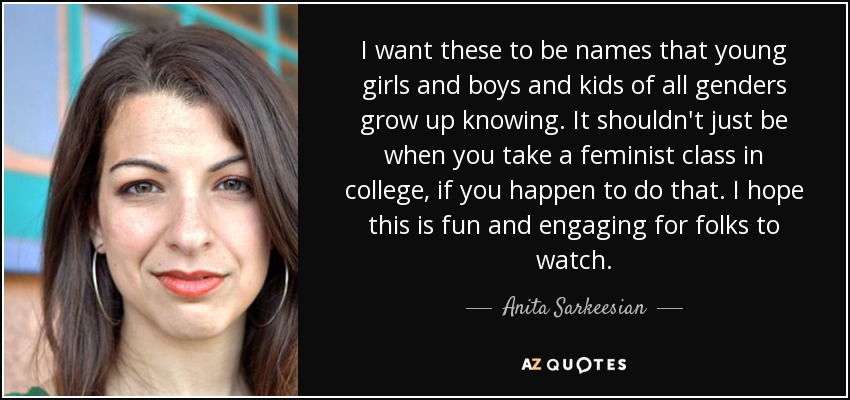
I want these to be names that young girls and boys and kids of all genders grow up knowing. It shouldn't just be when you take a feminist class in college, if you happen to do that. I hope this is fun and engaging for folks to watch.
I have an eight-year-old girl and she does have some appreciation for fashion, but she's stuck in that: "Oh my God, this is cute" phase, so when I go shopping with her and my wife, I can only last about 10 minutes before I have to start exploring other parts of the store.
The gaslight of the film [The Girl On The Train] became something that really needed to be dramatized more than the book did, because it wasn't going to read as strongly on screen.
The way we started was, Alison [McGhee] said, 'Tall girl, short girl.' We had no plans beyond that.
I could have a one-night stand, and I'm the kind of girl who looks over in the morning and is like, Do you really have to be here? I don't need to cuddle and do all that stuff because I know what it is and I don't try to make it more. I feel like a lot of women try to make it into more, so they don't feel so bad about just wanting to have sex.
I've got my girl records that are real feel-good and could be a radio crossover. But it's not me going in that direction, and being like, "We need this huge pop crossover record where we need this girl on the hook."
There's a misconception about girls accusing people of sexual assault. There's this sense of, Well, she might be lying, she might be telling the truth, it's really a he-said, she-said. But it turns out if you study the cases, something like 97 percent of the cases are actually true. And you think about it common sense - wise: Why would a young girl or a woman bring this attention upon herself? It's nonsensical. It sets up a binary equation where, in fact, if a girl makes that accusation, she's usually not lying about it.
There's a part of me with every book that thinks, What would it have meant for me tohave had this book when I was a kid? I decided to create a book for girls like me. The Littlest Bigfoot is about bullying and body image and girls who don't fit in. It's like training wheels for my adult books - like Sex and the City, but with 12-year-olds.
Try not to catch a girl when she's not in a great mood, tired or distracted.
People who know my music think I'm the most depressed girl on the planet.
I think as an actress before I was on Twitter I thought, I'm only doing drama [and dramatic roles]... but then as soon I started tweeting it was like, "Oh you're the funny girl!"... but that was never how I saw myself. It's changed how I seem in other people's eyes.
I liked girls with pale skin because I am a California boy, tanned and blonde hair.
I like a girl who's smart, they have to be able to grasp witty sarcasm.
If I'm gonna play a character in a movie or if I want to be the lead of a film, you wanna carry the guy, you wanna get the girl, you wanna save the day or the world.
In the '50s you weren't taught about sex whatsoever. It was never just talked about. People used to snoop behind their curtains and look at the neighbors. And if a girl became pregnant in your part of the world, she was shipped off to the countryside.
Can a controlled experiment explain why people like Kewpie dolls in one year, Beanie Babies in another, and American Girl dolls this year? Yet social scientists are asked to answer analogous questions. We economists and perhaps psychologists shouldn't overreact to the derision. That is, we shouldn't try to overlay a false sense of precision on our admittedly squooshy work.
We don't have T-shirts with my face, but there I can see the beginnings, especially young girls seeing me as sort of a icon in that way. And in that regard I'm more than happy to step in.
I'm a tough girl, I know what my job entails - it entails a lot more than standing in front of the camera. So I get it. I won't deny the physicality of it is exhausting, and sometimes my body just can't keep up. But it is ultimately about mind over matter.
Nice girls are not supposed to be hungry. They are not supposed to feed themselves or care about their own food. They're definitely not supposed to take food out of a child's mouth.
I did not have any problem with speaking up because my mother, my family, my grandmother, my aunt - I grew up in a family dominated by women - always encouraged me to do so. And if a girl is unafraid, then the world is her oyster.
I really needed to dramatize and clarify that Rachel was taking strides towards her own healing and her own sobriety - and that she was actually thoroughly frightened about what she may have done.This was something that was so beautifully done in the book [The Girl on the Train] through inner monologue, but I couldn't just have a whole film filled with inner monologues. So going to Alcoholics Anonymous was a very simple solution to that problem.
I needed to enhance the outward threat to Rachel.In the book [Girl on the Train], her inner threat is so strong; the fear of herself and her inability to remember and the false memories. In the film [Girl on the Train]I wanted to increase the exterior threat. So that's why Allison's part was bigger and was an important part of the climax of the film.
You come in as this satellite part of the film [Catching Fire], so I only see Stanley [Tucci] in my scenes. These kinds of movies have so many different components; it's about as different from doing The Girl as you could imagine.
Just because Rachel [from the Girl On The Train] is an unreliable character doesn't mean she has sex with anybody who walks by her. It was important to keep her a little virginal.
If readers like The Thorn and the Blossom, which I would call literary fantasy, I think they would like books such as Elizabeth Hand's Mortal Love, Catherynne Valente's The Girl Who Circumnavigated Fairyland in a Ship of Her Own Making, and Kelly Link's Stranger Things Happen.
Follow AzQuotes on Facebook, Twitter and Google+. Every day we present the best quotes! Improve yourself, find your inspiration, share with friends
or simply: