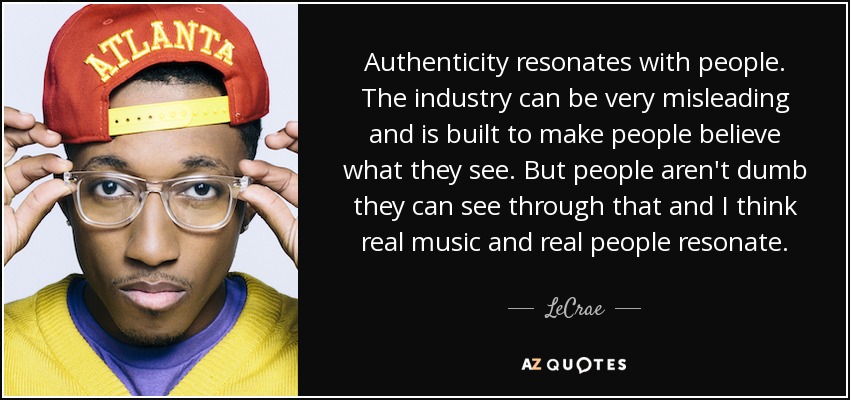
Authenticity resonates with people. The industry can be very misleading and is built to make people believe what they see. But people aren't dumb they can see through that and I think real music and real people resonate.
I like American cars. And I would do nothing to hurt the U.S. auto industry.
I just want to say that the only thing less popular than putting money into banks is putting money into the auto industry.
Beside the two wars he inherited in Iraq and Afghanistan, and promised to end, a financial crisis at home had pushed the United States to the brink of another Great Depression. When we spoke with the new president in March of 2009, the economy was losing 800,000 jobs a month, the government was throwing hundreds of billions of dollars at failing banks, and the auto industry was on the verge of collapse. Politically pummeled from all sides, Obama did his best to keep a sense of humor.
Chanting doesn't stop you from being creative or productive. It actually helps you concentrate. I think this would make a great sketch for television: imagine all the workers on the Ford assembly line in Detroit, all of them chanting Hare Krishna Hare Krishna while bolting on the wheels. Now that would be wonderful. It might help out the auto industry, and probably there would be more decent cars too.
I try not to be either optimistic or pessimistic. I try not to think about outcomes on that scale. My job, it seems to me, is to wake up every morning and figure out how to cause as much trouble for the fossil fuel industry as I can.
I think most micro-brewers/craft-brewers are similar in that they enjoy making something themselves and at the end of the day they can enjoy the fruit of their labor. Most people really enjoy the process of making beer and like the industry as a whole. We often are passionate about what we do and enjoy talking to people about the art and science of making beer.
When you're dealing with people in an industry that's all about making money, they push you farther than you really wanna go.
It [the film industry] is not a glamorous industry. It's really, really hard, and you get told all the time, "You're not this, you're not that," and so you have to find a center.
In the entertainment industry all that anybody wants to do whether it's music or stories or dancing or comedy or whatever, they want to entertain the public. And they do it any way they can. Sometimes they concentrate simply on entertaining people and they don't care what message they are giving.
One of the reasons for The Walt Disney Company's long- term success is really the first of Dr. Deming's famous points, "create constancy of purpose." In his professional career, Walt's major passion was to provide the finest in family entertainment. For the most part, for nearly a century, the Company has stayed true to that legacy, and has set the standard for the entire entertainment industry.
You go to other countries and you look at industries they have, and you say, let me see your regulations, and they're a fraction, just a tiny fraction of what we have.
Corporations that are turning over these huge profits can own everything: the media, the universities, the mines, the weapons industry, insurance hospitals, drug companies, non-governmental organisations. They can buy judges, journalists, politicians, publishing houses, television stations, bookshops and even activists. This kind of monopoly, this cross-ownership of businesses, has to stop.
I think people are much more concerned about money now. There aren't the big advances of the past. You feel the sense of nervousness about the book industry. It's not like before. Not that I knew very much about what it was like because I was a newcomer to it, but I get that feeling that people are more conservative in their book choices and what they are going to publish and what's a sure sell. As opposed to - just like in the economy - a sense of luxury and sense of risk taking ten years ago.
Technology changes rapidly and there's definitely a shift toward connectivity that provides 24-hour access to information aligned with individual needs. That's one of the driving trends and that's going to impact every industry in a very big way.
Technology affects everyone, from agriculture to broadcasting to automotive to content to travel to leisure to everything, so we're seeing an incredible array of CEOs from every different industry.
I want the people to work less for the government and more for themselves. I want them to have the rewards of their own industry.
I remember talking to, 40 years ago, one of the leading people in the government who was involved in arms control, pressing for arms control measures, détente, and so on. He's very high up, and we were talking about whether arms control could succeed. And only partially as a joke he said, "Well it might succeed if the high tech industry makes more profit from arms control than it can make from weapons-related research and production. If we get to that tipping point maybe arms control will work." He was partially joking but there's a truth that lies behind it.
Man didn't put me in this place [in entertaining industry]. I'm in this position because of God. And so, if man didn't put me in this place, I really don't see no man that can take me out of here.
All the great advances in cinema came about from technology. The 3-D camera was not invented by a movie director. The new industries are driven by the innovations in science and technology.
The manufacturing industry is starting to press for some kind of national healthcare. Now it's beginning to put it on the agenda. It doesn't matter if the population wants it. What 90% of the population wants would be kind of irrelevant. But if part of the concentration of corporate capital that basically runs the country - another thing we're not allowed to say but it's obvious - if part of that sector becomes in favor then the issue moves onto the political agenda.
Everyone out here in Los Angeles is trying to do whatever to break into films. It is a tough industry to get into, kind of like pro wrestling in a lot of respects when you think about it.
I think we all have a certain number of "coming of age" songs, and then a writer has to expand and grow into more varied and specific themes. And the music industry is, like Jawbreaker says, "selling kids to other kids," so it makes sense that those early songs in a writer's life are often the ones that catch people's ears, and later work is more difficult and less immediate.
My goal right now is to actually help Donald Trump. He's the Republican president. He's doing a lot of things that conservatives are for. I'm for. And so my goal is to help Kentucky by repealing regulations that are killing our coal industry. And I think on that, we're very much aligned.
It's a strange place where the film industry is at. I guess you could just play superhero after superhero. That seems to be the only guaranteed big-money thing. I don't know.
Follow AzQuotes on Facebook, Twitter and Google+. Every day we present the best quotes! Improve yourself, find your inspiration, share with friends
or simply: