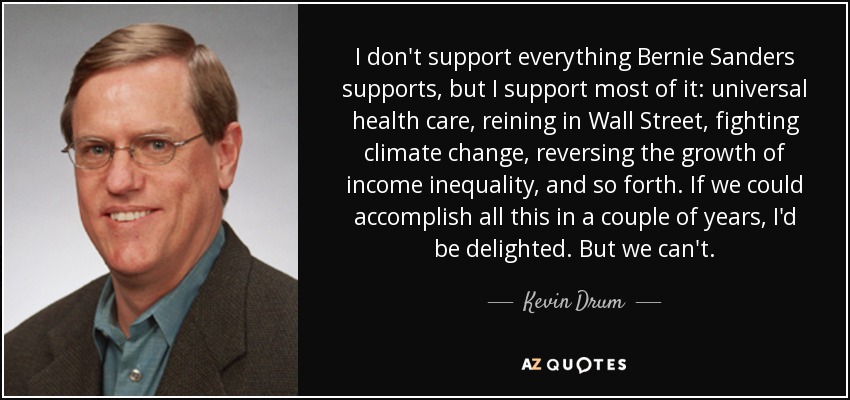
I don't support everything Bernie Sanders supports, but I support most of it: universal health care, reining in Wall Street, fighting climate change, reversing the growth of income inequality, and so forth. If we could accomplish all this in a couple of years, I'd be delighted. But we can't.
We know that communism is the right hypothesis. All those who abandon this hypothesis immediately resign themselves to the market economy, to parliamentary democracy-the form of state suited to capitalism-and to the inevitable and 'natural' character of the most monstrous inequalities.
The law cannot save those who deny it but neither can the law serve any who do not use it. The history of injustice and inequality is a history of disuse of the law.
We work harder and we earn less. Income inequality is at the highest point in over a century. While American capitalism never guaranteed success, it did guarantee opportunity, for too many, the dream of economic mobility has been replaced with a nightmare of economic stagnation.
At a time of massive inequality, I think we can raise substantial sums of revenue to address the needs of working families, the elderly, and the children, by asking those people who are doing phenomenally well to start paying their fair share.
It would, I think, be hard for anyone to make the case that the United States is a just society or anything close to a just society. In America today, there is massive injustice in terms of income and wealth inequality. Injustice is rampant.
The story of Detroit's bankruptcy was simple enough: Allow capitalism to grow the city, campaign against income inequality, tax the job creators until they flee, increase government spending in order to boost employment, promise generous pension plans to keep people voting for failure. Rinse, wash and repeat.
The United States in many ways resembles a Third World country - far more elevated, but it has many of those structural characteristics: the extreme inequality of wealth, the deterioration of infrastructure because it only serves poor people, predatory operations, huge corruption, and so on.
Sometimes the facts of the crime are so distracting - there's been some tragic murder or horrific incident, and people aren't required to think as carefully and thoughtfully, and directly, about this legacy of racial inequality and structural poverty. And what it's contributing to these wrongful convictions.
First of all, [Buckminster Fuller's] identification of the problems that are all that much more pertinent, all that much more pressing in the world today than in his own lifetime from sustainability in terms of the environment to income inequality.
There are, however, those who have called the book [The Kite Runner] divisive and objected to some of the issues raised in the book, namely racism, discrimination, ethnic inequality etc.
One feels so despairing on some levels about what's going on in our culture, in regards to things like gender inequality. But there is progress. There is enhanced empathy and respect for others, we are fighting the tide, even though it seems like a tug of war sometimes.
It is probably true that the economic benefits of being in the EU are a net positive to the UK, but a large number of people do not share in these benefits and the result is increasing inequality.
How many really great writers are there who are totally non-political? You can hear the French Revolution in the poetry of [Percy Bysshe] Shelly and [John] Wordsworth; you can sense the vast inequalities of Tsarist Russia in [Anton] Chekhov and [Lev] Tolstoy.
Lynching is an important aspect of racial history and racial inequality in America, because it was visible, it was so public, it was so dramatic, and it was so violent.
Marginalized youth, workers, artists and others are raising serious questions about the violence of inequality and the social order that legitimates it. They are calling for a redistribution of wealth and power - not within the old system, but in a new one in which democracy becomes more than a slogan or a legitimation for authoritarianism and state violence.
The national conversation around white entitlement, around institutionalized racism, the Black Lives Matter movement, I think, came about in large part because of the widening and broadening of our understanding of inequality. That conversation was begun by Occupy.
Neoliberal violence produced in part through a massive shift in wealth to the upper 1%, growing inequality, the reign of the financial service industries, the closing down of educational opportunities, and the stripping of social protections from those marginalized by race and class has produced a generation without jobs, an independent life and even the most minimal social benefits.
At the start of the second decade of the 21st century, young people all over the world are demonstrating against a variety of issues ranging from economic injustice and massive inequality to drastic cuts in education and public services. These demonstrations have and currently are being met with state-sanctioned violence and an almost pathological refusal to hear their demands.
Rejecting the notion that democracy and markets are the same, young people are calling for an end to the poverty, grotesque levels of economic inequality, the suppression of dissent and the permanent war state.
Four hundred top-decision makers listed the myriad looming threats to global security, including famine, terrorism, inequality, disease, poverty and climate change. Yet when we tried to address each diverse force, we found them all attached to one universal security risk: fresh water.
The benefits of feminism have been unequally distributed, because the move toward gender equality and gender neutrality has been countered to a large extent by the increase in economic inequality.
The historical weight of gender inequality has tended to concentrate women in lower-paid jobs with fewer benefits and at the same time made them primarily responsible for care giving.
ulturally, we are definitely seeing people being to ask hard questions. There's been a major shift over the last year. The NSA revelations played a big part but there are all sorts of other issues too, like inequality and gentrification in the Bay Area, and labor abuses everywhere from Amazon's warehouse, to Apple's factories, to start-ups like Uber and TaskRabbit.
The critique of social inequality, which is very much a part of my story, came about naturally from my recollection of Huck and Tom and the controversy surrounding [Mark] Twain's use of them and from my own passionate interest in civil rights, animal rights, and the right of Earth to survive humankind's reprehensible neglect of its stewardship.
Follow AzQuotes on Facebook, Twitter and Google+. Every day we present the best quotes! Improve yourself, find your inspiration, share with friends
or simply: