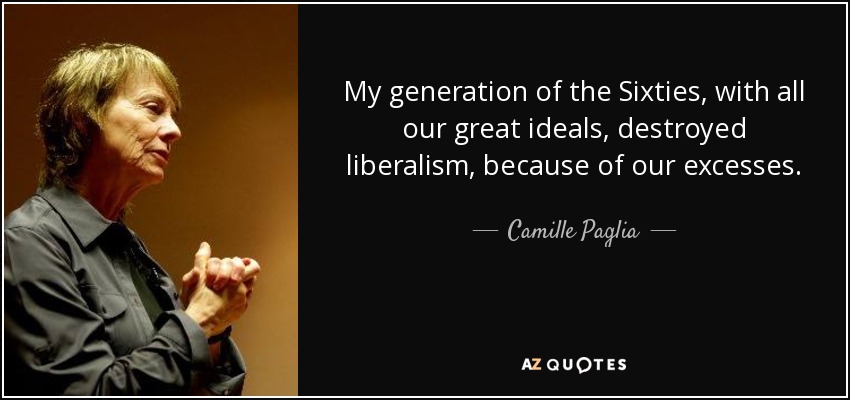
My generation of the Sixties, with all our great ideals, destroyed liberalism, because of our excesses.
In the 1970s, many intellectuals had become political radicals. Marxism was correct, liberalism was for wimps, and Marx had pronounced that 'the ruling ideas of each age have ever been the ideas of its ruling class.'
If adapted to the unique requirements of various regions and peoples of the world, such economic pluralism could have a greater global impact over the next fifty years than the collectivist economics of Marxism and neo-Marxism have had during the half century just past.
What does it say about a president's policies when he has to use a cartoon character rather than real people to justify his record?
The belief that recipients of government aid are better off the more we spend on them is remarkably persistent. No matter how many times this central tenet of liberalism gets debunked, like Brett Favre, it just keeps coming back.
It is less important to redistribute wealth than it is to redistribute opportunity.
The victory of liberalism enables them to sue their victors.
iPod liberalism [is] where we assume that every single Iranian or Chinese who happens to have and love his iPod will also love liberal democracy.
Poverty often deprives a man of all spirit and virtue; it is hard for an empty bag to stand upright.
Liberalism regards life as an adventure in which we must take risks in new situation, in which there is no guarantee that the new will always be the good or the true, in which progress is a precarious achievement rather than inevitability.
If man chooses oblivion, he can go right on leaving his fate to his political leaders. If he chooses Utopia, he must initiate an enormous education program - immediately, if not sooner.
I would always argue to my students that Canada is not necessarily or inherently a left-wing country, and the United States is not necessarily the citadel of right-wing liberty. The obvious case there is Franklin Roosevelt's New Deal, which made the Americans much further left than the Canadians at the time, and Americans coming to Canada found us backward, conservative, and out of tune with the kind of free-spirited liberalism that there was in the States. Then things reversed, with medicare the prime example.
Given that the nineteenth century was the century of Socialism, of Liberalism, and of Democracy, it does not necessarily follow that the twentieth century must also be a century of Socialism, Liberalism and Democracy: political doctrines pass, but humanity remains, and it may rather be expected that this will be a century of authority ... a century of Fascism. For if the nineteenth century was a century of individualism it may be expected that this will be the century of collectivism and hence the century of the State.
Liberalism is a really old British tradition and it has a completely different attitude towards the individual and the relationship between the individual and the state than the collectivist response of Labour, and particularly Old Labour, does.
It is not too soon to provide by every possible means that as few as possible shall be without a little portion of land. The small landholders are the most precious part of a state.
The freedom of man is, in political liberalism, freedom from persons, from personal dominion, from the master; the securing of each individual person against other persons, personal freedom.
Liberalism provided me with an intellectual satisfaction that I never found in fundamentalism. I became so enamored of the insights of liberalism that I almost fell into the trap of accepting uncritically everything it encompassed.
Peter Beinart excoriates the doughface liberals who during the Cold War put anti-imperialism before anti-totalitarianism and demanded total moral purity on the part of the United States, thus opposing any action in the real world to resist Soviet expansionism. If the Democrats were, as he advocates, to return to the Trumanesque anti-totalitarian liberalism that held sway in the party from roughly 1947 to 1972, the party and the country would be better off.
[Senators John Kerry & John Edwards] have risen high in Democratic polls with a brand of class resentment and soak-the-rich rhetoric rooted in the old-fashioned liberalism of Ted Kennedy.
In academia, left-liberalism is so entrenched its advocates' debating skills have gone rusty. When you've been talking to yourself for decades and imposing speech codes on everyone else, your ability to argue coherently - let alone entertainingly - inevitably wanes.
The ACLU's record, far from showing a momentary wavering from impartiality, is replete with attemps to reform American society according to the wisdom of liberalism. The truth of the matters is that the ACLU has always been a highly politicized organization.
[C]ontemporary liberalism stands on a foundation of assumptions and ideas integral to the larger fascist movement.
In my view, the future of politics is, without a doubt, social liberalism married to economic conservatism. Which means we have to make an economic argument to social liberals, that it's OK to vote for us. But we won't run the economy into the ground at the same time.
[T]aking the Third into account does not bring us into the position of pragmatic consideration, of comparing different Others; the task is rather to learn to distinguish between false conflicts and the true conflict. For example, today's conflict between Western liberalism and religious fundamentalism is a false one, since it is based on the exclusion of the third term which is its truth: the Leftist emancipatory position.
Neo-Liberalism promised us a Global Village and gave us a Potemkin Village.
Follow AzQuotes on Facebook, Twitter and Google+. Every day we present the best quotes! Improve yourself, find your inspiration, share with friends
or simply: