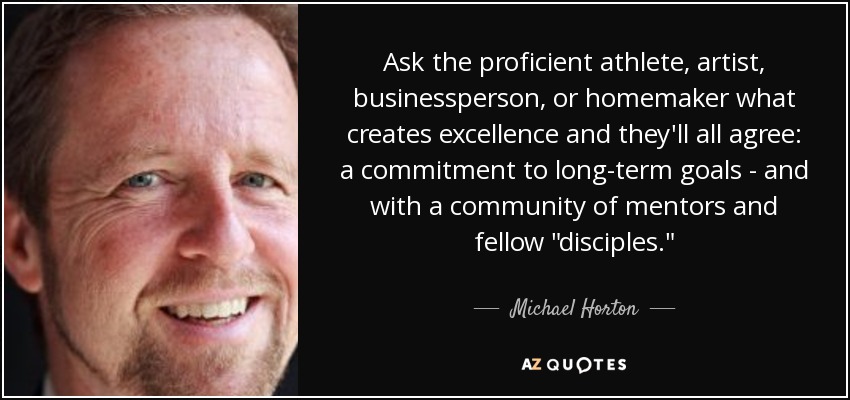
Ask the proficient athlete, artist, businessperson, or homemaker what creates excellence and they'll all agree: a commitment to long-term goals - and with a community of mentors and fellow "disciples."
Nothing highlights better the continuing gap between rhetoric and substance in British financial services than the failure of providers here to emulate Jack Bogle's index fund success in the United States. Every professional in the City knows that index funds should be core building blocks in any long-term investor's portfolio. Since 1976, the Vanguard index funds has produced a compound annual return of 12 percent, better than three-quarters of its peer group.
We can extrapolate from the study that for the long term individual investor who maintains a consistent asset allocation and leans toward index funds, asset allocation determines about 100% of performance.
The investor should be aware that even though safety of its principal and interest may be unquestioned, a long term bond could vary widely in market price in response to changes in interest rates.
We rarely use much debt and, when we do, we attempt to structure it on a long-term fixed rate basis. We will reject interesting opportunities rather than over-leverage our balance sheet. This conservatism has penalized our results but it is the only behavior that leaves us comfortable, considering our fiduciary obligations to policyholders, depositors, lenders and the many equity holders who have committed unusually large portions of their net worth to our care.
Unlike the objective of far too many companies, manufacturing is not about a quick exit. It is centered on long-term value creation.
Like twentieth-century Iran, the remnant of the Persian Empire, Ethiopia under Haile Selassie attempted to preserve the absolutist state throught an accommodation with modernizing forces in his own terms without completely subduing traditionalists. This was not a strategy of Haile Selassie's own choosing. Instead, he was overtaken by events and forced to deal with contradictions that were from the very beginning too formidable to be managed in the long term.
For all great innovations, someone took a risk. They risked capital; they risked their energy; they risked their opportunity cost; and more important, they risked failure. We can't innovate without the belief that we can succeed, the confidence that others will be there to help us on the journey, and the security that we will not be punished if we fail to reach our goal. A fast-moving world demands innovation for long-term success.
To be sure, changes in American family structure have been fairly continuous since the first European settlements, but today thesechanges seem to be occurring so rapidly that the shift is no longer a simple extension of long-term trends. We have passed a genuine watershed: this is the first time in our history that the typical school-age child has a mother who works outside the home.
In my day job, I worry non-stop about making wise investments for long-term gains.
The secret to desire in a long-term relationship
But it may be one of our best markets in the long term because when the Japanese society embraces a brand it is a very deep connection, so we're willing to make that investment knowing that it's not the quick route to success that might be in other countries.
No long-term marriage is made easily, and there have been times when I've been so angry or so hurt that I thought my love would never recover.
Certain elements of today's ecological crisis reveal its moral character. First among these is the indiscriminate application of advances in science and technology. Many recent discoveries have brought undeniable benefits to humanity. Indeed, they demonstrate the nobility of the human vocation to participate responsibly in God's creative action in the world. Unfortunately, it is now clear that the application of these discoveries in the fields of industry and agriculture have produced harmful long-term effects.
It is much easier to make intellectual messes than it is to clarify complicated issues, especially when real solutions would challenge the status quo and require much careful thought across many fields of knowledge. Problems of climatic change, biotic impoverishment, population growth, and the choices to be made by various technologies and the transition to a sustainable and decent society with an economy that works over the long-term are difficult, complex, and intertwined problems with many possible answers.
While business advertises, charity is taught to beg. While business motivates with a dollar, charity is told to motivate with guilt. While business takes chances, charity is expected to be cautious. We measure the success of businesses over the long term, but we want our gratification in charity immediately. We are taught that a return on investment should be offered for making consumer goods, but not for making a better world.
We want to do what is good for Cardiff and for the long-term survival, and hopefully Cardiff can be around for a long time and, God willing, be around in the Premier League.
Mangling my racket and an odd swearword on the court is not something I am proud of and it shouldn't happen, but even my coaches have told me that it's sometimes better to let it all out, the anger inside you, because keeping it bottled would just eat you up in the long term.
I also want to raise the possibility that there are, in the very long term, "virtue effects" in economics- for instance that widespread corrupt accounting will eventually create bad long term consequences as a sort of obverse effect from the virtue-based boost double-entry book-keeping gave to the heyday of Venice. I suggest that when the financial scene starts reminding you of Sodomand Gomorrah, you should fear practical consequences even if you like to participate in what is going on.
Everyone is wounded. No one is healthy enough to never screw up, when you're in combat. But, I like to show that, and I like to show how people get back from that. You have to forgive each other. When you're in the middle of a long-term commitment, the essence of it is that everyone is going to have good days and bad days, and it's about how you continue to rejoin forces.
We need an adequate defense, but every arms dollar we spend above adequacy has a long-term weakening effect upon the nation and its security.
There were times in my life when I said, "Oh God, I'm making a terrible, terrible mistake here." And on another level it looked as if that's exactly what I had done. All of us can look back across our lives and see what we thought was a disaster was actually a blessing - from a long-term perspective, it was a blessing. With practice, we can shorten the length of time between "what a dumb mistake I've made" and "what a brilliant choice that was.
In the long term, Israel's security rests on only one pillar: the Palestinians' acceptance of the country. It isn't the atom bomb that makes Israel secure.
In the long term, it is desirable that the human race, faced with the prospect of extinction on Earth, should prepare an escape route for itself to another inhabitable planet.
I have told our senior executives that I will slaughter holy cows if it benefits the company's long-term success. When we asked ourselves whether Formula 1 still matched the concept of a sustainable company, the clear answer was no.
Follow AzQuotes on Facebook, Twitter and Google+. Every day we present the best quotes! Improve yourself, find your inspiration, share with friends
or simply: