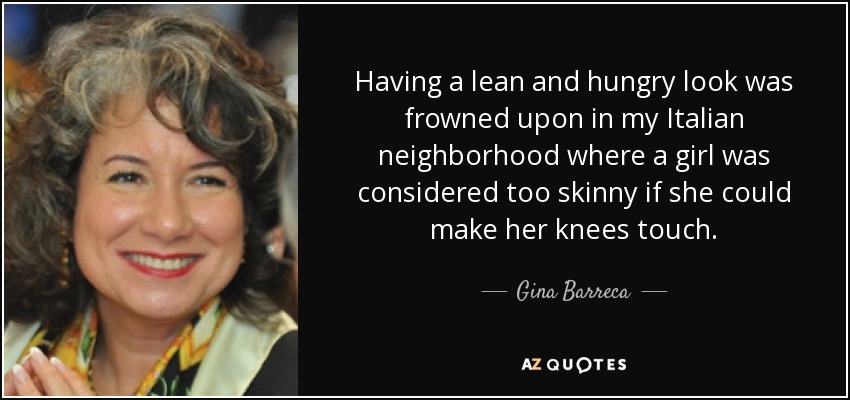
Having a lean and hungry look was frowned upon in my Italian neighborhood where a girl was considered too skinny if she could make her knees touch.
Dimension stone, flint, rubble, burnt or unburnt brick, use them as you find them. For it is not every neighborhood or particular locality that can have a wall built of burnt brick like that at Babylon, where there was plenty of asphalt to take the place of lime and sand, and yet possibly each may be provided with materials of equal usefulness so that out of them a faultless wall may be built to last forever.
Trees which grow in places facing the course of the sun are not of porous fiber but are solid, being drained by the dryness... The trees in sunny neighborhoods, therefore, being solidified by the compact texture of their fiber, and not being porous from moisture, are very useful, so far as durability goes, when they are hewn into timber. The lowland firs, being conveyed from sunny places, are better than those highland firs, which are brought here from shady places.
A new world of complex relationships and feelings opens up when the peer group takes its place alongside the family as the emotional focus of the child's life. Early peer relationships contribute significantly to the child's ability to participate in a group (and in that sense, society), deal with competition and disappointment, enjoy the intimacy of friendships, and intuitively understand social relationships as they play out at school, in the neighborhood, and later in the workplace and adult family.
It would not be long ere the whole surface of this country would be channelled for those nerves which are to diffuse, with the speed of thought, a knowledge of all that is occurring throughout the land, making, in fact, one neighborhood of the whole country.
Great powers reserve the right to police bad actors in their neighborhoods.
I honestly believe that in my lifetime we will see a country once again governed by Christians...and Christian values. What Christians have got to do is take back this country, one precinct at a time, one neighborhood at a time, and one state at a time.
I was not addicted to stealing in my youth, nor have ever been; yet such was the confidence of the Negroes in the neighborhood, even at this early period of my life, in my superior judgment, that they would often carry me with them when they were going on any roguery, to plan for them.
Lets make no mistake about this: The American Dream starts with the neigborhoods. If we wish to rebuild our cities, we must first rebuild our neighborhoods. And to do that, we must understand that the quality of life is more important than the standard of living.
In losing stewardship we lose fellowship; we become outcasts from the great neighborhood of creation.
Poor communities, frequently communities of color but not exclusively, suffer disproportionately. If you look at where our industrialized facilities tend to be located, they're not in the upper middle class neighborhoods.
I grew up in a very loving middle class family. My parents were educators. I'm not even the first PhD in my family. They tried to shield me, just as other parents in my neighborhood tried to shield their children. But you knew there was a reason that you couldn't go to that theme park or to a movie theater or to a hamburger stand. They couldn't shield you completely. What they did though was they never let it be an excuse for not achieving, and they always said racism is somebody else's problem, not yours. They tried in that way not to make us bitter about Birmingham.
Sometimes, when you grow up in one of these poverty-stricken neighborhoods where the educational system isn't the best, you don't realize that you have any choices.
The environment is the most important, the most fundamental, civil-rights issue.... Four out of every five toxic-waste dumps in America is in a black neighborhood.
St. Louis has a lot of weird food customs that you don't see other places - and a lot of great ethnic neighborhoods. There's a German neighborhood. A great old school Italian neighborhood, with toasted ravioli, which seems to be a St. Louis tradition. And they love provolone cheese in St. Louis.
Famously in 1936, Oswald Mosley led a march of his British black shirts through a mostly Jewish neighborhood, in the east end of London. What resulted was what they called the "Battle of Cable Street", where Oswald Mosley and his fascists basically got the snot beaten out of them when East London rose up against them and beat them up.
We were poor. we were so poor, in my neighborhood the rainbow was in black-and-white.
In my old neighborhood, a boy stopped playing when he began to lose his pulse. And then he became the referee.
We follow a certain pattern, a maze, if you will, every day, tracing our steps into certain districts and neighborhoods and back home. So it's easy for people to relate to clichés. That's why comedy routines are based on mutual experiences of clichés.
There's a lot of dudes in my neighborhood that have handlebar mustaches. Which is cool if you want to have a handlebar mustache but don't try to have a conversation with me like you don't have a handlebar mustache.
When 9/11 happened, 12 of our neighborhood firemen were killed. I looked around at the country that had adopted me and I became an American.
We lived in a neighborhood that was too rich for us. When I was young, I had to deliver groceries to the homes of the kids I went to school with. I had to go to the back doors to make the deliveries. It was embarrassing. That was one thing out of a hundred.
My mother was born in San Juan. So I'm Puerto Rican, Jewish, colored and married to a white woman. When I move into a neighborhood, people start running four ways at the same time.
Many churches of all persuasions are hiring research agencies to poll neighborhoods, asking what kind of church they prefer. Then the local churches design themselves to fit the desires of the people. True faith in God that demands selflessness is being replaced by trendy religion that serves the selfish.
It's really the story of a young woman, or two women, growing up in Naples in a poor neighborhood. The way that they get out of it - or don't get out of it - that's part of it. But it's also the story of the mid-20th century in Italy so it's really like a social, historical and personal novel. I think that even though I didn't live in Italy in those years, it did cover that same type of generational upbringing that someone like me might've had in America.
Follow AzQuotes on Facebook, Twitter and Google+. Every day we present the best quotes! Improve yourself, find your inspiration, share with friends
or simply: