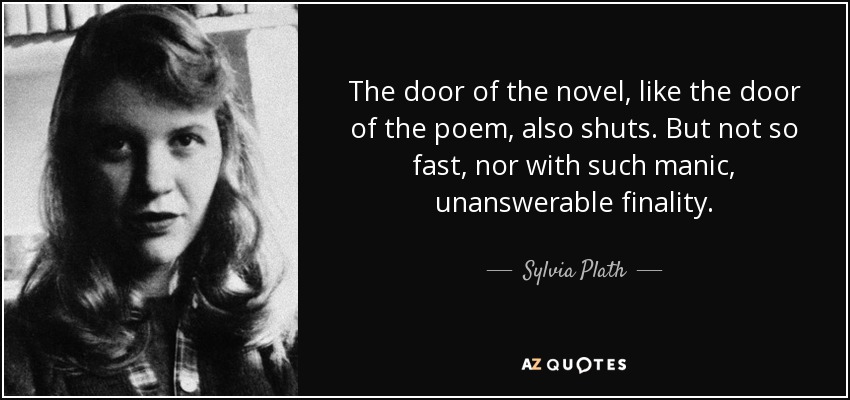
The door of the novel, like the door of the poem, also shuts. But not so fast, nor with such manic, unanswerable finality.
Novels are longer than life.
Writing's funny, it's like walking down a hall in the dark looking for the light switch, and suddenly you find it, flip it on, and then you discover the hallway you passed through is papered with the novel you've written.
It was like being in a Jane Austen novel, but one with far less clothing.
Whether I like it or not, most of my images of what various historical periods feel, smell, or sound like were acquired well before I set foot in any history class. They came from Margaret Mitchell, from Anya Seton, from M.M. Kaye, and a host of other authors, in their crackly plastic library bindings. Whether historians acknowledge it or not, scholarly history’s illegitimate cousin, the historical novel, plays a profound role in shaping widely held conceptions of historical realities.
I don't say anything and he casually leans against my desk, picking up the novel that's sitting there. "It's bullshit," he tells me, flicking through it. "There's no such thing as Atticus Finch." I shrug. "It'd be nice if there was, though.
You can't really succeed with a novel anyway; they're too big. It's like city planning. You can't plan a perfect city because there's too much going on that you can't take into account. You can, however, write a perfect sentence now and then. I have.
We trust to novels to train us in the practice of great indignations and great generosity.
The only form of fiction in which real characters do not seem out of place is history. In novels they are detestable.
Good novels are not written, they're rewritten!
One of my heroes, G.K. Chesterton, said, "The old fairy tales endure forever. The old fairy tale makes the hero a normal human boy; it is his adventures that are startling; they startle him because he is normal." Discovering that the modern world can still contain the wonder and strangeness of a fairy tale is part of what my novels are about.
Novels arise out of the shortcomings of History.
St. Paul introduced an entirely novel view of marriage, that it existed primarily to prevent the sin of fornication. It is just as if one were to maintain that the sole reason for baking bread is to prevent people from stealing cake.
Novels are about other people and poems are about yourself.
...By far the most usual way of handling phenomena so novel that they would make for a serious rearrangement of our preconceptions is to ignore them altogether, or to abuse those who bear witness for them.
Reading a novel in which all characters illustrate patience, hard work, chastity, and delayed gratification could be a pretty dull experience.
Sir,’ said Stephen, ‘I read novels with the utmost pertinacity. I look upon them--I look upon good novels--as a very valuable part of literature, conveying more exact and finely-distinguished knowledge of the human heart and mind than almost any other, with greater breadth and depth and fewer constraints.
I never really understood that massive collaboration involving hundreds of people is what makes movies possible, and it's also why I would agree that curiosity is not the most important human trait; the urge to collaborate is. Heck . . . only we have the ability to cooperate to make like online communities and space telescopes and imaginariums and movies. So the great thrill of this whole experience [my novel being made into a movie] for me was . .. .seeing humanity do what it's best at, which ultimately is not competing but cooperating.
You are about to begin reading Italo Calvino's new novel, If on a winter's night a traveler. Relax. Concentrate. Dispel every other thought. Let the world around you fade. Best to close the door; the TV is always on in the next room. Tell the others right away, "No, I don't want to watch TV!" Raise your voice -- they won't hear you otherwise -- "I'm reading! I don't want to be disturbed!" Maybe they haven't heard you, with all that racket; speak louder, yell: "I'm beginning to read Italo Calvino's new novel!" Or if you prefer, don't say anything: just hope they'll leave you alone.
Dear Mia, What can I say? I don't know all that much about romance novels, but I think you must be the Stephen King of the genre. Your book is hot. Thanks for letting me read it. Anyone who doesn't want to publish it is a fool. Anyway, since I know it's your birthday, and I also know you never remember to back anything up, here's a little something I made for you. It would be a shame if Ransom My Heart got lost before it ever saw the light of day because your hard drive crashed. See you tonight. Love, Michael
Other people’s words are so important. And then without warning they stop being important, along with all those words of yours that their words prompted you to write. Much of the excitement of a new novel lies in the repudiation of the one written before. Other people’s words are the bridge you use to cross from where you were to wherever you’re going.
A novel is never anything but a philosophy expressed in images. And in a good novel the philosophy has disappeared into the images.
Adrianne Harun's dark, mysterious novel is by turns Gothic and grittily realistic, astute and poetic in its evocation of evil everywhere.
A bank book makes good reading - better than some novels.
Unless a writer lives with a periodic delusion of his greatness, he will not continue writing. He must believe, against all reason and evidence, that the public will experience a catastrophic loss if he does not complete his novel. The public is just clamoring to give him his fame. From the book Dare to be a Great Writer: 329 Keys to Powerful Fiction by
Follow AzQuotes on Facebook, Twitter and Google+. Every day we present the best quotes! Improve yourself, find your inspiration, share with friends
or simply: