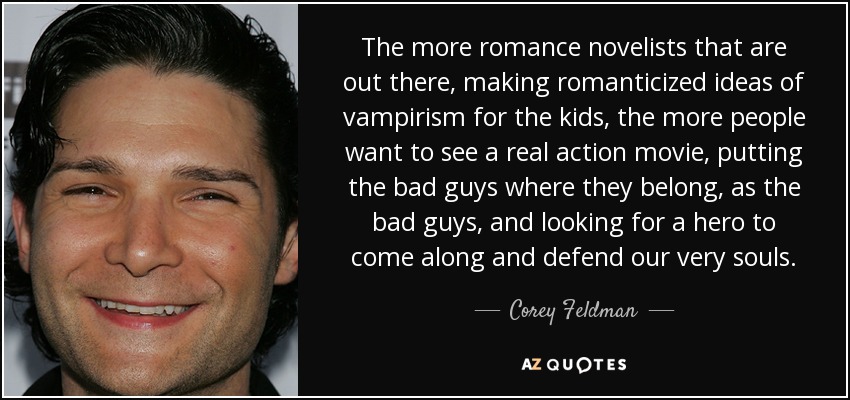
The more romance novelists that are out there, making romanticized ideas of vampirism for the kids, the more people want to see a real action movie, putting the bad guys where they belong, as the bad guys, and looking for a hero to come along and defend our very souls.
Even in an intensely mediated world, in a world that offers at least the illusion of radical self-invention and radical freedom of choice, I as a novelist am drawn to the things you can't get away from. Because much of the promise of radical self-invention, of defining yourself through this marvelous freedom of choice, it's just a lie. It's a lie that we all buy into, because it helps the economy run.
The best novelist of my generation is an Italian living in Paris, still working and improving - Italo Calvino.
Unfortunately for novelists, real life is getting way too funny and far-fetched.
For a novelist, it’s kind of an onerous burden to represent an entire culture. That said, I’m in a unique position to speak on behalf of Afghanistan on certain issues that I feel are important, particularly the issue of Afghan refugees.
I'm a novelist at heart. My sole intention is to write the best novel possible. I don't think about the film potential at all.
It is however, difficult to make your narratives relative by yourself. A novelists' work is to provide models to make your narratives relative. If you read my novels then you may feel, "I have the same experience as this narrative", or "I have the same idea as this novel". It means that your narrative and mine sympathize, concord and resonate together.
I’ve always said to people, "I don’t care what you call me as long as the checks don’t bounce and the family gets fed." But I never saw myself that way. I just saw myself as a novelist.
More than anything I am a novelist. But for me, an author's job is not only to create linguistically accomplished works. As an author I also want to stimulate discussion.
And there are two types of stories. One type is one's own story. The other type is telling the stories of others. Thanks to this genre, writers of nonfiction can now use the tools of the reporter, the points of view and ear for dialog of a novelist, and the passion and wordplay of the poet.
I am not a psychological novelist, and I try very hard not to allow the reader to see the plight or circumstances of the characters as individual psychological plights. That's my preference; still, a lot of people do read my novels as psychological studies, and they're right to read them that way too, if that's what they mean to them.
To be honest, I want readers to be wrung out. As a novelist, I don't have a political agenda or specific philosophy; I'm trying to create a gut-wrenching, intimate, memorable experience.
For me the journey of making a film is a journey of discovery as to what that film is. I mean what I do is what other artists do, painters, novelists, people that make music, poets, sculptors, you name it. It's about starting out and working with the material and discovering through making, working with the material the artifact.
The lesson you have to learn as novelist is how to be collaborative, and how to say, "I don't get to dictate this."
A novelist is someone who sits around the house all day in his underwear, trying not to smoke.
I couldn't have been a novelist without being a mother. It gives you a unique witness point of the growth of a personality. It was a kind of biological component for me that had to come first. My children gave this other window on the world.
My temperament is not geared to that of a novelist.
I think that if the novel's task is to describe where we find ourselves and how we live now, the novelist must take a good, hard look at the most central facts of contemporary life - technology and science.
Alternate history fascinates me, as it fascinates all novelists, because 'What if?' is the big thing.
I want to be a popular novelist who's also serious, or a serious novelist who's also very accessible.
All good novelists have bad memories. What you remember comes out as journalism; what you forget goes into the compost of the imagination.
So much of a novelist's writing, as I have said, takes place in the unconscious: in those depths the last word is written before the first word appears on the paper. We remember details of our story, we do not invent them.
I try very hard to be fair, and I look for ironies. In a way, I live on ironies as a novelist.
I do have a very strong sense that most of the terrible things in life happen suddenly and unpredictably, and certainly can sweep you off in different directions, and that is always of interest to a novelist.
I couldn't think about novels at all. It seemed the only writing that was appropriate to that horrendous event was journalism, reportage. And, in fact, I think the profession rose quite honorably to the task. Novelists require a slower turnover, I mean, in time.
Follow AzQuotes on Facebook, Twitter and Google+. Every day we present the best quotes! Improve yourself, find your inspiration, share with friends
or simply: