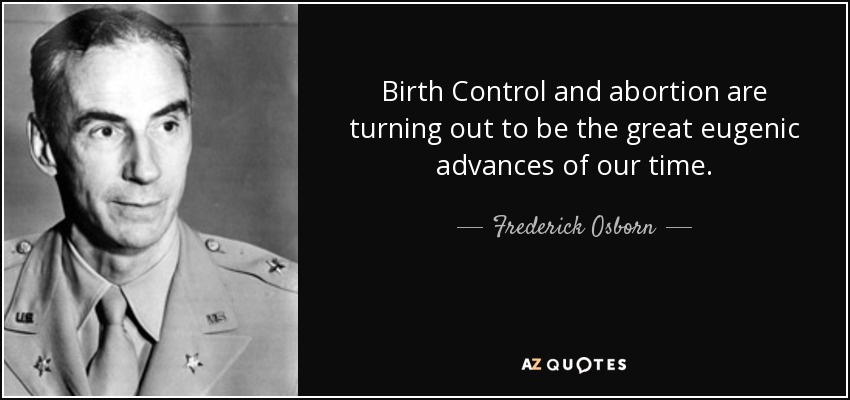
Birth Control and abortion are turning out to be the great eugenic advances of our time.
One of the bigger mistakes of our time, I suppose, was preaching the demonization of all judgment without teaching how to judge righteously. We now live in an age where, apart from the inability to bear even good judgment when it so passes by, still everyone, inevitably, has a viral opinion (judgment) about everything and everyone, but little skill in good judgment as its verification or harness.
Of books in our time the variety is so voluminous, and they follow so fast from the press, that one must be a swift reader to acquaint himself even with their titles, and wise to discern what are worth reading.
With a novelist's sense of drama and a historian's understanding of the social forces that shape our lives, Tom Gjelten has captured vividly -- through the chronicle of a powerful family's fortunes -- one of the great political dramas of our time.
The finest and most beautiful ideas on morals and manners have been swept away before our times, and nothing is left for us but to glean after the ancients and the ablest amongst the moderns.
Too much of our time is spent trying to chart God on a grid, and too little is spent allowing our hearts to feel awe. By reducing Christian spirituality to formula, we deprive our hearts of wonder.
There is again a living prophet on the earth speaking in the name of the Lord. And how we need such guidance! Our times are turbulent and difficult. We see wars internationally and distress domestically. Neighbors all around us face personal heartaches and family sorrows. Legions know fear and troubles of a hundred kinds.
If I were to give a summary of the tendency of our times, I would say, Quantity. The multitude, the mass spirit, dominates everywhere, destroying quality. Our entire life--production, politics, and education--rests on quantity, on numbers. The worker who once took pride in the thoroughness and quality of his work, has been replaced by brainless, incompetent automatons, who turn out enormous quantities of things, valueless to themselves, and generally injurious to the rest of mankind. Thus quantity, instead of adding to life's comforts and peace, has merely increased man's burden.
The present mode of life on earth is madness, which is nontheless lethal for being legal. Rational existence is possible, but it calls for a world consciousness and a world design. People who develop the habit of thinking of themselves as world citizens are fulfilling the first requirement of sanity in our time.
You usually get one or the other, you get someone who knows how to tell a story but they don't necessarily know about light and camera and rhythm, or you get someone who can make beautiful images but they can't necessarily tell a great story. He does both and I think he's going to be one of the film-makers that our time is remembered for.
In general, my paintings are multifocal. You can't call it unfocused space, but not being fixed to a single focus is very much of our time.
That we have great men in our time and recent times is not because of our educational system, but rather in spite of it. They are the ones the teachers couldn't spoil.
In the political, the social, the economic, even the cultural sphere, the revolutions of our time have been revolutions "against" rather than revolutions "for"... On the whole throughout this period the man--or party--that stood for doing the positive has usually cut a pathetic figure; well meaning but ineffectual, civilized but unrealistic, he was suspect alike to [by both] the ultras of destruction and the ultras of preservation and restoration.
One of the great weaknesses of the progressive, as distinct from the religious, mind, is that it has no awareness of truth as such; only of truth in terms of enlightened expediency. The contrast is well exemplified in two exact contemporaries - Simone Weil and Simone de Beauvoir; both highly intelligent and earnestly disposed. In all the fearful moral dilemmas of our time, Simone Weil never once went astray, whereas Simone de Beauvoir, with I am sure the best of intentions, has found herself aligned with apologists for some of the most monstrous barbarities and falsehoods of history.
Is it not our duty to find the symphonic formula which fits our time, one which progress, daring and modern victory demand? The century of airplanes has a right to its own music.
Technology is both a tool for helping humans and for destroying them. This is the paradox of our times which we're compelled to face.
SETI is probably the most important quest of our time , and it amazes me that governments and corporations are not supporting it sufficiently.
The great question for our time is, how to make sure that the continuing scientific revolution brings benefits to everybody rather than widening the gap between rich and poor. To lift up poor countries, and poor people in rich countries, from poverty, to give them a chance of a decent life, technology is not enough. Technology must be guided and driven by ethics if it is to do more than provide new toys for the rich.
I have always considered The Merry Wives one of the worst plays, if not altogether the worst, that Shakespeare has left us. The wit for the most part is dreary or foolish; the tone is coarse and farcical; and the characters want the fine distinctive touches he so well knew how to give. If some luckless wight had written such a comedy in our time, I should like to see what the critics would say to it?
Nearly all the writing of our time is likely to disappear in a hundred years. Certainly most readers - and nearly all critics - feel that [Kurt] Vonnegut started to repeat himself, to grow increasingly self-indulgent and meandering, and to sometimes just blather in his later work. But his books up to "Slaughterhouse-Five" do possess a distinctiveness that will insure some kind of permanence, if only in the history of the 1960s and of science fiction.
Our times demand rejection of seven word bios.
To gain strength in our struggles, we must have a positive perspective of the principles in the plan of salvation. We must realize that we have a personal Savior whom we can trust and turn to in our times of need.
Miracles are like candles lit up until the sun rises, and then blown out. Therefore, I am amused when I hear sects and churches talk about having evidence of Divine authority because they have miracles. Miracles in our time are like candles in the street at midday. We do not want miracles. They are to teach men how to find out truths themselves; and after they have learned this, they no more need them than a well man needs a staff, or a grown-up child needs a walking-stool.
Medieval and ancient sensibility now dominates our time as acoustic and multisensory awareness displaces the merely visual.
Friends humor and flatter us, they steal our time, they encourage our love of ease, they make us content with ourselves, they are the foes of our virtue and our glory.
Follow AzQuotes on Facebook, Twitter and Google+. Every day we present the best quotes! Improve yourself, find your inspiration, share with friends
or simply: