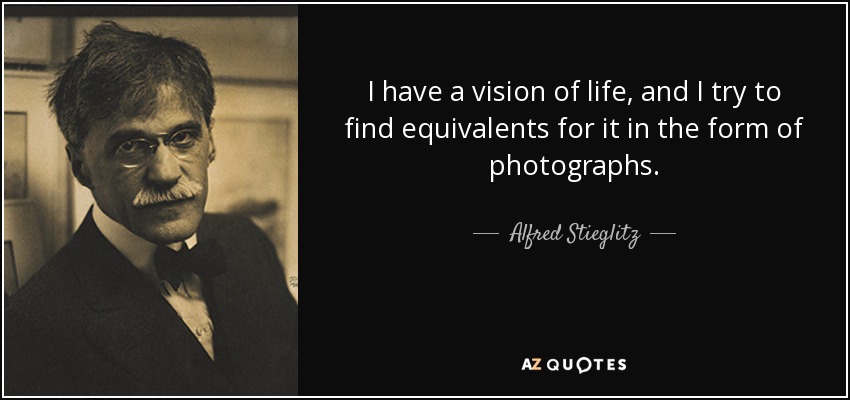
I have a vision of life, and I try to find equivalents for it in the form of photographs.
What I want is the world to remember the problems and the people I photograph. What I want is to create a discussion about what is happening around the world and to provoke some debate with these pictures. Nothing more than this. I don't want people to look at them and appreciate the light and the palate of tones. I want them to look inside and see what the pictures represent, and the kind of people I photograph.
There comes a moment when it is no longer you who takes the photograph, but receives the way to do it quite naturally and fully.
There are moments that you suffer a lot, moments you won't photograph. There are some people you like better than others. But you give, you receive, you cherish, you are there. When you are really there, you know when you see the picture later what you are seeing.
So many times I've photographed stories that show the degradation of the planet. I had one idea to go and photograph the factories that were polluting, and to see all the deposits of garbage. But, in the end, I thought the only way to give us an incentive, to bring hope, is to show the pictures of the pristine planet - to see the innocence.
In the end, the only heritage we have is our planet, and I have decided to go to the most pristine places on the planet and photograph them in the most honest way I know, with my point of view, and of course it is in black and white, because it is the only thing I know how to do.
My way of photographing is my way of life. I photograph from my experience, my way of seeing things.
My passport photo is one of the most remarkable photographs I have ever seen- no retouching, no shadows, no flattery-just stark me.
People buy ideas, they don't buy photographs.
A photograph is just a little, teeny-weeny, small piece of life. I feel like I see so much more than what I can actually get.
I feel it is the heart, not the eye, that should determine the content of the photograph. What the eye sees is its own. What the heart can perceive is a very different matter.
I believe you can use photographs to meditate on and work through things in your life.
One does not photograph something simply for 'what it is', but 'for what else it is.
Photographs shock insofar as they show something novel.
Whether a watercolor is inferior to an oil [painting], or whether a drawing, an etching, or a photograph is not as important as either, is inconsequent. To have to despise something in order to respect something else is a sign of impotence.
We don't take photographs with our cameras, we take them with our hearts and our minds. They are a reflection of ourselves...wha t we are and what we think.
A person shows himself for an instant as in a photograph but clearer and in the background something which is bigger than his shadow.
Influences come from everywhere but when you are actually shooting you work primarily by instinct. But what is instinct? It is a lifetime accumulation of influence: experience, knowledge, seeing and hearing. There is little time for reflection in taking a photograph. All your experiences come to a peak and you work on two levels: conscious and unconscious.
After many months of writing, it occured to me that it might be possible to photograph, in the flesh, what I was attempting to capture in words. I bought a Rolleiflex camera and began to take pictures of objects or structures that were used and abused by human hands
It is one of the peculiar characteristics of the photograph that it isolates single moments in time.
A photograph is what it appears to be. Already far from 'reality' because of its silence, lack of movement, two-dimensional ity and isolation from everything outside the rectangle, it can create another reality, an emotion that did not exist in the 'true' situation. It's the tension between these two realities that lends it strength.
Unless it hurts, unless there’s some vulnerability there, I don’t think you’re going to get good photographs.
Two factors thus emerge as requisites of success in the field of creative photography. First, the subject must be photogenic. Second, its re-creation in a photograph must be based upon technical knowledge, guided and supported by artsitic inspiration.
The photographs are not illustrative. They, and the text, are coequal, mutually independent, and fully collaborative. By their fewness, and by the importance of the reader’s eye, this will be misunderstood by most of that minority which does not wholly ignore it. In the interests, however, of the history and future of photography, that risk seems irrelevant, and this flat statement necessary.
Criticism is hypocrisy; society is hypocrisy. I'm a tourist. I'm a consumer. I do the things that I photograph and can be criticized of.
Follow AzQuotes on Facebook, Twitter and Google+. Every day we present the best quotes! Improve yourself, find your inspiration, share with friends
or simply: