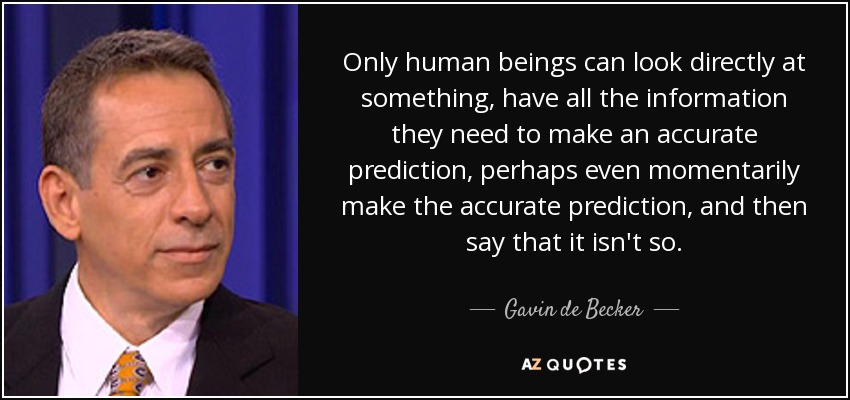
Only human beings can look directly at something, have all the information they need to make an accurate prediction, perhaps even momentarily make the accurate prediction, and then say that it isn't so.
History will remember the twentieth century for two technological developments: atomic energy and space flight.
People ask me what my predictions are for publishing and how digital is changing things and I tell them my only real prediction is that is it's all changing. Amazon, Google and all of those things probably aren't the enemy. The enemy right now is simply refusing to understand that the world is changing.
The shape of the heaven is of necessity spherical; for that is the shape most appropriate to its substance and also by nature primary.
Our sun enlightens the planets that belong to him; why may not every fixed star also have planets to which they give light?
They have likewise discovered two lesser stars, or satellites, which revolve around Mars, whereof the innermost is distant from the center of the primary exactly three of his diameters, and the outermost five: the former revolves in the space of ten hours, and the latter in twenty-one and a half, so that the squares of their periodical times are very near in the same proportion with the cubes of their distances from the center of Mars; which evidently shows them to be governed by the same Law of Gravitation that influences the other heavenly bodies.
From the moment they had left the Earth, their own weight, and that of the Projectile and the objects therein contained, had been undergoing a progressive diminution. . . . Of course, it is quite clear, that this decrease could not be indicated by an ordinary scales, as the weight to balance the object would have lost precisely as much as the object itself. But a spring balance, for instance, in which the tension of the coil is independent of attraction, would have readily given the exact equivalent of the loss.
Is it not demonstrated that a true flying machine, self-raising, self-sustaining, self-propelling, is physically impossible?
The distance between the earth and her satellite is a mere trifle, and undeserving of serious consideration. I am convinced that before twenty years are over one-half of our earth will have paid a visit to the moon.
Some think that solar work is pretty well played out. In reality, it is only beginning.
A planet is the cradle of mind, but one cannot live in a cradle forever.
No rocket will reach the moon save by a miraculous discovery of an explosive far more energetic than any known. And even if the requisite fuel were produced, it would still have to be shown that the rocket machine would operate at 459 degrees below zero-the temperature of interplanetary space.
The time will come when man will know even what is going on in the other planets and perhaps be able to visit them.
The universe will finally become a ball of radiation, becoming more and more rarified and passing into longer and longer wave-lengths. The longest waves of radiation are Hertzian waves of the kind used in broadcasting. About every 1500 million years this ball of radio waves will double in diameter; and it will go on expanding in geometrical progression for ever. Perhaps then I may describe the end of the physical world as-one stupendous broadcast.
The choice, as Wells once said, is the Universe-or nothing. . . . The challenge of the great spaces between the worlds is a stupendous one; but if we fail to meet it, the story of our race will be drawing to its close. Humanity will have turned its back upon the still untrodden heights and will be descending again the long slope that stretches, across a thousand million years of time, down to the shores of the primeval sea.
The younger generation of rocket engineers is just beginning. They are of the new generation to which space travel is not going to be a dream of the future but an everyday job with everyday worries in which they will be engaged.
Development of the space station is as inevitable as the rising of the sun; man has already poked his nose into space and he is not likely to pull it back . . . . There can be no thought of finishing, for aiming at the stars-both literally and figuratively-is the work of generations, and no matter how much progress one makes, there is always the thrill of just beginning.
What can there be concerning outer space but ignorance?
I first came into the labor force in 1941 when the minimum wage was 40 cents an hour, and that was my first job. And each time that we've tried to boost the lower level of salary for the most underpaid workers, there have been predictions of catastrophe. But each time, in [m]y opinion, the change has helped our Nation and its economic strength.
You can't make money with a consensus accurate prediction.
The first men who set out for Mars had better make sure they leave everything at home in apple-pie order. They won't get back to earth for more than two and a half years. The difficulties of a trip to mars are formidable. . . . What curious information will these first explorers carry back from Mars? Nobody knows-and its extremely doubtful that anyone now living will ever know. All that can be said with certainty today is this: the trip will be made, and will be made . . . someday.
Despite the immense distance between our own solar system (including the earth) and the nearest other solar systems, a journey from one system to another is theoretically possible, once an unlimited source of power is developed.
The exploration of the planets is now closer to us in time than the exploration of Africa by Stanley and Livingstone.
If we were to start today on an organized and well-supported space program I believe a practical passenger rocket can be built and tested within ten years.
Space travel is utter bilge. I don't think anybody will ever put up enough money to do such a thing. . . . It is all rather rot.
Follow AzQuotes on Facebook, Twitter and Google+. Every day we present the best quotes! Improve yourself, find your inspiration, share with friends
or simply: