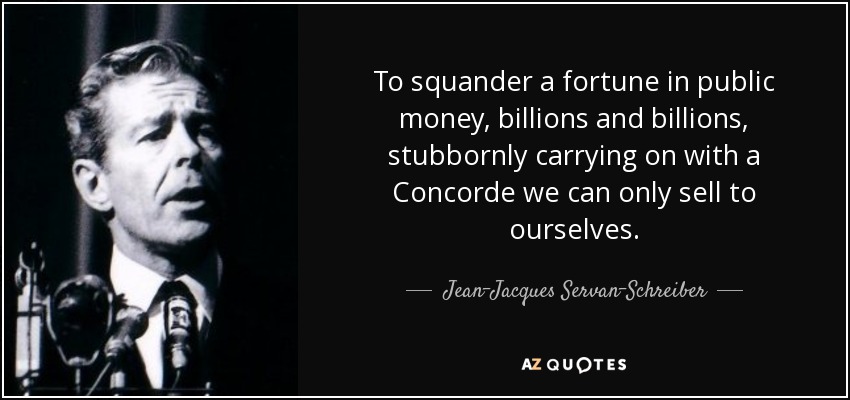
To squander a fortune in public money, billions and billions, stubbornly carrying on with a Concorde we can only sell to ourselves.
A very friendly boom, like a pair of gleeful handclaps.
There are no practical alternatives to air transportation.
Although humans today remain more capable than machines for many tasks, by 2030 machine capabilities will have increased to the point that humans will have become the weakest component in a wide array of systems and processes. Humans and machines will need to become far more closely coupled, through improved human-machine interfaces and by direct augmentation of human performance
Nothing can prevent us from another day and night, and the myth of perpetual flight.
The first company to produce a certified two seat electric aircraft with a 1.5 hour range will dominate the aviation training market.
We will be producing supersonic planes which will go far, far faster than Concordes. New York to Tokyo could be less than an hour. You could be traveling at 19,000 miles an hour orbitally.
Science is one of a handful of things that defines us as a very special species. It is amazing how far we have been able to get and how accurate our predictions are. I think understanding how the universe was born is very important. It really gives us a perspective on many things.
Our spiritual life is a life in which we wait, actively present to the moment, expecting that new things will happen to us, new things that are far beyond our own imagination or prediction. This, indeed, is a very radical stance toward life in a world preoccupied with control.
The human brain is like a memory system that records every thing that happens to us and makes intelligent predictions based on those experiences.
Darwin's prediction of rampant, albeit gradual, change affecting all lineages through time is refuted. The record is there, and the record speaks for tremendous anatomical conservatism. Change in the manner Darwin expected is just not found in the fossil record.
If the facts are contrary to any predictions, then the hypothesis is wrong no matter how appealing.
It is the ability to make predictions about the future that is the crux of intelligence.
The book known by the name of the Apocalypse, has seemed to be until now unintelligible, merely because people persisted to see in it a real prediction of the future, which every one has explained after his own fashion, and in which they have always found what they wanted, namely anything but that, what the book contained.
It is very difficult to make an accurate prediction, especially about the future.
We need to stop, and admit it: we have a prediction problem. We love to predict things—and we aren’t very good at it.
On the conservative side, today's libertarianism is far more dogmatic and devoid of qualification than the liberalism of Adam Smith or J.S. Mill. Like Marxism, libertarianism is a utopian worldview based on an economic-determinist vision of history. Unlike Marxism, libertarianism is highly specific in its predictions about the transition to the utopian world order, rendering it vulnerable to fact.
Nobody believes a weather prediction twelve hours ahead. Now we're being asked to believe a prediction that goes out 100 years into the future? And make financial investments based on that prediction? Has everybody lost their minds?
The first men who set out for Mars had better make sure they leave everything at home in apple-pie order. They won't get back to earth for more than two and a half years. The difficulties of a trip to mars are formidable. . . . What curious information will these first explorers carry back from Mars? Nobody knows-and its extremely doubtful that anyone now living will ever know. All that can be said with certainty today is this: the trip will be made, and will be made . . . someday.
Despite the immense distance between our own solar system (including the earth) and the nearest other solar systems, a journey from one system to another is theoretically possible, once an unlimited source of power is developed.
The exploration of the planets is now closer to us in time than the exploration of Africa by Stanley and Livingstone.
If we were to start today on an organized and well-supported space program I believe a practical passenger rocket can be built and tested within ten years.
Space travel is utter bilge. I don't think anybody will ever put up enough money to do such a thing. . . . It is all rather rot.
U.S. has lost a battle more important and greater than Pearl Harbor.
Really exotic methods of propulsion . . . will have to be devised to get there. How it will be done, I do not know. Whether it will be done, I am not quite certain. But I would bet it can be done.
Follow AzQuotes on Facebook, Twitter and Google+. Every day we present the best quotes! Improve yourself, find your inspiration, share with friends
or simply: