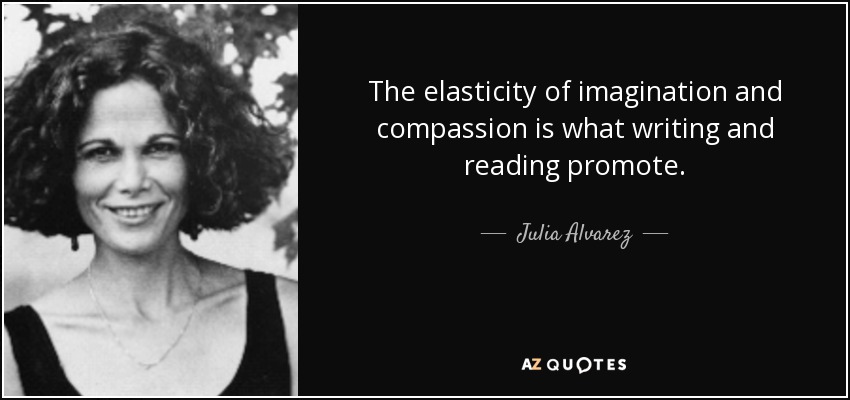
The elasticity of imagination and compassion is what writing and reading promote.
When I re-read the Odyssey, it felt like I was reading PD James or Minette Walters - you feel that you are sharing in something that hundreds of millions of people have read with love, and I think that this is worth holding onto. It is not a matter of canonical texts or elitism, which the universities are trying to make us wary about. It is about shared language and metaphor and experience and imagery and that is all good.
I'm not the type who spends his free time in training camp playing with his Playstation or playing cards on trips. The other players thought it was odd: There he is, reading again.
Reading and writing are the same thing; it's just one's the more active and the other's the more passive. They flow into each other.
Other people's creativity inspires me. Seeing great art, or reading a fab book or watching an interesting documentary or an exciting film - these things make me want to let my own imagination fly.
It makes me believe in fate. In most cases, the readings where I've been really bad have usually been the ones where I got the part
I never stop running. I'm not one of the weenies who drop out just because the electoral college votes. I'm still in the race. I'm an extremely corrupt candidate and I stress that in case anybody in our reading audience is interested in sending me money.
If we're trying to excite young people about reading, we need to be experiencingbookjoy ourselves so that we have references to make. It's important to be able to say, "You know, I read the most wonderful poem the other day. Let me tell you about it."
The more developed your abs, the less time you've spent reading.
My dad is one of the funniest people I know. He's the sort of man who can make you laugh just by reading out of a telephone directory... He's a spastic.
Meditation is the one thing I do every day - meditate, pray. I do reading in the morning and try to center myself. I play music every day because that is very centering.
If someone does learn about the world from reading a novel of mine, that makes me very happy. It's probably not what brings me into the novel in the first place - I usually am pulled in by some big question about the world and human nature that I'm not going to resolve in the course of the novel. But I'm very devoted to getting my facts straight.
If you really want people to pay attention to how you feel, you need to express your feelings in language that's worth reading.
I do think poetry needs to invite the reader, especially when there are so many other distractions while reading.
I could be standing in the supermarket, and there is a person standing down the aisle, who is reading the back of a cornflakes box but everything about them is going "It's me! I'm the one you want! I am the necessary subject. This is it!"
I love reading epic fantasies and big fat books and so I really wanted to write one. I think you always write what you want to read.
I love being home, reading the paper in the morning and having a cup of coffee, doing laundry, going grocery shopping and running daily errands. For me, it's important to have that balance in my life.
When I was young I was constantly reading walls; I took in everything written on walls, from love messages to political messages. It was my hobby and became my art.
I hope any poem I've ever written could stand on its own and not need to be a part of biography, critical theory or cultural studies. I don't want to give a poetry reading and have to provide the story behind the poem in order for it to make sense to an audience. I certainly don't want the poem to require a critical intermediary - a "spokescritic." I want my poems to be independently meaningful moments of power for a good reader. And that's the expectation I initially bring to other poets' writing.
My mother was an English teacher before she became a full-time mom, and a huge proponent of reading, so she made sure I was an early and vigorous reader.
Decide, before you start, that you're going to change three things about what you do all day at work. Then, as you're reading, find the three things and do it. The goal of the reading, then, isn't to persuade you to change, it's to help you choose what to change.
It was really hard coming to terms with the Nazi history. Then in my twenties I was traveling to Germany. There was a lot of poetry activity and some of my first readings abroad and trying to relate with people my own age there and what they were discovering and learning had to examine in terms of their backgrounds. Then so many of my friends had family who had either perished in the holocaust or survived in the holocaust. It was very palpable.
I have rock climbed but not in awhile. Love all sports, reading, cooking, some carpentry, gardening.
There are a lot of college writing textbooks that will include essays and short stories, and after reading the story or essay, there will be questions such as "Have YOU Had any experience with a pedophile in YOUR family?" or "When was the last time you saw YOUR mother drunk?" and they're just really good at prompting stories. You answer the question, and sometimes that can spring into a story.
For the last episode [of Downton Abbey], you'll need some handkerchiefs. I needed handkerchiefs reading it. It wasn't because it necessarily moved me while reading it, but it was the experience of reading it when I realized it was the last time I was ever going to be reading one of those scripts. That was quite terminal.
Follow AzQuotes on Facebook, Twitter and Google+. Every day we present the best quotes! Improve yourself, find your inspiration, share with friends
or simply: