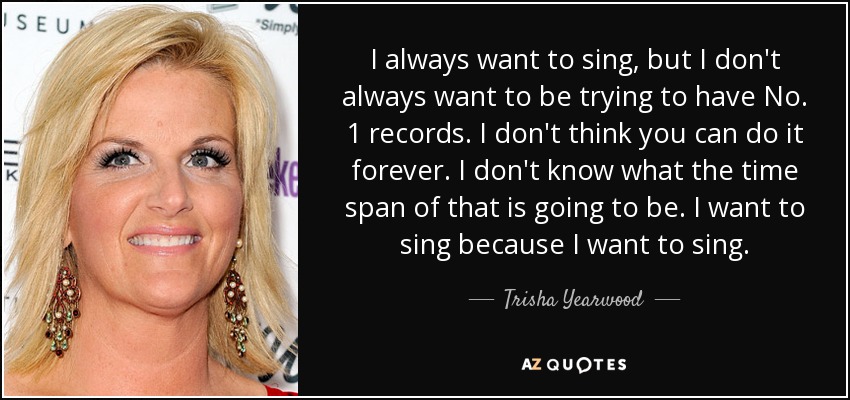
I always want to sing, but I don't always want to be trying to have No. 1 records. I don't think you can do it forever. I don't know what the time span of that is going to be. I want to sing because I want to sing.
If there's one thing that differentiates me from the rest of my family it's the rock element. I hung out with friends who like punk rock a lot. Not getting a big record deal, and having a hard time for years, it means you have to prove yourself and scratch your way up from nothing.
I didn't want to do the whole, get the hottest person thing. I wanted to make sure every record felt right.
People in the record business would say, Well, Pras, you know, you haven't been out in a while, maybe you should get today's hottest producer or rapper to do something.
The history of pop is a progression of underground styles going mainstream, so there's nothing unusual about the White Stripes or Franz Ferdinand selling records.
You have to really swallow your pride and admit that you want to make a comeback. And that means that you weren't at your best and I feel like I stopped being who I needed to be. When I started making this record "Born Villain", I didn't want to be what I used to be but I certainly didn't want to be what I was at the time. I knew that I was supposed to be something better then what I was. I feel that I am close to being what I'm supposed to be and am enjoying what I'm doing here.
Everything is starting to make a little more sense to me now. I love the idea that, first of all when I made the record I don't look at the music by classifying it. People have a problem classifying me as pop, or rock, or folk, or alt. The beauty for me is that a thirteen year old girl can fall in love with the record and so can her mom. I tend to gravitate towards artists that are timeless and don't sound dated.
Mainly horror movies and exploitation movies and a lot of stuff comes from those press books from those old movies. Lines out of old movies, comic books that we collect, all the old horror comics of the 50s, probably about the only comics that we collect are obscure horror comics, the real sick ones from the 50s. Some stuff comes from there but mainly just old records, old rockabilly records and that stuff, singles mainly, 45s.
I don't really think of these as projects. I think of them as bands. I have tried to not just convene a group of musicians and make one record or make one gig and just drop it. Each of them develop over time. I have been really fortunate to keep a band like the Sextet together over three very different albums. Each time, the goal got more deep for me in terms of how I wanted to write for those people. So it is really about trying to develop ideas and trying to have a consistent focus on a way to come up with new ideas in music that I want to do.
If I worried about that, I wouldn't have made a single record in my whole career. I think more and more, audiences appreciate something that is distinctive and different. Everyone always throws out this figure, 'Jazz is now down to three percent of the total record sales.' So does that mean it is not important? I think if we agree that human culture itself is important, then I think those three percent take on a greater significance.
As a matter of fact it wasn't until after BIG passed and stupid rumors went around that I had something to do with it, and it's like I'm not a killer man , I'm a musician, I'm a DJ we got like a different heart. Ya know back then when rappin' was fun, and we could immolate being gangstas; ya know Dr. Dre made the hardest gangsta rap records in the world, that didn't necessarily make him a gangsta. It was all like ya know : character, we were all in character.
We have signed with Artemis Records. Originally they were our distributor for 'Group Therapy'. My former manager (Chip Quigley) started a record label (Recon Records) and had Artemis Records as their distributor. Unfortunately, the way the label was run meant that it didn't turn out the way that we thought it was going to be. We simply got into something that was different to what we initially thought
TALLAHASSEE LASSIE was a record I wrote with my mom. A number of other famous groups have also recorded it such as Led Zeppelin (I understand they are currently touring) and several other English bands and also some various "Punk Bands".
Before I joined Kraftwerk in 1971, I played guitar in a band called Spirits of Sound, whose members included (at times) amongst others singer Wolfgang Riechmann (Sky Records released his only solo album Wunderbar shortly after his death in 1978) and drummer Wolfgang Flür (later on Kraftwerk, now solo). The music of S.o.S. in the mid 60's first was the English pop and rock music of the times (Beatles, Kinks, Rolling Stones ).
I wrote half the record in 2002, which basically concluded with us releasing "Baby's Got A Temper," the last single. I think after the disappointment of that record for myself with the lack of energy and the way the record came out, I would say that was probably the low point of The Prodigy.
That's the way I came up, writing and recording at home. I developed by playing everything myself. I was a drummer first and that's my favorite instrument to play. Once I get the drums done, everything else comes real quick. Also, we track in my friends' garage, which is really small ... there's not really room to record live with a band.
Antwan Patton and Andre Benjamin saved my life. That's how I view them giving me a record deal, with nothing but love and adoration. I saw Big Boi have to do what he kept doing after Dre said he didn't want to do touring and Aquemini [the label].
In itself, I spent a year writing, you know all these different songs and when it came to recording the record, I just pulled out all the tracks I liked the most.
My first big break was with the Ted Fio Rito band. Fio Rito had a bunch of record hits in the 1930s and did a lot of radio work back then. When he came to my home town in early 1942, I sat in with the band. Ted liked me and offered me a job.
Well, it's great to have a Sony Records or a BMG or a Warner Brothers pocketbook. Money is a challenge when you're funding your own start-up costs and everything. But I feel like it's doable. You just have to be very careful.
On past records I usually did start with a story or an idea for a song and then write around it, but on Achilles' Heel I would just start writing and try to let the song and my sub-conscience determine the direction. which is a goofy way of saying I tried not to decide before hand what the song and or the characters would do and be like.
I just turn the record in. I don't think about the commercialism of it, but rather what's getting me off. That's why I stay in this business, because I can still afford to do exactly what I want to do.
We were on Island Records for five or six years and we kinda just got tired of them always wanting to use our connections, all the time. It's like, they didn't really do much for us, I mean, they would give us money here and there and you know, do stuff like that but, I mean, overall, they didn't push us.
Well, I never made a record to be in the Christian market. So when I made my record it was to exist in all of the markets. I grew up not really listening to tons of Christian music and if I did it was in the context of all the other music I listened to. So when I made the record I definitely had plans and visions and dreams.
One of the hardest things in the world is to perform on record and get someone to enjoy and feel what you're doing. It's unlike, like TV you can, you can fake it with the face and the crying and the bits. Recording is completely different.
Follow AzQuotes on Facebook, Twitter and Google+. Every day we present the best quotes! Improve yourself, find your inspiration, share with friends
or simply: