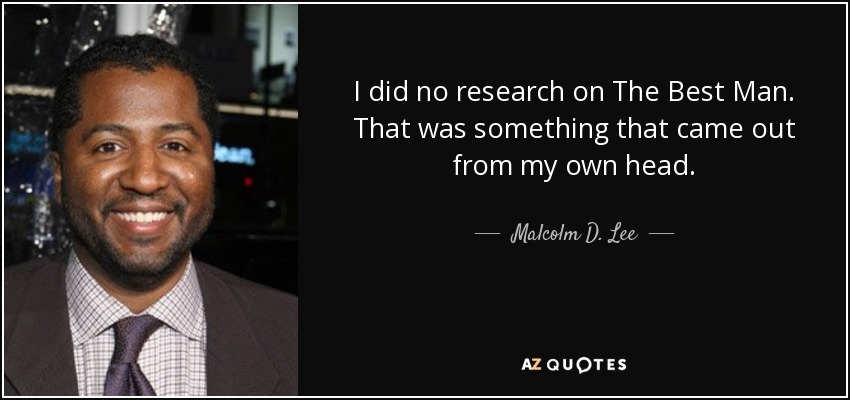
I did no research on The Best Man. That was something that came out from my own head.
What I found, over four years of research and reporting, was a conscious effort — taking place in labs and marketing meetings and grocery-store aisles — to get people hooked on foods that are convenient and inexpensive.
We allowed ourselves to become particularly interested in research into the appearance of intermediate products of sugar decomposition during cell-free fermentation.
It's amazing how much research has gone into making some of the worst decisions.
My solutions are to include Africa in the global economy, and not African charity, AIDS research, but African infrastructure development. And I think that Africa can import and needs everything the whole world can manufacture. And they have got enough money to pay for it. It's just that the money is in the ground.
There are major writers who have written books [based on my research]. If one looks carefully at the copyright page, you'll see my name. Writers of the stature of Mailer and even bigger. All over the world.
I wasn't a huge fan of the comic book, but I definitely was of the cartoon series. I wasn't much for sitting around and reading as a kid, I preferred to be outside running around and playing sports, but I was absolutely thrilled to get the role of Colossus. I don't think I realised how popular the character was until I got the role and started doing some research; it was then that I really fell in love with the character of Colossus myself.
Oral history is a research method. It is a way of conducting long, highly detailed interviews with people about their life experiences, often in multiple interview sessions. Oral history allows the person being interviewed to use their own language to talk about events in their life and the method is used by researchers in different fields like history, anthropology and sociology.
My book, Oral History: Understanding Qualitative Research is about how researchers use this method and how to write up their oral history projects so that audiences can read them. It's important that researchers have many different tools available to study people's lives and the cultures we live in. I think oral history is a most needed and uniquely important strategy.
I find music the the clearest and easiest way in to what a movie will feel like - more so than visual references or other movies or dense dossiers of research material. Every now and then I'll send a piece of music or two to people I'm working with - actors or heads of department - when I think it'll help them get a sense of the kind of movie I'm proposing. Often those pieces will end up in the movie - sometimes they won't.
I had published a co-edited book with Oxford a decade ago, my first book actually. Years later I found myself having lunch with Lori Stone, who was an editor at Oxford at that time. We connected at a conference and over the course of lunch she told me about a wonderful new series she had just developed called Understanding Research.
The list of qualities (an investor should have) include patience, self-reliance, common sense, a tolerance for pain, open-mindedness, detachment, persistence, humility, flexibility, a willingness to do independent research, an equal willingness to admit mistakes, and the ability to ignore general panic.
Most research is a synthesis of problem solving and creativity.
I love the fact that in the cancer universe you have a lot of money going towards research, but this is about cancer support. It allows people to receive information to facilitate their healing. It's a revelation and just phenomenal.
Steve Jobs always believed that you didn't want to do focus groups or research and ask people what they wanted. You wanted to create products that they didn't know they wanted yet and they would fall in love with. And I think that was part of the magic of his design philosophy.
We don't believe in market research for a new product unknown to the public. So we never do any.
Motto for a research laboratory: what we work on today, others will first think of tomorrow.
Two factors explain our success. One, MIT's renaissance after World War II as a federally supported research resource. Two, the mathematical revolution in macro- and micro-economic theory and statistics. This was overdue and inevitable, MIT was the logical place for it to flourish.
Learning to exist in a world quite different from that which formed you is the condition, these days, of pursuing research you can on balance believe in and write sentences you can more or less live with.
While I did a lot of research, I ended up feeling that the best way to write about grief was to describe it from the inside out - the show the strange intensities that come along with it, the peculiar thoughts, the longing for that past - all the strange moments of thinking you glimpse the dead person on the street, or in your dreams.
I'm really changed by my research. This book ["This Changes Everything" ]is very different from what I set out to write.
After I finished the Atlantic swim I said "never again," but it didn't take long for me to change my mind. I like to push my limits. I want to raise money for cancer research and to inspire others to follow their dreams.
I think serious research tends to be associated with higher academic quality, more prestige, more resources, and even, heaven help us, better teaching, to a greater extent than you might think. Folks who don't have an active intellectual life become, though the long years of just teaching, less intellectually alive and exciting.
We were young. We were 23. I was a kid, growing up, that would burn and fry. I didn't understand why. We did all this study and research and learned so much about skin cells and rejuvenation and how the body works and (how) everybody is different. (We) learned what doctors do for treatment of certain things and so I changed my direction and opened up a skin-care company - healthy tanning, skin-care products and rejuvenation and all of that and it took off.
I find I use the Internet more and more. It's just an invaluable tool. I do most of my research on the Net now - and certainly do the bulk of my communicating through email.
Follow AzQuotes on Facebook, Twitter and Google+. Every day we present the best quotes! Improve yourself, find your inspiration, share with friends
or simply: