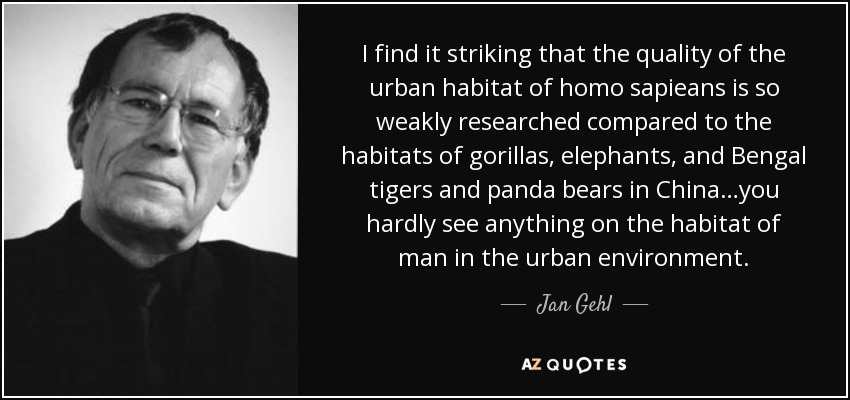
I find it striking that the quality of the urban habitat of homo sapieans is so weakly researched compared to the habitats of gorillas, elephants, and Bengal tigers and panda bears in China…you hardly see anything on the habitat of man in the urban environment.
I wanted to make sure the focus [in The Land] was on human beings themselves and their decisions, but still connected to the urban environment that people associate as being black. I think I was able to make a film without commenting on "black this or black that" and you still feel the presence of it. There's no one character who's saying "we're all black and we're all in this struggle." It's that you just feel it. Some of that is because we get the sense from a lot of independent films that black people struggle all the time.
Every place has its own challenges. In Canada, we have blessings like grants, but we also have curses in the sense that when you start to do more urban classified music, we no longer have a single urban radio station left.
What I wanted to try and figure out was, okay, in contemporary 21st century life the alienation between the self and the land around you or the self and even the urban landscape. You name it.
I felt that there's an obligation when writing a piece about an urban expressway made in the 50s to acknowledge the context, and Robert Moses is sort of an iconic figure in New York, and he influenced the shape of the city more than anyone else before or after him. He was one of the most powerful and influential civic architects in the world, because of how much he transformed the city. He built multiple bridges and highways and parks and recreational spaces, beaches - in the course of a few decades, he completely changed the city
Because we're becoming such an urban nation, we're going to need to be producing so much more food in cities. These institutions have members, obviously. They have the resources to start projects like urban farms and gardens, teaching tools, and the ability to educate their members so that they can then go home and start their own urban gardens. I just really think that faith-based institutions can take the lead in creating community-based food systems, and I'd really like to see that happen.
Communities of every demographic (north, south, urban, rural, public animal control shelter, private shelter) have achieved No Kill success.
San Francisco lags behind other communities in providing a vital, vibrant and ecologically sustainable urban canopy, as well as open space in the city.
I enjoy places that have mystery and atmosphere, perhaps a patina of age, a suggestion rather than a description, a question or two. I look for memories, traces, evidence of the human interaction with the landscape. Sometimes I photograph pure nature, sometimes urban structures.
Being materialistic is part of the hip-hop community's nature, because jazz and blues and rock 'n' roll, when they started out in the urban communities, were about the American Dream, and the lack of opportunity in that structure. So they talked about everything - uplifting and getting what is perceived as success in America.
I've been making 16mm urban landscape films about San Francisco for many years. I choose different nonfiction themes to investigate and am generally interested in surfacing lesser-known histories. I like to investigate and illuminate these histories, combining them with my own unconventional storytelling style, which is generally a stream-of-consciousness voiceover involving a steady stream of personal reflections on pining over unavailable women.
I have always been interested in crafting films that use long, static urban landscape shots as a way of manipulating the emotions of the viewer and forcing them to slow down, which I think simultaneously makes them more vulnerable as spectators, and also puts them in a position of being more than just spectators.
[Children should contribute] to a family's essential survival and happiness. [In] an urban society, children are ... robbed of the opportunity to do genuinely responsible work.
The drugs are just growing all around the country, and so, it all feeds into problems that are not just urban, but are just spread throughout the country.
Detroit is an urban hell. But even in this city of the dying auto industry, there is reason to hope, if they manage to combine the creative forces of designers and other intellectual "suppliers" in other ways.
You can put the greatest seafood restaurant next to an average steak house in an urban area, and that steak house will do more business than the seafood place. If you go to the water, you can put an average seafood place next to the greatest steak house, and people are going to eat seafood.
I think that digital is offering many great possibilities for cinematographers. Particularly in urban cityscapes and low light photography its allowing us to render what we actually see with our eyes; which is interesting.
I have the greatest appreciation for [producers] Matt Alvarez and Ice Cube. They put me in Friday after Next, and now this, which I hope is just the start of a long, wonderful relationship. I love the urban comedies, because they keep you famous, keep you having fun, and keep you in love with the business. Those are my roots. I'll always love doing those.
I think I'm a full-time artist, a full-time urban planner, and a full-time preacher with an aspiration of no longer needing any of those titles. Rather, I'm trying to do what for some seems a very messy work or a complicated work.
I think when you write every song on your album - it's like having eleven or twelve children. It's hard to say I like this one song more or I like that one more. I love every song on the album. What's happening is that I'm hoping that everyone will be very satisfied. I think the single "Good Girl" will be adored by the people in the urban world and I think the "Best of Me" will be loved by people in the pop world.
I am very determined when it comes to my music, and I grew up just loving those singers who had that urban sort of feeling. So when it came down to making my record, I wanted to have that as well. ForeFront was really good about letting me go in that direction and then of course adding the more pop sounds. I feel very fortunate that I got to explore some unique and creative angles musically.
I think, first of all, I don't think people understand Ice Cube's body of work. Ice Cube is a, and I hate to use the word 'urban' but - when you think of Judd Apatow, and a person who's launched so many careers, Ice Cube has done that for so many comedians, you know?
It is not education, but education of a certain kind, that will serve us. And the current model of western, urban-centered, school-based, education, which is so often more focused on turning children into efficient corporate units rather than curious and open-minded adults, will only lead us further down the wrong path.
So here's my advice to city planners. Make your city runnable. Runners are the first wave of troops bringing human activity back to the urban core of any city. Where we go, others will follow. The connection between runnability and livability is so clear (at least to me), that it's surprising that new developments consistently leave pathways out of the plans.
When doctors describe pain as experiencing "discomfort," it's like saying Hiroshima experienced "urban renewal".
Follow AzQuotes on Facebook, Twitter and Google+. Every day we present the best quotes! Improve yourself, find your inspiration, share with friends
or simply: