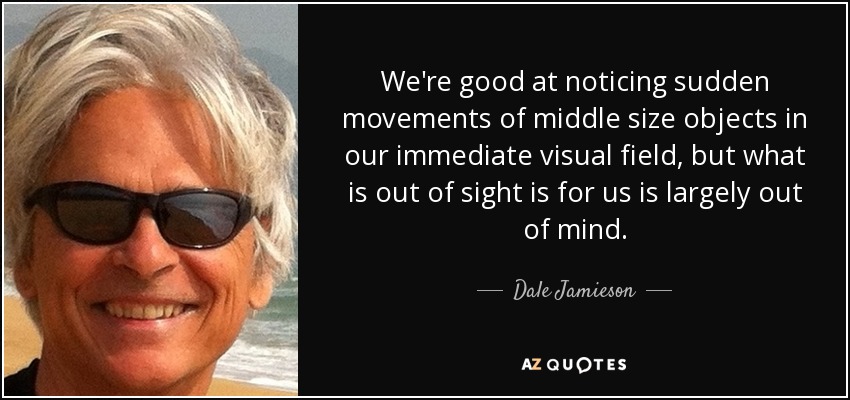
We're good at noticing sudden movements of middle size objects in our immediate visual field, but what is out of sight is for us is largely out of mind.
When I see somebody sun-drenched in a shot with their espadrilles and a cup of coffee, I'm like, "Your life is amazing. It's so perfect." I get drawn into that very easily so it totally worked, because the visual style sucks you in. It makes you want that.
I have been interested in visual arts since high school and, after realising that I had absolutely no interest in the economics degree I had undertaken at ANU, I started a BFA in Sydney which I completed at VCA in Melbourne.
I met Mary [Hamill] in New York at my exhibition and when I told her about my oral history project she asked, "Would it be possible to incorporate visual art?" My sister stitches pillowcases, which led to Mary suggesting using cyanotype on them. I originally thought of the idea of pillowcases because when people get married, they have the bride and the groom lay their hands on each other's pillows while their relatives tie ribbons on their wrists. And then on the bed you usually have two pillows - one for yourself and one for your loved one - so when one is gone, one pillow remains.
I'm also developing my own narrative, because I'm the son of a widow. And so, while working with women and gathering their oral histories, I'm taking a step back to do my own art book and visual work.
Mary's [Hamill] working from an outsider perspective and I'm working from an insider-outside perspective. In this case, it will bring an added dimension to the visual aspects of the work. Also the processes and approaches that I'm thinking are about learning. I'm playing it by ear to experiment and see what happens.
Everything around you can use. It's like your tools and your material. Whether it's in performing arts like dance, or visual arts, or poetry, a lot of those elements can come and help you, can trigger your creativity. But you have to be open, be aware, and you have to be ready to look.
When I was in the sixth grade my friend and I always won writing contests, and we read a lot of books. We were always the ones that read the most books in class. I thought about writing but visual arts weren't part of my vocabulary.
I have some advantages of viewing from the two lenses, the two perspectives. I think that a lot of visual artists who come back here from the United States and are Cambodian also write from their American references - looking inside the old culture, and looking at themselves as an American looking into the country where they were born.
I have a commission to do a piece in a place in California, Oliver Ranch, which has an eight-storey structure called The Tower designed by the visual artist Ann Hamilton.
I wanted all the responsibility to rest on the content of the story. I tried to make the visual style almost invisible.
The goal is to align with your core group of collaborators, who understand your vision and aesthetics. I usually show them visual material of what I have in mind, as well as a color spectrum of mood boards.
The visual and literary arts are of perennial interest to me, and these art forms have become more and more a part of my life; they have become companions of sorts. I cannot imagine my day to day experiences without the presence of these art forms. They're absolutely essential.
Abstraction means getting away from a visual interpretation but nearer to an emotional one.
The human brain has left and right brain symmetry with its own nature and can process information which initially appears to have no pattern or order. However, the brain has the ability to process visual information much more efficiently.
I'm quite a softy, yes. I have a blank spot with respect to visual art, but I have perhaps a compensating hypersensitivity to poetry and music.
Our one goal is to give the world a taste of peace, friendship and understanding. Through the visual arts, the art of celebration of life.
We are obliged to steal pieces of language, both visual and textual.
The problem of criticism is not judgment but evocation - conveying the particular emotional and visual feel that the movie has.
I see everything visually. It's very visual for me. And so I think, from a plotting standpoint or what have you, there's obviously a certain amount of internal thinking that goes on in a novel (that) you can't do...in a screenplay. But I think, pacing wise, my novels move quickly because (they aren't overly) descriptive.
I find music the the clearest and easiest way in to what a movie will feel like - more so than visual references or other movies or dense dossiers of research material. Every now and then I'll send a piece of music or two to people I'm working with - actors or heads of department - when I think it'll help them get a sense of the kind of movie I'm proposing. Often those pieces will end up in the movie - sometimes they won't.
And also the idea of not making it apparent that it's different from the rest of the film, even though there are visual differences, the audience is supposed to think that they are with him when he wakes up in the morning.
I don't necessarily think there's a difference in terms of how the film industry and the ad industry view visual effects. If visual effects (or the lack thereof) are used as a tool to strengthen an idea, they're great. If they are meant to carry more of a load in the absence of a concept, they're a waste and a distraction.
I have, and do sometimes, work with other media. But there is something about the physical activity and the directness of painting that I find fascinating. I am very attracted to the materiality of paintings and the visual phenomena of hue and value.
Keep your paragraphs short. Writing is visual - it catches the eye before it has a chance to catch the brain.
Follow AzQuotes on Facebook, Twitter and Google+. Every day we present the best quotes! Improve yourself, find your inspiration, share with friends
or simply: