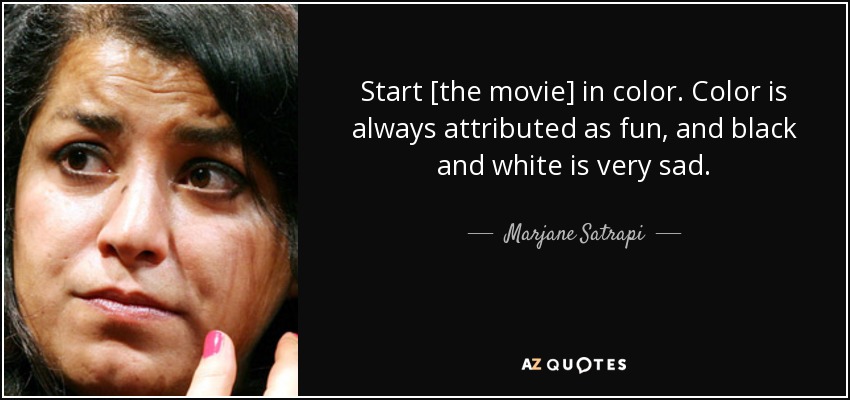
Start [the movie] in color. Color is always attributed as fun, and black and white is very sad.
So if you're black or brown, you can make money in America, you can get rich in America... but whatever you decide to do, it better be positive, 'cause if one person is harmed, you will be destroyed. You see Oprah, she just be giving away money. She's doing that to keep the Feds off her back.
That's why I'm glad Jesus died when he did. Because if he lived to be 40, he would have ended up like Elvis. He was famous already at that point. If he lived to be 40, he'd be walking around Jerusalem with a big fat beer gut and black side burns going, Damn, I'm the son of God. Give me a cheeseburger and french fries right now.
At least black people knew when they were slaves; you remain clueless.
One thing that's coming up a lot is: are you as grumpy as you appear from this Black Books thing.
Why is it that it's okay to call a white person "mate" yet it's not okay to call a black guy "primate"?
Black holes. I don't know what people see in them. Exit signs? They're on their way out.
Here's the problem: the description of the world is always reduced to yes or no, black or white. Superficial stories. Superhero stories. One side is the good one. The other one is evil.
My greatest influence has been the blues. And that's a literary influence, because I think the blues is the best literature that we as black Americans have.
You know how Mexican restaurants always have "border" in the name: Border Grill, Border Cafe. You wouldn't do that to black people: Kunta's Kitchen or Shackles. They don't do it to white people. You don't see the Honkey Grill, the Cracker Barrel... oh, nevermind.
Barack Obama may be black, but John McCain is the first Albino presidential candidate: he's completely see-through!
Have you heard his new song? 'Cause he thinks he's a black man now.
Something struck me in Africa, in black Africa, where polygamy is legal: the solitary woman is the rule there, from at an extremely young age, and the children are always the mother's responsibility.
It's very difficult to get any movies done about Black heroes - Haitian or American - in Hollywood. The argument in Hollywood is that there is no market for those movies, and that is not true.
You absolutely feel, as a black actress, that you've got to ride the wave because there's just so few roles. I hate to play that card, but it's the truth. There's not a lot of roles.
Most of life is grey, with a little tiny bit of black and white. We're always subject to what I call the compression industry, which is an attempt to compress a million shades of grey with a little bit of black and white to just a hundred, or to ten, or to one!
Intellectual traditions emerging from populations that have always been the constitutive other in the development of the properly free citizen - indigenous people, populations labeled physically or mentally unfit, black people, migrants, women, prisoners - have always produced robust critiques of the what Dylan Rodriguez calls "white bourgeois freedom."
I would suggest is that in the latter 1990s it is extremely important to look at the predicament of black people within the context of the globalization of capital.
I'm thinking about some developments say in the 80s when the anti-apartheid movement began to claim more support and strength within the US. Black trade unionists played a really important role in developing this US anti-apartheid movement.
I do think it's extremely important to acknowledge the gains that were made by the civil rights movement, the black power movement.Institutional transformations happened directly as a result of the movements that people, unnamed people, organized and gave their lives to.
It doesn't surprise me that aspect of the black nationalist movement, the cultural side, has triumphed because that is the aspect of the movement that was most commodifiable and when we look at the commodification of blackness we're looking at a phenomenon that's very profitable and it's connection with the rise of a black middle class I think is very obvious.
I think it's important for us to recognize that although historically black communities have been very progressive with respect to issues of race and with respect to struggles for racial equality, that does not necessarily translate into progressive positions on gender issues, progressive positions on issues of sexuality and in the latter 1990s we have to recognize the intersectionality, the interconnectedness of all of these institutions and attitudes.
Often young black people are looking towards the alternative economies. They are looking towards the drug economy.... the economies that are going to that apparently will produce some kind of material gain for them.
The de industrialization of the US. economy based on the migration of corporations into third world areas where labor is very cheap and thus more profitable for these companies creates on the one hand conditions in those countries that encourage people to emigrate to the US. in search of a better life. On the other hand, it creates conditions here that send more black people into the alternative economies, the drug economies, women into economies in sexual services, and sends them into the prison industrial complex.
I've never thought that I would see any man of color, not just a black president, but any man of color, I never thought that I would live to see that. I thought maybe my grandchildren would, but I never thought I would. So when Barack Obama first started to run I was like, "I've never heard of this guy - he probably doesn't have a shot." But then he started picking up steam and that piqued my interest.
Follow AzQuotes on Facebook, Twitter and Google+. Every day we present the best quotes! Improve yourself, find your inspiration, share with friends
or simply: