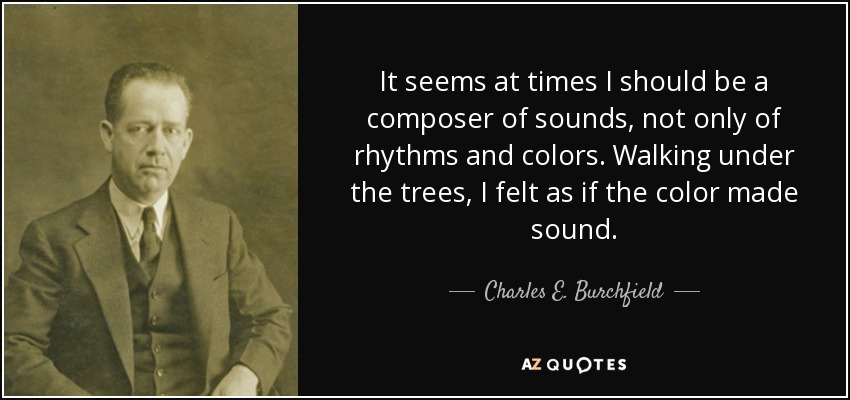
It seems at times I should be a composer of sounds, not only of rhythms and colors. Walking under the trees, I felt as if the color made sound.
A whole generation of veteran composers has never taken a stand or provided an example and has produced in the music academies generations of docile workers for the music industry. What can you expect from downtrodden workers who see music as a type of profession, like stenography, and not an act of creation that by its nature is subversive?
The three greatest composers are Bach, Beethoven, and Brahms. All the others are cretins.
'Jazz Artist of the Century' would have to be a distinctive soloist and ensemble player, a composer, an arranger, a bandleader, and a driver; would have to span all the genres and periods of jazz; would have to have run her own label; [would] possess a deep spirituality, with grace and a sense of humor; and would have to have succeeded against all odds. Who else? Mary Lou Williams.
I have to say I owe my career to the master composers of the Great American Songbook who have written such high-quality songs - the best popular music ever composed.
With television you are producing hours and hours of music and for film it is a shorter experience for both the audience and for you as a composer.
Our interpretations through the years and generations have always changed, but the emotions, ideas, and the thoughts of the composers are still with us, and these are the premise of the music. The time factor has little to do with it because, after all, it is about human feeling, the Universe and who we are as people.
Modern European composers...have very largely received their stimulus, their rhythms and impulses from Machine Age America. They have a much older tradition of musical technique which has helped them put into musical terms a little more clearly the thoughts that originated here. They can express themselves more glibly.
The prerequisite of contrapuntal art, more conspicuous in the work of Bach than in that of any other composer, is an ability to conceive a priori of melodic identities which when transposed, inverted, made retrograde, or transformed rhythmically will yet exhibit, in conjunction with the original subject matter, some entirely new but completely harmonious profile.
For me personally - because I do it myself - the scoring of a picture is fun. I edit the picture and when I've finished I go into my room and I have many many records - jazz, classical and popular music. And I have this all at my disposal. I don't have to get a composer.
I'm more encouraged by the saplings: new music groups, tiny new venues, entrepreneurial musician-composers who aren't waiting to be discovered but are instead building their own Establishment.
To make good films, you have to have a good relationship and good collaboration as composer-director, composer-editor, composer-production designer-actor because you're working with the actors on screen.
When I'm writing a play I hear it like music. I use the same indications that a composer does for duration. There's a difference, I tell my students, between a semi-colon and a period. A difference in duration. And we have all these wonderful things, we use commas and underlining and all the wonderful punctuation things we can use in the same way a composer uses them in music. And we can indicate, as specifically as a composer, the way we want our piece to sound.
I got myself into a lovely little shall we say controversy with André Breton, by pointing out that the discipline of spontaneity, which he was asking his surrealist neophytes to adopt, was new for language but something that composers had been practicing for centuries.
The most uninteresting part of the biography of a composer is his childhood. All those preludes are the same and the reader hurries on to the fugue.
Many consider that Shostakovich is the greatest 20th-century composer. In his 15 symphonies, 15 quartets, and in other works he demonstrated mastery of the largest and most challenging forms with music of great emotional power and technical invention...All his works are marked by emotional extremes - tragic intensity, grotesque and bizarre wit, humour, parody, and savage sarcasm.
What [Tulio Serafin] said that impressed me was: "When one wants to find a gesture, when you want to find how to act on stage, all you have to do is listen to the music. The composer has already seen to that." If you take the trouble to really listen with your soul and with your ears - and I say soul and ears because the mind must work, but not too much also - you will find every gesture there. And it is all true, you know.
When I was done with high school, I knew that music was really important to me and I knew I didn't want to be a cellist, but I wasn't really sure if I wanted to be a composer, or think about - I was just interested in the ideas behind music, I was interested in mathematics.
On one hand you have a string quartet, which is not a symphony. On the other hand is you have me sampling them and making it sound like there is many more people playing, so the whole notion of, kind of, sampling applied to classical music is very intriguing to me because composers throughout history have borrowed motifs and quotes from one another.
No composer has yet caught this rhythm of America - it is too mighty for the ears of most.
I was composing before I realised I was a composer. It came more or less naturally. There were a couple of old ladies lived next door to me, and I frequented their house more than I did my own, because it had all those marvellous things in that that old ladies do have. And they had a piano, and I used to play around with that; they showed me how to read music and I used to play to them.
I was composing before I realised I was a composer. I mean it came more or less naturally.
Notes are part of life for any composer for hire. There's no way around it. I think anyone who has done even a small number of films as a professional composer gets used to that idea pretty quickly.
Sometimes the personality or just the particular process of a director can really affect your quality of life as a composer in terms of how much time you spend away from your family or the amount of time you spend doing the type of work that you maybe don't consider as fun to do as other type of work.
You know creators, composers, need a palette for life, a color for life.
Follow AzQuotes on Facebook, Twitter and Google+. Every day we present the best quotes! Improve yourself, find your inspiration, share with friends
or simply: