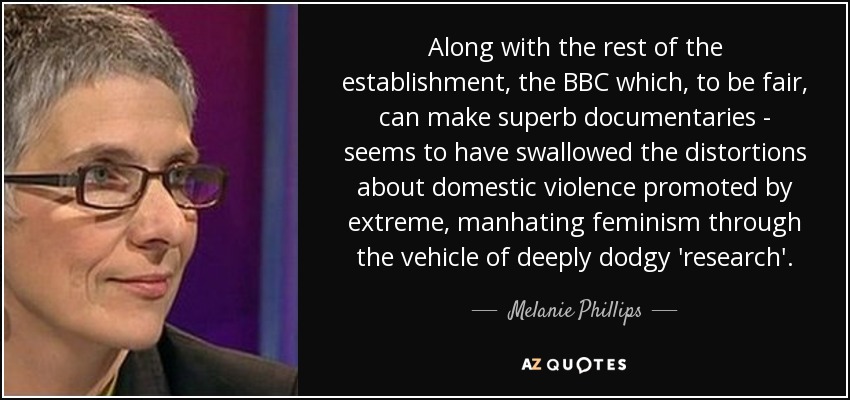
Along with the rest of the establishment, the BBC which, to be fair, can make superb documentaries - seems to have swallowed the distortions about domestic violence promoted by extreme, manhating feminism through the vehicle of deeply dodgy 'research'.
David Irving has consistenly applied an evidential double standard, demanding absolute documentary proof to convict the Germans (as when he sought to show that Hitler was not responsible for the Holocaust), while relying on circumstantial evidence to condemn the British (as in his account of the Allied bombing of Dresden).
As I've grown older, the simple pleasure of sitting on the couch with someone you love and watching a documentary is about as good as it gets for me.
I come from a documentary background and my natural tendency, as a filmmaker, is to make a movie, if I have something to talk about. If it's not about anything that matters, I don't feel like doing it. I'm not against people who make movies just for fun, but I'm not one of those guys. I just want to provoke thinking and debating about certain issues.
We're bombarded with liberal propaganda 24/7, from the early morning shows, Hollywood movies, documentaries and sitcoms, all major newspapers, fashion magazines, the sports pages, public schools, college professors and administrators, etcetera, etcetera, etcetera. Unless liberals specifically seek out Ann Coulter books and columns, which I highly recommend, or tune into Fox News or conservative talk radio, they have no idea what conservatives are thinking.
Some of my pictures are poem-like in the sense that they are very condensed, haiku-lik. There are others that, if they were poetry, would be more like Ezra Pound. There is a lot of information in most of my pictures, but not the kind of information you see in documentary photography. There is emotional information in my photographs.
I'm organizing documentary films, and whenever scriptwriting gets too tedious I go to my editing room and start to edit the documentary, even if I don't have the full funding yet. So you have to keep yourself busy, you have to like the subject matter.
I use people's real voices because I want realism. So often I mention the actors' physicality because I want it to be like a real documentary.
I wanted to describe the world at the same time, through image, express what I felt. It was the time of the great documentary filmmakers: Richard Leacock, Joris Ivens. Today, television has put an end to this type of filmmaking.
I don't like making didactic, pedagogical documentaries based on standard formulas of narration: I'm only interested in the ambitious French tradition of the documentaire de création where the film, if successful, is not about something but that something itself. The goal is to incorporate areas of risk and paradox that we associate with cinematic art.
When I was 16, I made some little 35mm documentaries about the poor in London. I went round Notting Hill, which was a real slum in the 1950s, shooting film.
The first time I thought about attempting a body suspension was after watching a documentary on rites-of-passage ceremonies from other cultures. I was completely intrigued by what these people put their bodies through.
I'm a massive sucker for music documentaries.
We have a documentary film festival in Mexico. It's really original. It's called Ambulante, and it's a film festival that travels around several cities in Mexico.
I love going on BBC6 and BBC7 and listening to documentaries.
The insanely gorgeous competition documentary on surfing obsession, Step Into Liquid — directed by Dana Brown and photographed by John-Paul Beeghly in hypnotic gradations of aquamarine — will send you into a dream state.
Most of the photographs people take with their cameraphones are of little value in terms of documentary.
Documentaries deal with people who live real, everyday lives. But if these people trusted us and told us the truth about their lives, it could be used against them - which sometimes happened.
Voicing acting is usually fun. I'm very curious about that world. I'm a fan of documentaries, as well, and the voice kind of makes it right. Mostly for me, though, it's all about the acting -you don't have to get hair and makeup and the whole bit. You just can have fun with the acting.
For me, the distinction between documentaries and feature films is not so clear - my "documentaries" were largely scripted, rehearsed, and repeated, and have a lot of fantasy and concoction in them.
I live in Tuxedo Park, N.Y. and spend time in the West Village, where my wife Elizabeth Cotnoir, a writer-producer and documentary filmmaker, has an office.
The main reason why I'm a documentary filmmaker is the power of the medium. The most powerful films I've seen have been documentaries. Of course, there are some narrative films that I could never forget, but there are more documentaries that have had that impact on me.
The power of the documentary film, when done well, I think is usually more impacting than a narrative, at least for me. Documentaries are also cheaper, they are more accessible to make.
Thhe essence of documentary filmmaking is how you manipulate the material to create an emotional impact, as opposed to just delivering information.
When I first started, I saw myself shooting documentaries or making documentaries, which is what I did, mostly, for a number of years. So it was quite a surprise how I found myself shooting features. It was like my wildest dreams as a kid collided.
Follow AzQuotes on Facebook, Twitter and Google+. Every day we present the best quotes! Improve yourself, find your inspiration, share with friends
or simply: