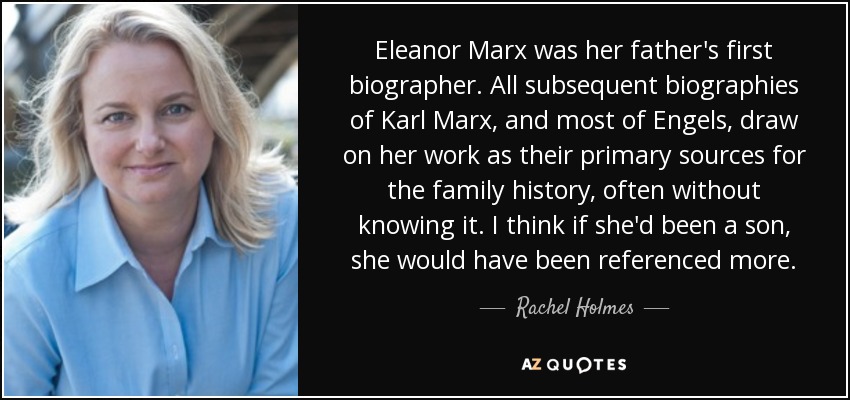
Eleanor Marx was her father's first biographer. All subsequent biographies of Karl Marx, and most of Engels, draw on her work as their primary sources for the family history, often without knowing it. I think if she'd been a son, she would have been referenced more.
In art class at school we learned how to draw tanks and soldiers opening fire at [Iranian leader Ayatollah] Khomeini and his beard. They didn't teach us the names of the flowers that grew around us in the city - wild flowers of all kinds and all colors. The math teacher used to whip the kids with his trouser belt. My father was constantly violent toward my mother for the most trivial reasons.
In a moment when the outcome of our revolution was most in doubt the father of our nation ordered these words be read to the people. Let it be told to the future world that in the depth of winter, when nothing but hope and virtue could survive, that the city and the country alarmed at one common danger came forth to meet it.
I didn't major in anthropology in college, but I do feel I had an education in different cultures very early on. My parents divorced when I was eleven, and my father immediately married a woman with three children and was with her for five years. When they got divorced, he immediately married a woman with four children. In the meantime, my mother married a man who had seven children. So I was going from one family to another between the ages of eleven and eighteen.
I was deliberately trying to express how possible it might be for unmarried men and adults not blessed with biological children to become "fathers of choice." In an old-fashioned, traditional world, this might not matter. But I think that it's probably going to become terribly relevant as time goes on.
One may not be able to fulfill a fatherly role with one's own child, but on the other hand, and this goes for me as well, one might still be a "father of choice" to someone else out there in the world. Fatherhood is something that can be shared worldwide. Meaning that in terms of the substance of a father's role, perhaps we are all pseudo-fathers.
My grandfather is Portuguese. He betrayed what was expected of him and married my grandmother of African descent on my father's side.
You don't need a dead father to explain a character's sadness. And impressing yourself with wit/cleverness often feels like what it is - authorial intrusion.
There's a kind of mystery to our being and from my point of view, regarding my own parents and their parents, I'd as soon let it lie than find out who my mother's father was.
There were the fairy tales my father told to me at bedtime. All the standards. I thought my father invented wolves.
After my parents divorced, my father remarried and my brothers were born when I was twelve and sixteen. I was thunderstruck at these kids. The "baby-ness" of them. Their toes. I had never been around babies before.
I've certainly faced some raw, real pain in my life. I lost my father to a car accident when I was young. My mother died ten years ago. My son was very sick as an infant. Eventually, I have attempted to transform this pain into art, to make meaning out of it.
But when you only speak using generalizations, you run the danger of denying the specific. In recent decades, millions of people have come to us from cultural groups within which women have absolutely no rights. They do not have a voice of their own and they are totally dependent on their fathers, brothers or husbands. That applies to North Africa and that applies to large parts of the Middle East. It isn't always linked to Islam.
False gods - the gods of human understanding - despise sinners, but the Father of Jesus loves all, no matter what they do. But of course this is almost too incredible for us to accept.
Obviously loss of family is huge and critical, but I think really it's more about losing a sense of family. The horror of that kind of incompleteness. Writing this book, I tried not to think about my father, which does no one any good fictionally. I did try to imagine not just the horror of that moment, but the horror of having witnessed it, and the lifelong void. And I think that's what's so frightening.
I come from a very poor family, with sisters. I never really knew my father, so I miss this strong image of a man in my life.
A lot of people ask me about my father's passing when I was young, which I'm never comfortable with. I invariably move around that subject.
My father, Arinze Ejiofor , was a musician and a doctor. Nobody's ever asked me about that combination and what growing up in that environment was like.
I don't know whether God talks to him or whether he's trying to undo what his father did. But he believes in the mission. The body bags aren't going to deter him. Public dissent isn't going to deter him. He's going to go ahead. And that's more frightening.
The idea of public service was instilled in me by watching my father, who shared that he was far more fulfilled in his public service than by his former lucrative corporate jobs.
I've been acting since I was a little kid. It was my escape from my day which had to do with a father leaving, and a mother not being home, and her struggling and doing her best and all that. But it wasn't fun. I would go into theater class. If she were a stay-at-home mom, I wouldn't have that discomfort inside that kept me pushing.
It was my father who could do no wrong. So I didn't think of it as, oh, look, my father's a violent man.
My mom, my father, my little sisters, and my brother - I don't got that much family. I'm not really a family person. I just do my own thing. But I've just been spending time with my mom, especially since the [September motorcycle] accident happened. I drive all the way down there to Georgia just to check up on her. You just get tired of being that person that you thought you were. I don't feel no different. I see the music, because I made it. I don't really see the fame.
There were days when you would get the TV listings from The Globe and The Herald. Video was out, but nobody could afford it...expect for my uncle George, who was a second father to me, and had every film in the world, and every book.
My personal background is actually very unusual for the kind of career I chose. I didnt meet anyone who had ever done physics in my life. I grew up in the Himalayan forests. My father was a forest conservator, which meant that if I wasnt in school I was in the forests with him. That has been very largely responsible for my ecological inclinations.
Follow AzQuotes on Facebook, Twitter and Google+. Every day we present the best quotes! Improve yourself, find your inspiration, share with friends
or simply: