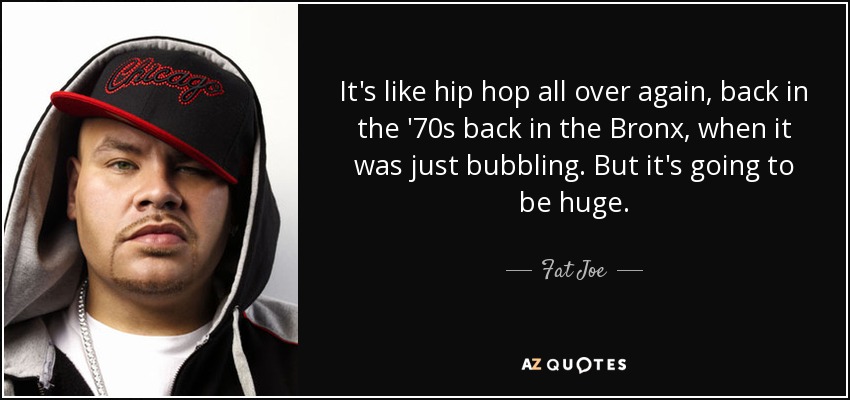
It's like hip hop all over again, back in the '70s back in the Bronx, when it was just bubbling. But it's going to be huge.
I do experiment with lots of different genres. In making music, I don't think of genre like, "I want to do this, because I'm going use that country music sound; I'm going use that hip-hop sound; I'm going use that acoustic [sound]." It's just making music. So now that I've traveled a lot more since I did Acoustic Soul, I'm sure that different sounds will come into place, because I have been exposed to it and I like it. But it's not so much of a conscience effort. It's mind and spirited. You know, we're humans.
But still it's like I said, when you hop in a cab in Italy and the guy doesn't speak English, uhh, you know, you have to start pointin' at things. You learn how to deal with it. What I'm tryin' to say is that it's not as convenient as touring in the states or say somewhere like Australia or even England where they speak the same language fluently.
Bob Marley performed the 'One Love Peace' concert in Jamaica with the two different warring political sides. There's always been that in black music and culture in general. It's no surprise because black music is such a reflection of what's going on in black life. It's not unusual for hip-hop.
I wouldn't want to hear Beethoven without beautiful bass, the cellos, the tuba. It's very important. Hip-hop has thunderous bass. And so does Beethoven. If you don't have the bass, it's like being amputated. It's like you have no legs.
Music is a huge part of my life, I enjoy every genre of music from jazz to country, and I even get down with a bit of hip hop.
I still love old-school hip-hop, but there hasn't been a lot that I've taken from the new stuff.
The first time I played golf was in Flushing Meadows, Queens, when I was about 16 or 17. They had an 18-hole pitch-and-putt. My buddies and I would hop the fence and sneak on and play.
I expect the hip-hop audience to be avant garde. I want them to be where I'm at or beyond where I'm at.
The upside of being a part of a post-civil rights generation is that black folks really are more diverse. But the flash point for that diversity is caught up in Hip Hop. So you have a generation that says, 'I'm gonna wear my sneakers, and I'm gonna wear my pants how I like themThen you have a generation that says, 'I did not get bit by dogs for you to conduct yourself this way. Then the younger generation says, 'Yes, you did. This is what freedom means.'
15, 16, I mean, 17, 18, is when I was really getting into the hip hop phase and really studying the things that I needed to study as far as learning about flows and learning about lyrics.
Everyone who raps isn't hip-hop. To be hip-hop, you've got to know the culture. You got to know the history.
The thing about hip-hop is they always want to classify you as one particular artist, but hip-hop is about going outside the box and expressing yourself however you want to.
The moment I made that decision to get in the studio and actually work and study the culture of hip-hop, then everything just started to open up and blossom for me.
Dear Hip Hop, we can't scream 'murder, misogyny, lawlessness' in our music & then turn around and ask for equality & justice.
A lot of underground hip-hop will inspire me as far as rhyme patterns - really wordy, intelligent lyrics.
Pitbull is great with brands. Endorsements with hip-hop artists work because hip-hop artists typically set the most trends... It's every brand's goal to be seen in the mainstream, and hip-hop music has become mainstream music.
Many critics are like woodpeckers, who, instead of enjoying the fruit and shadow of a tree, hop incessantly around the trunk, pecking holes in the bark to discover some little worm or other.
I guess the difference between the Korean hip-hop scene and the American hip-hop scene is that in the American hip-hop scene, you know, they have their Jay-Zs. They can become conglomerates through hip-hop. In Korea, it doesn't happen.
Michael Jackson carried urban America and eventually American society on his vocal cords for a good 25 to 30 years before even hip-hop became the vox populi of America, and then as an adult he shattered racial barriers.
I went down to London with the idea that I was going to do vocals over this crazy, crazy trip-hop digital beat. Within two or three months, I heard Hunky Dory by David Bowie and that changed me in one way, and I realized what I actually wanted was to have an E Street Band - individuals, not session musicians.
For us, selling a million records in 2005 is the equivalent of selling 2 to 3 million records (five years ago). Rock records aren't flying off the shelves like they used to. Hip-hop and pop are so huge. (But) everything's on the upswing for us.
When I die, so does hip hop.
When I fell in love with hip-hop, my favorite rapper was Jay-Z. But I used to like Common and Nas. But I was a South dude. So I grew up on UGK, Triple Six, Outkast, and Pastor Troy. That's where I get my lingo, my slang, my passion.
The competitive nature of hip-hop culture has always had battling involved with it. So you battle with the other artist but not necessarily in business and everywhere else.
Follow AzQuotes on Facebook, Twitter and Google+. Every day we present the best quotes! Improve yourself, find your inspiration, share with friends
or simply: