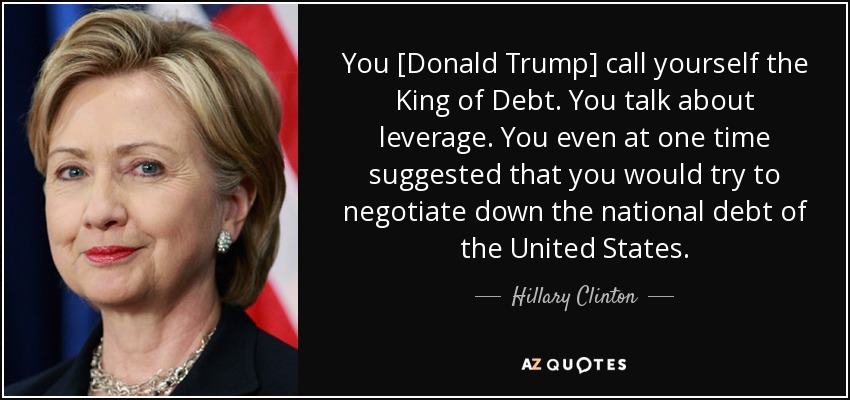
You [Donald Trump] call yourself the King of Debt. You talk about leverage. You even at one time suggested that you would try to negotiate down the national debt of the United States.
It is impossible not to bestow the imputation of deliberate imposture and deception upon the gross pretense of a similitude between a king of Great Britain and a magistrate of the character marked out for that of the President of the United States. It is still more impossible to withhold that imputation from the rash and barefaced expedients which have been employed to give success to the attempted imposition.
I believe that it is indeed easier for a woman who follows a male monarch, as it was in my case. There was no role model I had to measure up to. It was clear from the beginning that many things would be different, and that helped. And I hope that the same thing will help my son, Crown Prince Frederik, when he becomes king one day.
As Martin Luther King said, "Passively to participate in an unjust system is to accept that system and to participate in its evil."
For me, Lincoln is like just a handful of people - a Gandhi, or a Picasso, or a Martin Luther King Jr. - who is an original and captures something essential.
I have many sources of inspiration. I'd have to point to Dr. Martin Luther King, first and foremost. But my parents were good, hardworking folks who kept us in the church and the public schools, and out of trouble, for the most part.
Saul Bellow has that character in Henderson the Rain King say: "I want, I want, I want!"9 I remember reading this passage years ago and thinking, yes, that's the human.
Either Malcolm X or Martin [Luther King] could have played the role of a unifier, but it was - Malcolm as long as he remained within the Nation of Islam, talking to the converted, he did not represent a fundamental threat to the American government.
I'm reminded of an interview Larry King had on his talk show with one of Michael Jackson's sisters. He's talking about how many millions she made on her latest record, and all of a sudden, she looks at him tearfully and says, "Larry, you know, I'm not interested in money or sales or songs. I'm a spiritual person." And I thought, "Oh my god..."
The crown jewel of Dr. King`s movement was to protect the right to vote for all citizens.
I knew she was a party girl. The book I liked most on her was called [princess] Margaret: A Life of Contrasts and getting to know her, it was how conflicted her position and her internal life - or self - was. She is so fiercely royal and so fiercely "sister of the queen" or "daughter of the king" because that is her identity and it's all she's ever known. And at the same time she is struggling to push the boundaries and to break away from it, to be different or to modernize the monarchy, to turn it on its head.
It's this amazing combination to play, really, of somebody who's actually very fragile and hasn't really grown up properly yet - at least in a healthy environment - and has suffered immense loss with her dad - like that line where she says, [in the words of her father [King George VI], "Yes, 'Elizabeth is my pride but Margaret's my joy." She holds onto it!
His [Martin Luther King] last book, Where Do We Go From Here: Chaos or Community, is a direct reference to angles, barbarism or socialism.
We don't live in tyrannies, you know, the king doesn't decide what's legitimate, and there's much more freedom than there was in the past.
[Martin Luther King] King was a socialist and King was an activist who was really a radical by the end.
The president of the University said that night, congratulations to you the students, you've won a great victory, now the war will end. And I'm certain that he believed it that night and I believed it and we went away happy. Four days later, Martin Luther King was assassinated. Two months after that, Kennedy was assassinated. Two months after that, Henry Kissinger emerged from the swamp he was living in at Harvard with a plan to expand the war.
Being with the Dap-Kings is like being an athlete.
Go back to the Bible, the Old Testament. I mean there were people who we would call intelectuals, there, they were called prophets, but they were basically intelectuals: they were people who were doing critical, geopolitical analysis, talking about the decisions of the king were going to lead to destruction; condemning inmorality, calling for justice for widows and orphans. What we would call dissident intelectuals. Were they nicely treated? No, they were driven into the desert, they were imprisoned, they were denounced. They were intelectuals who conformed.
When I was singing "King of the Mountain," it was a pivotal point in the show. That's the song that took us from this concert setting of individual songs into the theatrical narrative piece.
The whole positioning and atmosphere of the song ["King of the Mountain"] was to build up this thunderstorm that would take us all onstage off into a story where we were suddenly in the middle of the ocean.
I was a 12 year old kid in Northern Idaho listening to Billie Holiday and Lena Horne and Sarah Vaughan and Nat King Cole. This whole genre of music is a part of who I am.
That's where Dr. [Martin Luther] King is mixed up. His goals should be the solution of the problem of the black man in America.
If I may add, for instance, [Martin Luther] King and these others will say that they are fighting for the Negro to have equal job opportunity. How can people, a group of people, such as our people, who own no factories, have equal job opportunities competing against the race that owns the factories?The only way the two can have equal job opportunities is if black people have factories as, as well as white people have factories.
Just as Uncle Tom, back during slavery used to keep the Negroes from resisting the bloodhound or resisting the Ku Klux Klan by teaching them to love their enemies or pray for those who use them despitefully, today Martin Luther King is just a twentieth-century or modern Uncle Tom or religious Uncle Tom, who is doing the same thing today to keep Negroes defenseless in the face of attack that Uncle Tom did on the plantation to keep those Negroes defenseless in the face of the attack of the Klan in that day.
Now the goal of Dr. Martin Luther King is to give Negroes a chance to sit in a segregated restaurant beside the same white man who has brutalized them for four hundred years.
Follow AzQuotes on Facebook, Twitter and Google+. Every day we present the best quotes! Improve yourself, find your inspiration, share with friends
or simply: