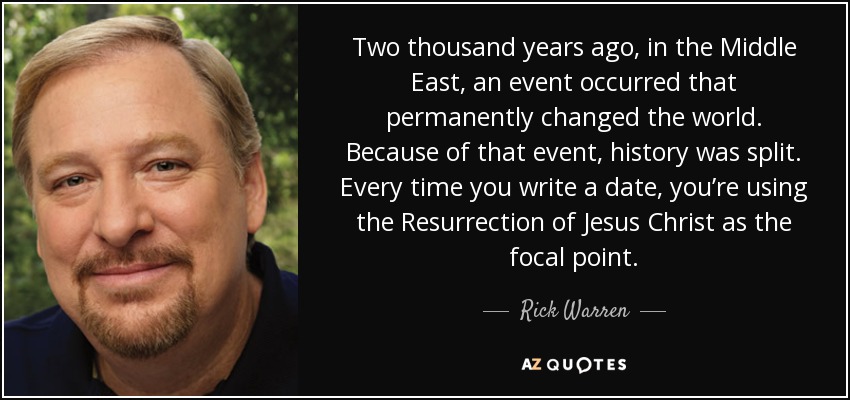
Two thousand years ago, in the Middle East, an event occurred that permanently changed the world. Because of that event, history was split. Every time you write a date, you’re using the Resurrection of Jesus Christ as the focal point.
Gabriel Levin's book is a journey through time and through entrenched animosities of the Middle East. What's astonishing and refreshing is his ability to combine the reporter's perspective with a deep knowledge of poetry, including pre-Islamic Arab poems. A brilliant poet is at work here-a poet in the rugged landscape of conflict and pain.
...if [the 9/11/01 attacks] had happened to the Russians, about three major cities in the Middle East would have been parking lots in twenty minute and they wouldn't have worried about the consequences because there would not have been any because the remaining terrorist states would have said 'we get the message.'
Ending torture and tyranny in Iraq was not a mistake. Supporting democracy in Iraq is not a mistake. Helping the long-suffering Muslims of Iraq who now seek to live democratically is not a mistake. In the long, long history of the Middle East, this breakthrough may one day be ranked as a dramatic turning point in regional history.
With Albright at the helm of the State Department, Osama bin Laden ran wild throughout the Middle East, the North Koreans began feverishly building nukes under her nose, and we staged a pre-emptive attack solely for purposes of regime change based on false information presented to the American people by Albright about a world leader who was not an imminent threat to the United States. Slobodan Milosevic wasn't even a latent, long-term, hypothetical threat.
There's too much political hay to be made undercutting the war, and the consequences be damned. If they want to defeat the war to defeat Bush, well, noted. If they truly believe that the United States is in the same group as the Nazis, the Soviets and Pol Pot, then they've shown they have no perspective, no judgment, no sense of nuance, shall we say. And the idea that such comparisons might be picked up in the Middle East and broadcast with glee is irrelevant; they're parochial to a fault, and care little for anything beyond their reputation and power in Washington.
Absorbing. . . . Scrupulously reported . . . illuminates today’s Middle East. . . . The ‘least interventionist of any modern president,’ the father of the Eisenhower Doctrine that still defines US policy in the Middle East . . . in 1956 battled demons in bodies personal and politic and in the desert – and prevailed. Nichols’ book, written lean enough to allow the facts to speak for themselves, makes for exciting history.
I don’t think it’s possible to skip with a frown on your face.... I’d like to see the world’s governing and terrorist leaders on a skipping tour through the Middle East and across the subcontinent and China to Korea.
One of my biggest personal holdings is Rotana. That company has a very dominant force in the Middle East. It has around 45% of all the movie industry and around 75% of all the music.
I believe the government of the United States should re-examine its policies in the Middle East and adopt a more balanced stance toward the Palestinian cause.
Hot, dry katabatic winds, like the south foehn in Europe, the sharav in the Middle East, and the Santa Ana of Southern California, are all believed to have a decided effect on human behavior and are associated with such health problems as migraines, depression, lethargy, and moodiness. Some scientists say that this is a myth.
I'm not an expert on the Middle East or terrorism or the use of military force or politics. It's all I can do to know a little bit about how to help people raise their kids and what to do when they get sick. When a war happens, I just hope it gets over with quickly so that how we take care of children becomes more important again.
For all their current prestige, Osama bin Laden and the suicide bombers are still regarded in all but the most desperate districts of Gaza or Peshawar as romantics with little chance of more than symbolic victories, however bloody and brutal. That gives both the Middle East and the West a small and distant hope of security.
The question of modernization is central to disturbances in the Middle East and in Africa. Everyone is after modernization, no matter where they come from. But you have to be careful about it, and more importantly, you have to have sense about it.
People in the Middle East may consider the U.S. an evil hegemony that has tainted their culture, but when I look at the growth of racial and ethnic tolerance and understanding in my generation in the U.S., and see those sentiments make it around the world, it makes me feel proud.
There is no question that al-Qaida operatives are currently active in Iraq. A premature exit before the threat they represent has been dealt with would endanger America and the prospects of eventual peace in the Middle East.
Syria is geographically and politically in the middle of the Middle East.
Our actions in the Middle East over the last 15 years have already guaranteed radical Muslims quite enough ammunition to kill Americans for the next century, even if Guantanamo did not exist.
Although most Americans don't know it, the U.S. gets more oil from Canada than it does from the entire Middle East.
One substitute for the disappearing Evil Empire (The Soviet Union) has been the threat of drug traffickers from Latin America. In early September 1989, a major government-media blitz was launched by the President. That month the AP wires carried more stories about drugs than about Latin America, Asia, the Middle East and Africa combined. If you looked at television, every news program had a big section on how drugs were destroying our society, becoming the greatest threat to our existence, etc.
Herpes, AIDS, the Middle East at full throttle. Better check that sausage before you put it in the waffle.
Peace in the Middle East is of prime importance to the Philippines, due to the presence of around 2 million of our countrymen working in that region.
In America, we're trying to find a peaceful solution in the Middle East, and we're not going to be divided along any lines.
Like most Americans, I hope and wish is that there is a peaceful resolution to the Middle East conflict. Unfortunately, there are extremists on both sides who oppose a peaceful resolution and instead choose violence.
No matter what's happening in the Middle East - the Arab Spring, et cetera, the economic challenges, high rates of unemployment - the emotional, critical issue is always the Israeli-Palestinian one.
Follow AzQuotes on Facebook, Twitter and Google+. Every day we present the best quotes! Improve yourself, find your inspiration, share with friends
or simply: